
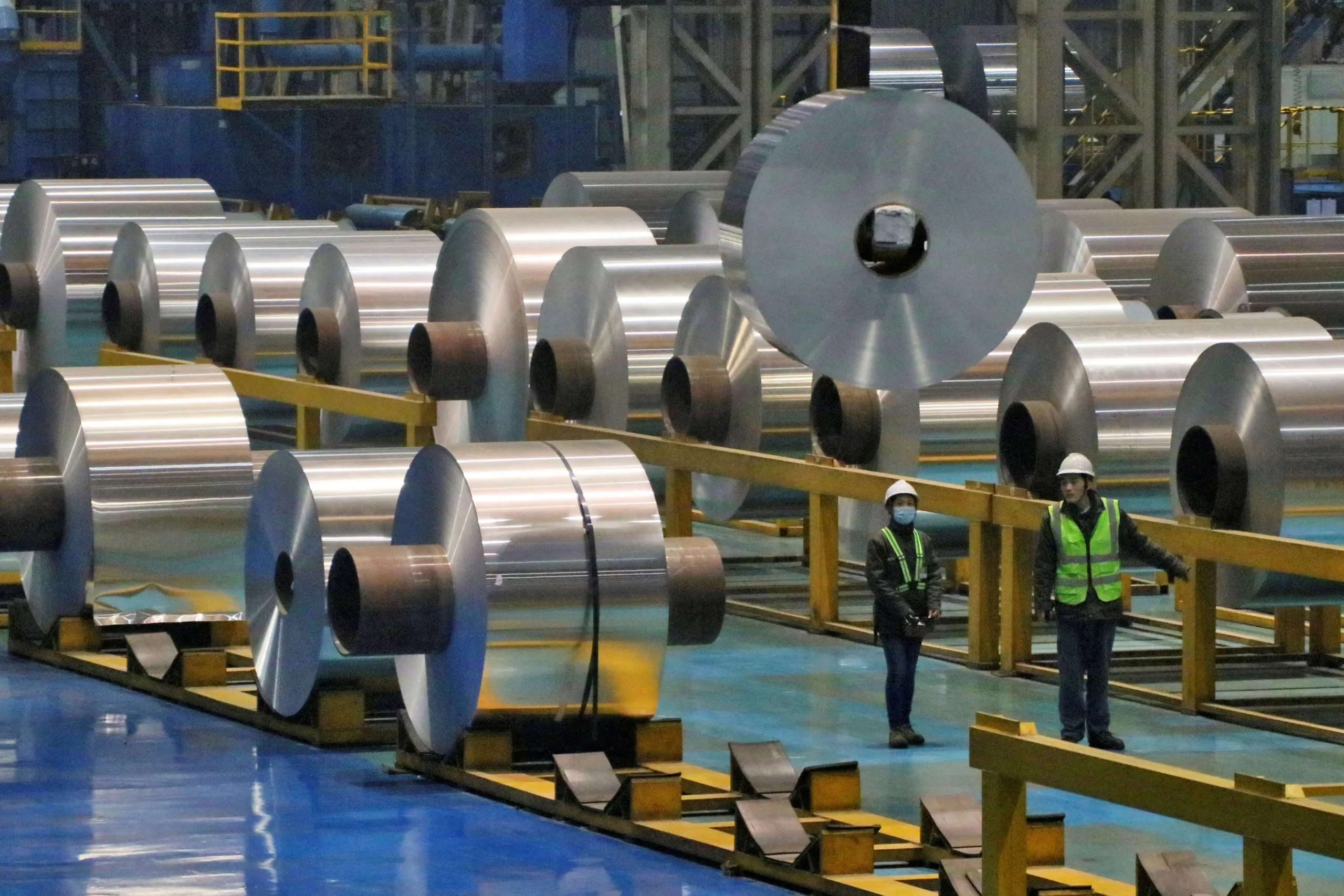
US Revises Import Tariffs on Key Metals, Shifting Economic Landscape
The United States has announced a significant adjustment to its import tariff policy on products containing steel, aluminum, and copper. Under the new directive, the tariff rate is set to be adjusted from a previous 50% to a more uniform 25%. This strategic move, detailed in a White House release, is primarily designed to bolster the domestic metal industry and reshape the enforcement mechanisms of these tariffs.
This modification introduces a new calculation method for the tariff, applying the 25% rate to the total value of the finished product that incorporates steel or aluminum. This contrasts with the prior rule, which levied the tax solely on the value of the metal content within the item. However, a 50% tariff will persist for basic-grade steel and aluminum products, those predominantly composed of these metals.
The announcement, as reported by Estadão Conteúdo, also outlines further nuances to the tariff structure. For instance, products manufactured abroad but containing U.S. or U.K. metals will benefit from a reduced tariff of 10%. Additionally, certain metal-intensive industrial equipment and electrical grid components will face a lower tariff of 15% until 2027, a measure intended to expedite the expansion of the U.S. industrial base.
Crucially, materials with a steel, aluminum, or copper composition of 15% or less will be exempt from Section 232 tariffs. The U.S. government asserts that under the previous aluminum and steel tariff regimes, domestic capacity utilization saw an increase from approximately 39% in 2017 to about 50.4% currently in aluminum production, a growth attributed to the tariffs imposed under Section 232.
President Trump, in a statement, affirmed his conclusion that aluminum, steel, and copper are being imported into the United States in quantities or under circumstances that threaten to impair the nation’s national security, citing Section 232 of the Trade Expansion Act of 1962 as the basis for these actions.
Impact on Global Trade and Supply Chains
The revised tariff structure is poised to have a considerable impact on global trade dynamics and supply chains. Businesses that rely on imported metal products, or those that incorporate these metals into their manufacturing processes, will need to re-evaluate their sourcing strategies and cost structures. The shift from taxing only the metal content to the total product value could significantly alter the cost-effectiveness of importing certain goods.
For U.S. manufacturers, these adjustments could present an opportunity to increase domestic production and competitiveness. The stated goal of enhancing national security through a robust domestic industrial base is a recurring theme in trade policy discussions. However, the ripple effects could extend to consumer prices, as increased production costs may be passed on.
The International Trade Administration and other governmental bodies will likely play a key role in monitoring the implementation and effects of these new tariff regulations. Companies operating in sectors such as automotive, aerospace, construction, and electronics, which are heavily reliant on steel, aluminum, and copper, should closely follow any further clarifications or amendments to these policies.
The World Trade Organization (WTO) may also become involved if trading partners raise concerns about the compliance of these tariffs with international trade agreements. Understanding the nuances of Section 232 and its application is paramount for any entity engaged in international commerce involving these key commodities.
Investment Strategies in the Face of Tariff Adjustments
For investors, these tariff adjustments present both challenges and opportunities. Companies that stand to benefit from increased domestic demand for their metal products may see their stock valuations rise. Conversely, companies that heavily rely on imported metals or have significant international production facilities might face increased operational costs and potential margin erosion.
Analysts suggest that a deeper dive into the specific product categories affected by the tariff changes is crucial. Diversification of supply chains and exploring alternative materials could become increasingly important strategies for mitigating risk. Furthermore, investments in domestic metal production and related industries might become more attractive.
The economic rationale behind such tariffs often centers on protecting nascent or strategically important domestic industries. While the immediate impact might be felt by importers and consumers, the long-term objective is to foster self-sufficiency and resilience in critical sectors. Investors should consider the long-term implications and the potential for shifts in global manufacturing footprints.
The financial markets will likely react to these changes, with certain sectors experiencing volatility. A thorough understanding of the global economic landscape, coupled with a keen eye on geopolitical developments, is essential for navigating these shifting investment waters. The interplay between trade policy and economic growth remains a critical factor for portfolio management.
Navigating the New Tariff Landscape: Practical Advice for Businesses
Businesses affected by the new tariffs must act proactively. The first step is to meticulously assess how the revised rates and calculation methods apply to their specific products and supply chains. This involves understanding the precise composition of imported goods and identifying any exemptions that might be applicable.
Consulting with trade law experts and customs brokers can provide invaluable guidance. These professionals can assist in navigating the complexities of tariff classifications, documentation requirements, and potential appeals processes. Staying informed about any updates or interpretations from U.S. Customs and Border Protection (CBP) is also critical.
Exploring opportunities for sourcing materials domestically or from countries with preferential trade agreements should be a priority. This might involve re-evaluating existing supplier relationships and seeking new partnerships. The potential for increased domestic manufacturing capacity, spurred by these tariffs, could also open doors for new business ventures or collaborations.
For companies that export finished goods to the U.S., understanding the implications of the 25% tariff is paramount. This may necessitate adjusting pricing strategies or seeking ways to reduce the metal content in their products without compromising quality. The flexibility and adaptability of businesses will be key to their success in this evolving trade environment.
Understanding Section 232 and National Security Implications
Section 232 of the Trade Expansion Act of 1962 grants the President the authority to adjust imports that are determined to threaten national security. This provision has been invoked in recent years to impose tariffs on various goods, including steel and aluminum. The core argument is that a strong domestic industrial base, particularly in critical materials like metals, is essential for national defense capabilities.
The U.S. government’s assertion that the import of steel, aluminum, and copper poses a threat to national security is a significant claim. This rationale is often debated, with critics arguing that trade policies should not be conflated with national security unless there is a direct and clear link. However, the legal framework of Section 232 allows for such broad interpretations.
The increase in domestic capacity utilization for aluminum, from 39% in 2017 to over 50% currently, is presented as evidence of the tariffs’ effectiveness in stimulating domestic production. This metric is crucial for policymakers aiming to revitalize U.S. manufacturing. The debate often centers on whether these measures achieve their intended goals without causing undue harm to other sectors of the economy or international relations.
Understanding the historical context and legal underpinnings of Section 232 is vital for businesses and investors. It provides insight into the motivations behind these trade actions and helps in anticipating potential future policy shifts. The concept of national security in trade policy is a complex and evolving area, with significant economic ramifications.
Frequently Asked Questions (FAQ)
Q1: What is the new tariff rate on imported steel, aluminum, and copper products?
The new tariff rate is adjusted to 25% on products made with steel, aluminum, and copper, down from a previous 50% in some cases.
Q2: How is the tariff calculated under the new rules?
The 25% tariff is now applied to the total value of the finished product containing steel or aluminum, rather than just the value of the metal content.
Q3: Are there any exceptions to the new tariff rates?
Yes, a 50% tariff remains for basic-grade steel and aluminum products. Additionally, materials with a steel, aluminum, or copper composition of 15% or less will not be subject to Section 232 tariffs.
Q4: What is the rationale behind these tariff adjustments?
The primary stated goal is to protect and bolster the domestic metal industry in the United States, with a broader objective of enhancing national security through industrial self-sufficiency.
Q5: How will these tariffs affect businesses that import metal products?
Businesses may face increased costs due to the tariff application on the total product value. They will need to reassess sourcing strategies and potentially adjust pricing.
Q6: Are there any special considerations for products containing U.S. or U.K. metals?
Products made abroad but containing U.S. or U.K. metals will receive a reduced tariff rate of 10%.
Q7: What are Section 232 tariffs?
Section 232 tariffs are measures imposed under Section 232 of the Trade Expansion Act of 1962, allowing the U.S. President to adjust imports deemed to threaten national security.
Q8: What impact might these tariffs have on investment strategies?
Investors may find opportunities in domestic metal producers and related industries. Conversely, companies heavily reliant on imports might face challenges, prompting a need for supply chain diversification and risk mitigation strategies.
Q9: What is the significance of the 15% weight threshold for exemptions?
This threshold means that products where steel, aluminum, or copper constitute a minor portion of the overall weight will not be subjected to these specific tariffs, offering relief for certain composite goods.
Q10: How can businesses prepare for these changes?
Businesses should conduct a thorough assessment of their supply chains, consult with trade experts, explore alternative sourcing options, and stay updated on official government guidance regarding tariff implementation.

Empowering you to master your money with confidence and clarity. On this channel, we break down personal finance—from budgeting basics and saving smarter to debt-free strategies and practical investing—all in easy-to-understand language.
Expect weekly deep dives into real-life financial questions, step-by-step tutorials, and expert insights that make money topics approachable and actionable. Whether you’re building emergency savings, paying off loans, or planning for the future, you’re in the right place to get informed, empowered, and financially confident.