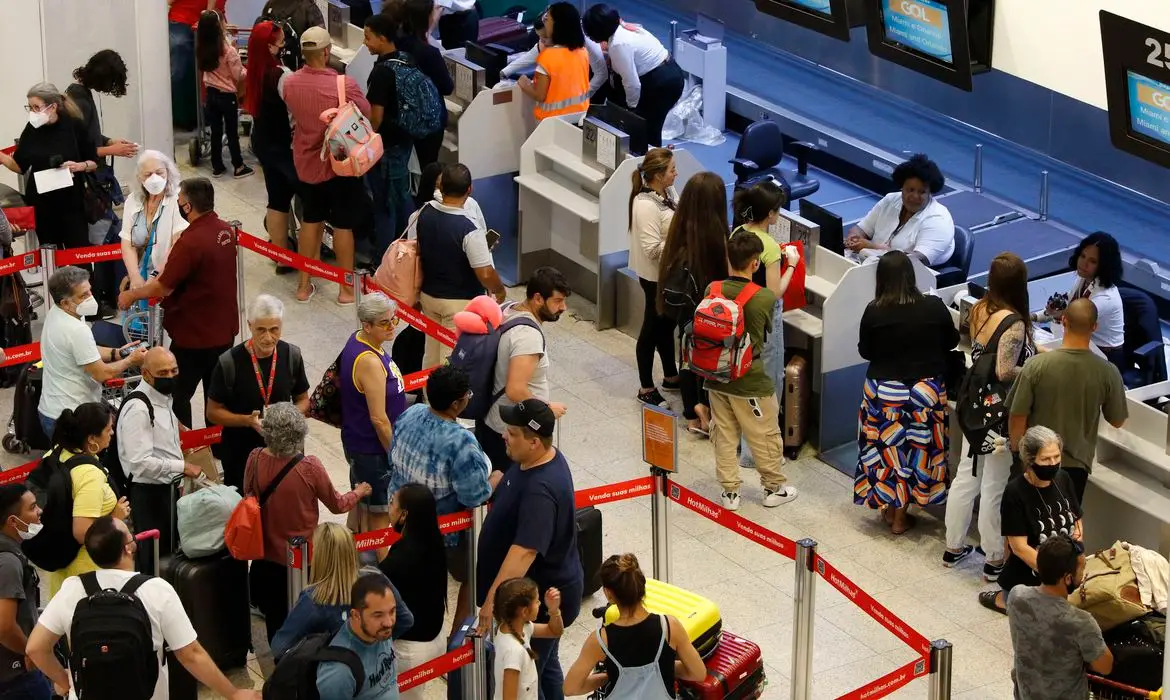
The City Hall of Rio de Janeiro has officially lodged a complaint with the Federal Court of Accounts (TCU) against the National Civil Aviation Agency (ANAC). This legal move comes after ANAC reportedly met with airline companies to discuss increasing the passenger limit at the Santos Dumont Airport. The current cap stands at 6.5 million passengers annually.
This action follows strong criticism from Rio’s Mayor, Eduardo Paes, who expressed concerns on social media about “hidden forces” within ANAC aiming to alter a coordinated policy between the city’s airports. This policy, established in 2024, is credited with the significant revitalization of Galeão International Airport.
The city administration argues that ANAC is misinterpreting a previous TCU ruling to justify a potential relaxation of passenger limits at Santos Dumont. The core of the dispute lies in the interpretation of an agreement made in June concerning the RIOgaleão concession. This is according to information initially reported by Agência O Globo.
City Hall’s Legal Stance and TCU Ruling Interpretation
According to the Prefeitura do Rio’s assessment, ANAC has improperly used a TCU decision to support the idea of increasing passenger flow at Santos Dumont. The TCU’s June agreement aimed to reformulate the contract with RIOgaleão, allowing it to continue managing the airport. This agreement involved changes to the concession’s financial model, including a shift from an annual fee to a 20% revenue share with the federal government.
The TCU ruling, spearheaded by Minister Augusto Nardes, stated that public authorities are not strictly bound by the 6.5 million passenger limit mentioned in the agreement. However, the ruling also suggested that restrictions at Santos Dumont (SDU) should be addressed separately from this consensual agreement, potentially through a decision by the Ministry of Ports and Airports. Nardes’ text noted that the economic-financial modeling only included a “mere forecast” for the end of the SDU limitation, with a three-year transition period, and this did not obligate public authorities to a specific timeline.
Concerns Over Market Pressures and Galeão’s Revitalization
The City Hall, in its filing signed by Municipal Attorney General Daniel Cervasio, asserts that the TCU’s decision does not authorize an increase in passenger volume at Santos Dumont. They contend that the ruling merely outlined technical scenarios for the concession’s financial modeling and did not establish any public policy directives. The city is seeking to be recognized as an interested third party and requests that ANAC and the Ministry of Ports and Airports be summoned for clarification.
Mayor Eduardo Paes has indicated he will meet with the Minister of Ports and Airports, Silvio Costa Filho, in early January to discuss the matter further. Paes believes the push to increase Santos Dumont’s capacity is driven by market pressures. He pointed to the significant turnaround at Galeão, which registered 14.6 million passengers from January to October of the current year, more than doubling the 6 million from the same period two years prior. Galeão is scheduled for auction again in March.
Economic Interests and Passenger Willingness
Paes expressed his concerns about the stability of the process, highlighting that companies considering investing in Galeão need assurance. He mentioned a conversation with President Lula, who he stated is a strong supporter of the current policy and committed to speaking with Minister Silvio. Paes also noted that the Infraero, a state-owned company, relies on Santos Dumont for its sustenance, and airlines like Latam, with hubs in Guarulhos, might benefit from consolidating Rio passengers through Santos Dumont for international connections, potentially bypassing Galeão.
A survey by Fecomércio RJ found that a significant majority of passengers interviewed at Santos Dumont (56.8%) would be willing to fly from Galeão. If fares were cheaper at Tom Jobim Airport (Galeão), an additional 19.2% would consider using it, bringing the total to 76% willing to use the international terminal.

Empowering you to master your money with confidence and clarity. On this channel, we break down personal finance—from budgeting basics and saving smarter to debt-free strategies and practical investing—all in easy-to-understand language.
Expect weekly deep dives into real-life financial questions, step-by-step tutorials, and expert insights that make money topics approachable and actionable. Whether you’re building emergency savings, paying off loans, or planning for the future, you’re in the right place to get informed, empowered, and financially confident.