
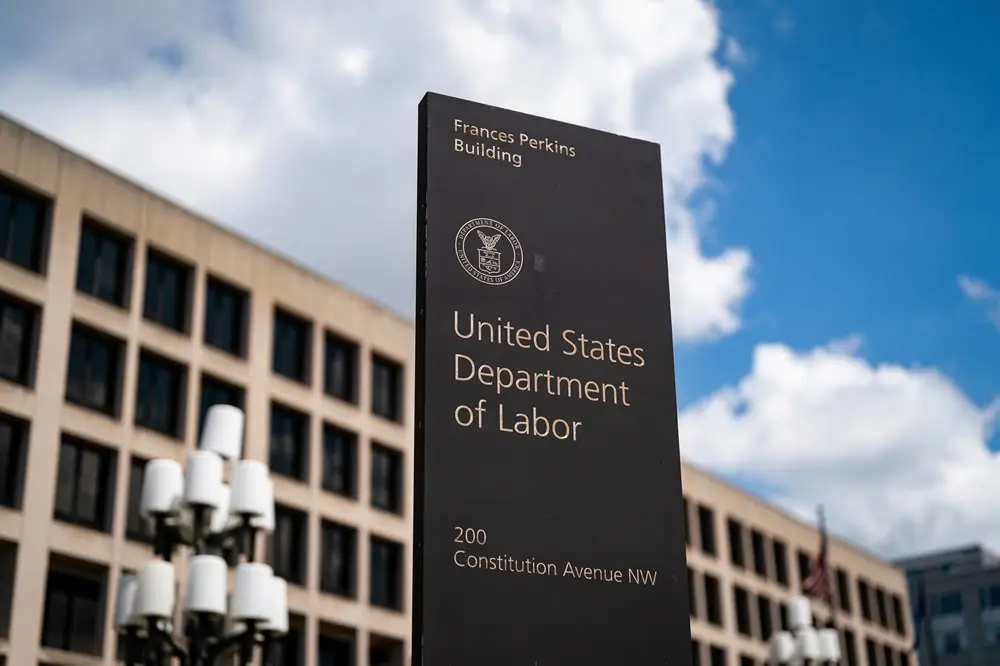
The Bureau of Labor Statistics (BLS) has announced it will not release the October jobs report, a critical piece of economic data. Instead, the figures will be incorporated into the November report, which is scheduled for release after the Federal Reserve’s final meeting of the year.
This decision stems directly from the record-breaking government shutdown. The BLS was unable to collect essential household data for October, which underpins key statistics like the unemployment rate. The agency stated this data cannot be retroactively gathered, leading to its omission from official publications.
This marks the first time the BLS has failed to publish a monthly employment report since records began in 1994. Consequently, the last comprehensive look at the U.S. labor market before the Federal Reserve’s December 9-10 meeting will be the September report, due out on Thursday.
Economic Uncertainty and Fed Rate Cut Expectations
Following this announcement, investors have begun to temper expectations for interest rate cuts in December. The delay in official data is likely to leave policymakers with divided opinions on the next steps for monetary policy. Minutes from the Fed’s October meeting, also released on Wednesday, indicated that “many” members leaned against rate cuts in December.
The jobs report is comprised of two surveys: a household survey and an establishment survey, which provides the payroll numbers. The BLS has confirmed it is extending data collection periods for both surveys in November to compensate for the lost October data.
A “Partial Blind Spot” in Economic History
Economists had previously warned that the household data might be lost due to the labor-intensive nature of its collection. However, many still anticipated the payroll figures. Kevin Hassett, director of the National Economic Council, had stated last week that the October jobs report would not include the unemployment rate.
The advocacy group Friends of BLS, comprised of former agency commissioners, described the situation as creating a “partial blind spot” for October 2025 in the official U.S. record. They noted that in some instances, the BLS will be unable to consistently collect information on Americans’ experiences during the shutdown period.
Challenges in Data Collection
While many businesses submit payroll data electronically, retroactively contacting workers by phone to recall their employment status during a specific October week presents significant challenges. The household survey, a joint effort by the BLS and the Census Bureau, typically interviews around 60,000 households monthly.
Previous government shutdowns have led to delays in certain reports, but never before has the BLS been forced to completely skip a major publication. This interruption in a historical data series, which economists rely on for trend analysis, is unprecedented. The 35-day shutdown in late 2018, the longest at the time, also caused disruptions, including the cancellation of several Census reports, though the BLS, with prior funding, remained operational.
Further Data Delays and Potential Cancellations
In addition to the October jobs report, the BLS is also canceling the September Job Openings and Labor Turnover Survey (JOLTS). This report was scheduled for release alongside the October data on December 9, the same day the Federal Reserve members begin their two-day meeting.
The agency has yet to make a decision regarding the October Consumer Price Index (CPI). Economists consider this report also at risk of cancellation, as it heavily relies on manual data collection. The White House has indicated that its publication is unlikely.

Empowering you to master your money with confidence and clarity. On this channel, we break down personal finance—from budgeting basics and saving smarter to debt-free strategies and practical investing—all in easy-to-understand language.
Expect weekly deep dives into real-life financial questions, step-by-step tutorials, and expert insights that make money topics approachable and actionable. Whether you’re building emergency savings, paying off loans, or planning for the future, you’re in the right place to get informed, empowered, and financially confident.