Food Prices Cool in IPCA-15, Fueling January Selic Rate Cut Hopes as Inflation Hits 4.50%
The latest inflation preview, the IPCA-15, released on Wednesday, November 26th, indicated a 0.20% increase. This figure was primarily driven by service costs, while a slowdown in food prices provided some relief. The accumulated 12-month inflation reached 4.50%, hitting the upper limit of the Central Bank’s target range for the year.
This development has strengthened the view that inflation will continue to trend downwards for the remainder of the year. Consequently, expectations are mounting for a cut in the benchmark interest rate, the Selic, to be implemented in January of the upcoming year.
The data, gathered between October 16th and November 15th, showed a 0.20% rise in the IPCA-15. While this slightly exceeded market expectations of 0.18%, the core inflation, which excludes more volatile items, advanced by 0.27%, falling below analysts’ predictions of 0.29%. This suggests a positive underlying trend in price stability.
Transport Sector Drives Inflation While Food Offers Relief
The main driver of the monthly increase was the Transport sector, which saw a 0.22% rise. According to André Valério, senior economist at Inter, airline tickets, with an 11.87% surge, were the primary contributor to the 0.66% acceleration in service inflation. This volatile component significantly impacted the overall inflation figure.
In contrast, essential items provided a much-needed reprieve. The Food and beverages group registered a modest 0.09% increase, breaking a five-month streak of declines. Notably, food consumed at home actually decreased by 0.15%. Leonardo Costa, an economist at ASA, pointed out that price drops in long-life milk, rice, and fruits helped offset increases in potatoes, soybean oil, and meats.
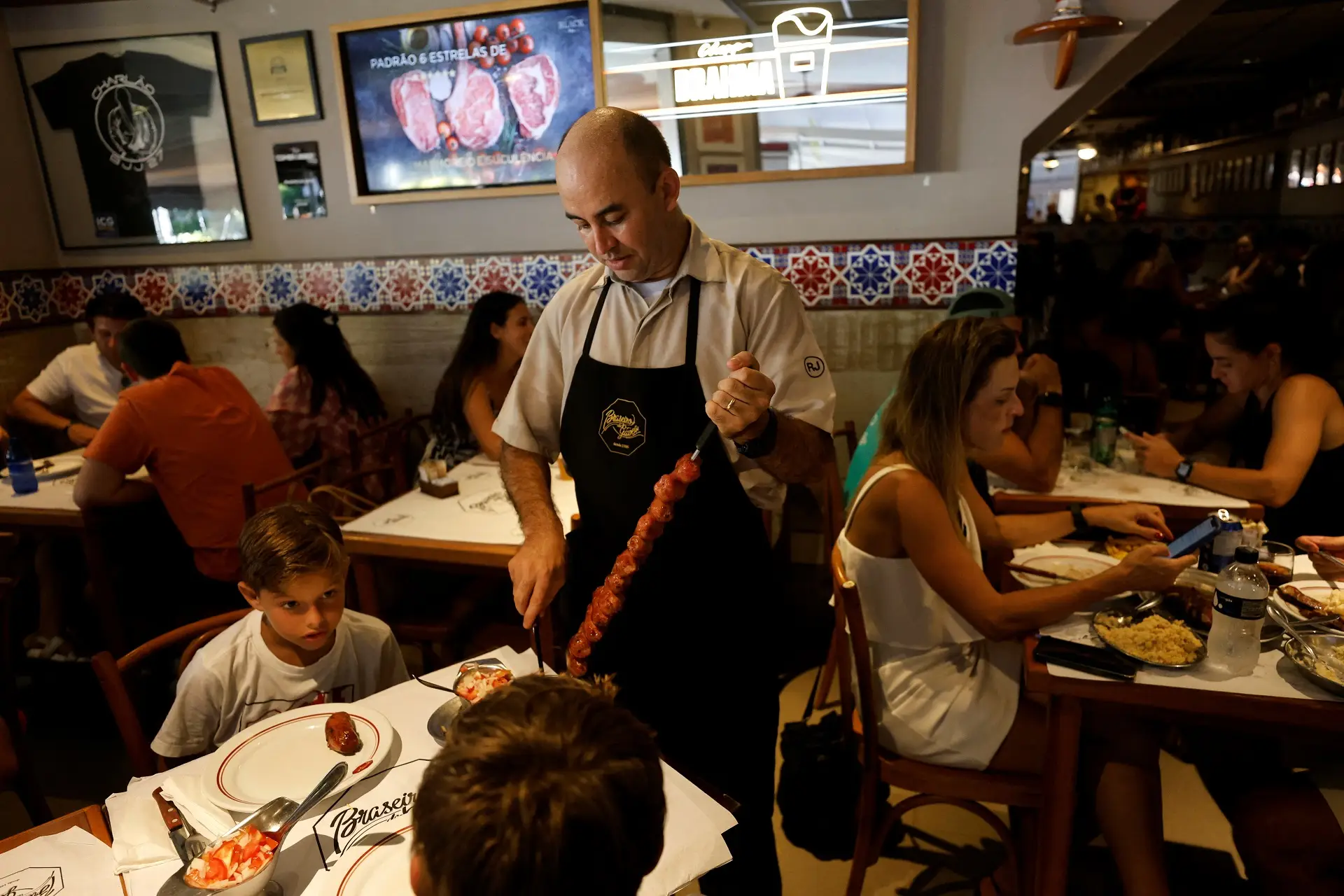
However, dining out became more expensive, with food consumed away from home accelerating by 0.68%, pushed up by snacks and meals. Further dampening inflationary pressures were decreases in fuel prices (-0.46%) and electricity (-0.38%). Despite the latter’s reduction, it still reflects the impact of the red tariff level 1.
Underlying Inflation Shows Signs of Moderation
Despite the slight uptick in the headline IPCA-15, a closer look at the underlying components suggests continued price stability. Leonardo Costa highlighted that core services inflation came in below expectations, with positive surprises in areas like vehicle services and rent. The three-month moving average of this indicator continues its downward trend, falling from 4.76% to 4.44%.
André Valério noted that the average of core inflation measures maintains a downward trend in its quarterly moving average, reaching 0.23%, the lowest point since September 2023. The diffusion index, which measures the breadth of price increases, rose to 55% from 51%, a contained level that is consistent with a disinflationary process.
“We maintain our expectation that the full IPCA will continue to decelerate, which would cause inflation to end 2025 within the ceiling of the 4.50% target,” Valério projected. Felipe Queiroz, chief economist at the Paulista Supermarkets Association (Apas), commented that these numbers reflect an economy characterized by stability and growth driven by household consumption.
Interest Rate Cut Expected in January
Valério further stated that the latest data reinforces the analysis that conditions are favorable for the Monetary Policy Committee (Copom) to initiate a cycle of Selic rate cuts at its January meeting, with a projected reduction of 25 basis points. Cristiano Oliveira, director of economic research at Banco Pine, anticipates that the benchmark interest rate will approach 12% by the end of 2026, with his institution forecasting 11.5%.
“We see a risk of the market overreacting and pricing in a more intense cycle than currently anticipated,” Oliveira cautioned. The consistent moderation in food prices and the controlled underlying inflation are key factors supporting these expectations for a looser monetary policy in the near future.

Empowering you to master your money with confidence and clarity. On this channel, we break down personal finance—from budgeting basics and saving smarter to debt-free strategies and practical investing—all in easy-to-understand language.
Expect weekly deep dives into real-life financial questions, step-by-step tutorials, and expert insights that make money topics approachable and actionable. Whether you’re building emergency savings, paying off loans, or planning for the future, you’re in the right place to get informed, empowered, and financially confident.