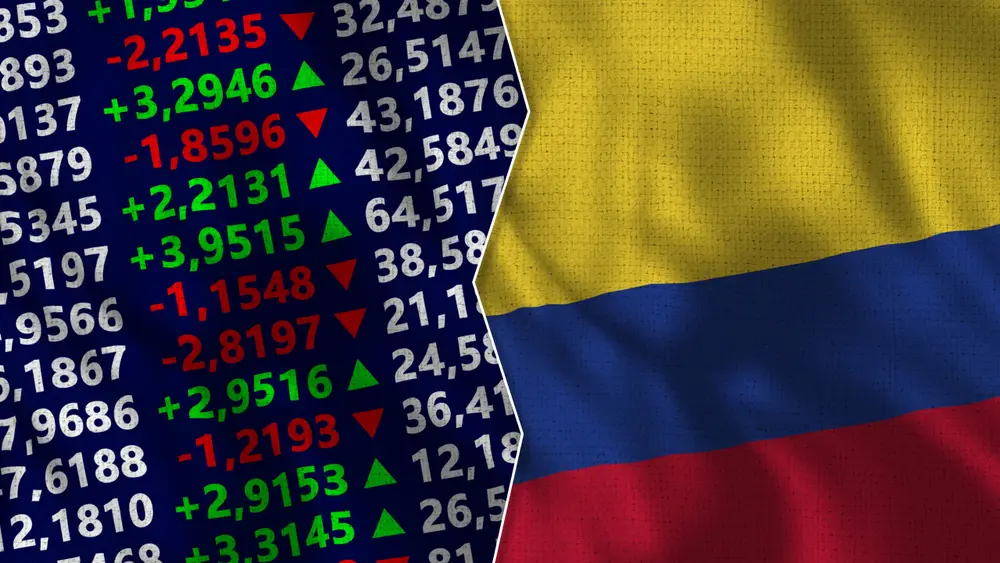
The international credit rating agency Fitch Ratings has significantly downgraded Colombia’s credit rating, citing persistent large fiscal deficits that are projected to increase the government’s overall debt relative to its Gross Domestic Product (GDP) in the medium term. This move signals growing concerns about the nation’s economic stability and its ability to manage its finances effectively.
Fitch’s decision highlights a lack of a credible fiscal anchor, increasing rigidity in government spending, and potential political hurdles in implementing revenue-generating measures. These factors are expected to challenge fiscal consolidation efforts, regardless of the outcome of the upcoming 2026 elections, creating an uncertain path forward for the Colombian economy.
This downgrade, which reduces Colombia’s long-term foreign currency issuer default rating from BB+ to BB, with a stable outlook, comes as the country navigates a complex economic and political environment. The agency’s assessment underscores the challenges ahead for policymakers in the coming years. The information was disclosed by Fitch Ratings in a statement released on Tuesday evening.
Persistent Fiscal Deficits Pose Major Challenge
Fitch Ratings projects a central government fiscal deficit of 6.5% of GDP in 2025, a figure notably higher than previously anticipated at the end of 2024. This persistent deficit is a primary driver behind the increased government debt levels. The agency’s analysis points to significant structural issues contributing to this fiscal imbalance.
Spending Rigidity Limits Fiscal Flexibility
A key concern for Fitch is the rigidity of Colombia’s government spending. The agency estimates that approximately 88% of government expenditures are allocated to public salaries, pensions, transfers, and interest payments. This high level of mandatory spending significantly limits the government’s flexibility to implement substantial cuts or reallocate resources to address fiscal deficits.
Economic Growth Forecast and Political Uncertainty
Despite the fiscal challenges, Fitch forecasts a moderate economic growth for Colombia, projecting 2.9% for 2026, an increase from the 2.7% anticipated for 2025. This growth is expected to be supported by resilient consumption and an incipient recovery in investments. However, the upcoming presidential elections, scheduled for May 31, 2026, add a layer of political uncertainty.
The selection of Senator Paloma Valencia by the Centro Democrático party as their candidate signals a potential shift in the political landscape. This move sets the stage for a contest against the preferred successor of President Gustavo Petro, further influencing the economic policy direction and the potential for fiscal reforms.
Factors Supporting and Limiting Colombia’s Ratings
Fitch acknowledges that Colombia’s ratings are supported by a history of maintaining macroeconomic and financial stability through various shocks, partly bolstered by an independent central bank. However, the agency also points to significant limitations, including high fiscal deficits, rising debt-to-GDP ratios, a heavy interest burden, and a reliance on commodities, as key factors constraining the country’s creditworthiness.

Empowering you to master your money with confidence and clarity. On this channel, we break down personal finance—from budgeting basics and saving smarter to debt-free strategies and practical investing—all in easy-to-understand language.
Expect weekly deep dives into real-life financial questions, step-by-step tutorials, and expert insights that make money topics approachable and actionable. Whether you’re building emergency savings, paying off loans, or planning for the future, you’re in the right place to get informed, empowered, and financially confident.