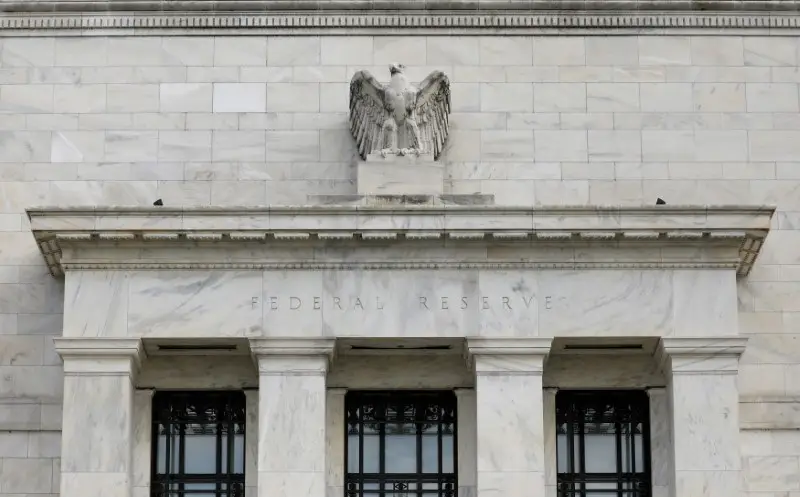
The U.S. economy has demonstrated a steady, albeit subdued, performance in recent weeks, according to the Federal Reserve’s latest Beige Book report. While overall economic activity has seen minimal shifts, the report highlights a notable cooling in the labor market, with employment weakening in approximately half of the Fed’s 12 districts.
Consumer spending has also experienced a downturn, contributing to a picture of an economy that, while stable, is showing signs of a gradual deceleration. This trend is likely to intensify discussions about the future direction of U.S. monetary policy.
The information compiled in the Beige Book, a collection of anecdotal evidence from businesses across the country, is crucial for Fed policymakers as they weigh their next moves. The report comes at a critical juncture, with markets increasingly anticipating further interest rate cuts.
Economic Activity Holds Steady, Labor Market Shows Signs of Cooling
The Federal Reserve’s latest ‘Beige Book’ report indicates that economic activity across the United States has remained largely unchanged since its previous assessment. This stability is observed in most of the 12 Federal Reserve districts, although a couple have reported modest declines, and one noted slight growth.
However, a more significant signal emerges from the employment sector. The report explicitly states that employment has softened, with roughly half of the districts experiencing weaker labor demand. This indicates a shift in the hiring landscape.
Hiring Freezes and Natural Attrition Outpace Mass Layoffs
Despite an increase in announcements of mass layoffs by some major corporations, the report clarifies that hiring freezes and natural attrition are more prevalent methods for reducing workforce size. This suggests that many businesses are opting for less drastic measures to manage their staffing levels.
Contacts within the districts frequently mentioned limiting staff numbers through hiring freezes, filling only essential replacement positions, and relying on employees leaving voluntarily. This approach contrasts with widespread, large-scale dismissals, signaling a more cautious approach to workforce adjustments.
Consumer Spending Declines, Adding to Economic Concerns
Adding to the picture of a moderating economy, the Beige Book also points to a decrease in consumer spending. This decline in consumer activity can have a ripple effect throughout various sectors, further influencing economic growth projections.
The combination of a cooling labor market and reduced consumer spending provides a complex backdrop for the Federal Reserve. Policymakers are tasked with balancing the need to support economic growth with the imperative to manage inflation.
Labor Market Data Suggests Gradual Softening
Current indicators, such as the latest jobless claims data, corroborate the Beige Book’s findings of a gradually softening labor market. While new unemployment claims fell to their lowest level since April, the number of individuals remaining on unemployment benefits for extended periods has stabilized near a four-year high.
This suggests that while mass layoffs might not be dramatically increasing, the unemployed are finding it more challenging to secure new employment. This dual observation underscores the nuanced state of the U.S. job market.
Markets Anticipate Further Fed Rate Cuts
In light of these economic signals, financial markets are increasingly pricing in the likelihood of a third consecutive interest rate cut by the Federal Reserve at its upcoming December meeting. This expectation has been influenced by recent statements from Fed officials, including New York Fed President John Williams, who indicated room for short-term rate reductions.
The Federal Reserve remains divided on the necessity and potential risks of further monetary easing, particularly concerning inflation remaining above the central bank’s 2% target. Nevertheless, the prevailing sentiment in the markets points towards an imminent rate cut, a decision that will be closely watched by investors and businesses alike.

Empowering you to master your money with confidence and clarity. On this channel, we break down personal finance—from budgeting basics and saving smarter to debt-free strategies and practical investing—all in easy-to-understand language.
Expect weekly deep dives into real-life financial questions, step-by-step tutorials, and expert insights that make money topics approachable and actionable. Whether you’re building emergency savings, paying off loans, or planning for the future, you’re in the right place to get informed, empowered, and financially confident.