
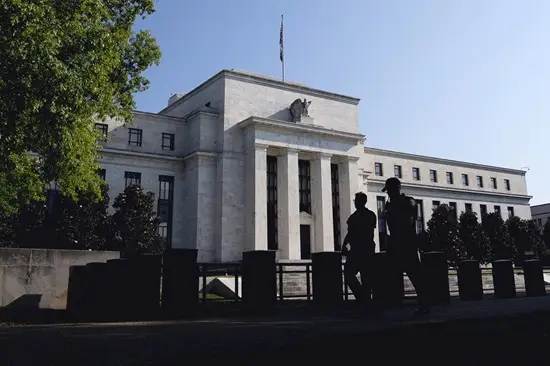
Federal Reserve officials who dissented on the recent decision to cut interest rates expressed significant concerns regarding the persistent high levels of inflation. Their votes against the rate reduction were primarily driven by a perceived lack of sufficient recent data to justify easing monetary policy, especially with businesses and consumers still vocal about rising prices.
This divergence in opinion highlights a key debate within the central bank about the appropriate timing for monetary easing, balancing the need to stimulate the economy against the imperative to bring inflation back to the Fed’s 2% target.
The lack of up-to-date official figures, a consequence of the federal government shutdown in October and November, further complicated the decision-making process for these dissenting members. According to Reuters, the core issue revolves around the interpretation of current economic signals and the potential risks associated with premature rate cuts.
Goolsbee Cites Inflation Concerns and Data Lag
Austan Goolsbee, President of the Federal Reserve Bank of Chicago, stated that he favored waiting for more comprehensive data on inflation and the labor market before implementing a rate cut. He emphasized that delaying the decision until early next year would have allowed policymakers to benefit from updated government reports, with crucial releases expected soon.
Goolsbee argued that this cautious approach would pose minimal additional risk to a labor market that appears to be experiencing only a moderate cooling. He was one of three officials who voted against the 0.25 percentage point cut, which brought the federal funds rate to a range of 3.50% to 3.75%.
“We should have waited to get more data, especially on inflation,” Goolsbee remarked. He noted that inflation has been above the Fed’s target for four and a half years, with progress stagnating for several months. He also pointed out that nearly all business and consumer contacts in his district recently identified prices as a primary concern.
Schmid Advocates for Maintaining Restrictive Policy
Jeffrey Schmid, President of the Federal Reserve Bank of Kansas City, also dissented, advocating for the maintenance of the current interest rate. In his view, inflation remains “too high,” and monetary policy should continue to be moderately restrictive to keep it in check.
Schmid stated that he sees an economy demonstrating good momentum and elevated inflation, which suggests that monetary policy is not excessively restrictive. He believes that little has changed since he opposed an earlier rate cut in October, with inflation still above the target and the labor market largely balanced.
The most recent official data available, from September, indicated a slight increase in the unemployment rate to 4.4% from 4.3%, and the Fed’s preferred inflation measure edged up to 2.8% from 2.7%. The pace of price increases has been steadily rising since April, partly attributed to the pass-through of import tax increases to consumers.
Miran Advocated for a Larger Rate Cut
Adding another layer to the dissent, Stephen Miran, a member of the Fed’s board, had previously advocated for a more substantial rate cut of 50 basis points. This position, while also a deviation from the majority, stems from a different concern, potentially related to economic growth or market stability, though not detailed in the provided sources.
Both Goolsbee and Schmid will not be voting members of the Federal Open Market Committee (FOMC) in the upcoming year. Conversely, Anna Paulson, President of the Federal Reserve Bank of Philadelphia, who will gain voting rights, expressed a different concern, focusing on the fragility of the labor market over inflationary risks.
Paulson’s Focus on Labor Market Fragility
Anna Paulson indicated that she remains “a little more worried about the fragility of the labor market than the upside risks to inflation.” This perspective is partly due to her view that inflation has a good chance of falling over the next year, especially as the impacts of tariffs diminish. Tariffs have been a significant contributor to inflationary pressures exceeding the Fed’s target this year.
Goolsbee expressed optimism that interest rates could decline significantly next year, contingent on future data showing inflation returning to the Fed’s 2% target. The differing viewpoints among Fed officials underscore the complex economic landscape and the challenges in calibrating monetary policy effectively in the current environment.

Empowering you to master your money with confidence and clarity. On this channel, we break down personal finance—from budgeting basics and saving smarter to debt-free strategies and practical investing—all in easy-to-understand language.
Expect weekly deep dives into real-life financial questions, step-by-step tutorials, and expert insights that make money topics approachable and actionable. Whether you’re building emergency savings, paying off loans, or planning for the future, you’re in the right place to get informed, empowered, and financially confident.