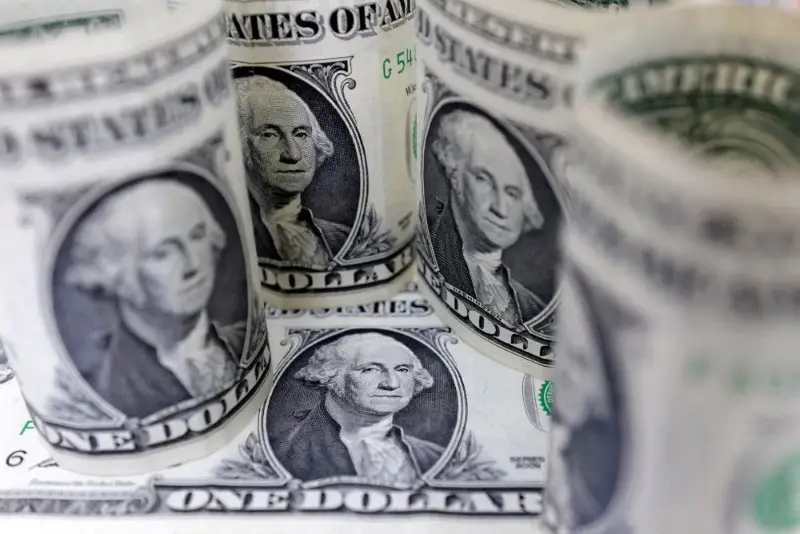
The recent appreciation of the US dollar against the Brazilian Real, observed since last Friday’s announcement of Senator Flávio Bolsonaro’s (PL) presidential candidacy for 2026, is expected to have a negligible effect on the Central Bank’s interest rate decision in January. This assessment comes from Leonardo Porto, Chief Economist at Citi Brazil.
Speaking to journalists in São Paulo, Porto highlighted that the dollar was trading around R$5.47 on Tuesday morning. This figure is only slightly above the R$5.40 exchange rate that the Central Bank considered during its most recent Monetary Policy Committee (Copom) meeting.
“The Central Bank will not use R$5.47 (as a reference in its decision). It uses the average of the ten days,” Porto explained, referring to the calculation method based on the ten days preceding each Copom meeting. “By governance, it will use something close to R$5.40. So, zero impact,” he opined.
Key Factors for January’s Decision
Porto emphasized that the primary driver for the January interest rate decision will be the Copom’s communication this week. Market consensus overwhelmingly anticipates a **maintenance of the Selic base rate at 15%** on Wednesday. However, financial institutions will be closely scrutinizing the accompanying statement for clues about the Central Bank’s future monetary policy actions.
The Citi team forecasts a 25 basis-point cut in the Selic rate in January. Nevertheless, Porto cautioned that this prediction is contingent on the Central Bank’s communication following the upcoming meeting. He noted, “As I read the (November) statement today, I see a constraint on cutting interest rates at the subsequent meeting (January), unless the scenario changes.” He added, “Therefore, as I have an interest rate cut (forecast) in January, I expect there to be a change in communication.”
Market Reaction to Political Developments
Since Friday, when news emerged of former President Jair Bolsonaro endorsing his son, Flávio, as a presidential candidate, Brazilian assets have reacted negatively. This sentiment stems from the perception that the senator’s candidacy might undermine the prospects of São Paulo Governor Tarcísio de Freitas (Republicanos), who is considered a more competitive contender against President Luiz Inácio Lula da Silva.
In response to these political developments, the dollar saw a significant surge against the Real, a trend that continued into Tuesday. Interbank Deposit (DI) rates also experienced firm increases.
“The Central Bank, in principle, does not act on political issues, but rather on how politics affects the economy,” Porto stated. He elaborated that the January decision on the Selic rate will depend on the “overall picture,” not solely on the exchange rate.
Broader Economic Indicators
Beyond the exchange rate, Porto identified several other factors that will influence a potential interest rate cut in early 2026. These include the re-anchoring of inflation expectations as reflected in the Focus bulletin, the economic slowdown indicated by the third-quarter Gross Domestic Product (GDP) figures, and signs of cooling in the labor market.

Empowering you to master your money with confidence and clarity. On this channel, we break down personal finance—from budgeting basics and saving smarter to debt-free strategies and practical investing—all in easy-to-understand language.
Expect weekly deep dives into real-life financial questions, step-by-step tutorials, and expert insights that make money topics approachable and actionable. Whether you’re building emergency savings, paying off loans, or planning for the future, you’re in the right place to get informed, empowered, and financially confident.