
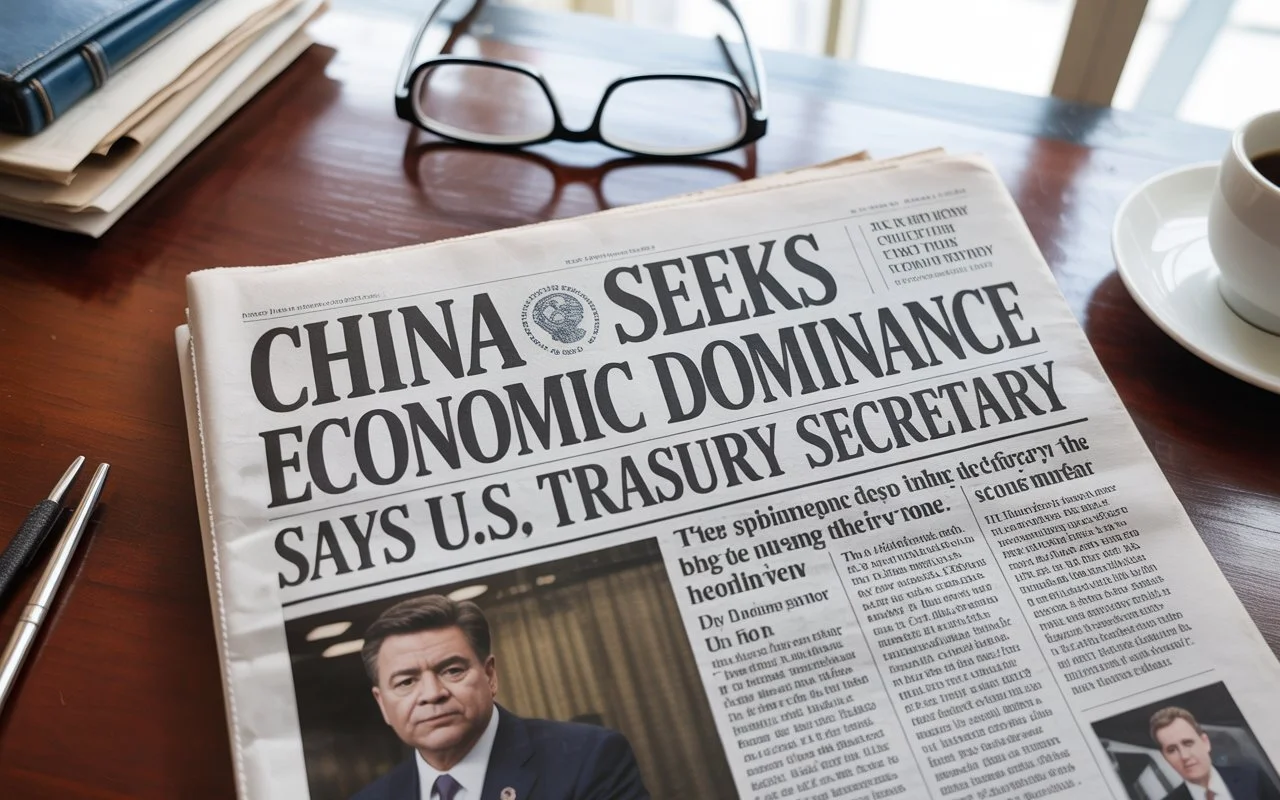
In a world where global economies are more intertwined than ever, every policy change by a superpower can send ripples across markets, businesses, and households alike. That’s exactly what happened this week, as Scott Bessent, the U.S. Treasury Secretary, publicly accused China of taking deliberate measures to undermine the global economy. In a candid interview with the Financial Times, Bessent claimed that China’s recent export restrictions on critical minerals and sanctions on companies linked to the United States are signs of a shaky Chinese economy, and might be aimed at “exporting their recession” to the rest of the world.
What’s behind these tensions? How might these escalating trade moves affect you, the American economy, and the broader global landscape? Let’s break down the key points and unpack the bigger picture.
China’s Economic Moves: Sabotage or Survival?
According to Secretary Bessent, China’s latest trade actions—including new restrictions on exports of vital minerals and penalties on select U.S.-connected businesses—signal more than just routine trade disputes. He argues these are signs of economic weakness in China.
“This is a sign that their economy is fragile, and they want to bring everybody down with them,” Bessent told the Financial Times.
Bessent even speculated that China’s tactics resemble a “Leninist business model,” which he described as: “hurting your own customers in the hope of gaining advantage.” Given China’s dominant position as a global supplier, Bessent warned, such moves could easily backfire—hurting China more than anyone else by slowing worldwide demand for its products.
Trade Tensions Hit New Highs
This latest spike in U.S.-China trade friction comes after Beijing imposed sanctions on five American subsidiaries of the South Korean shipbuilding giant Hanwha Ocean. China accuses these firms of aiding U.S. investigations into the Chinese shipping industry—a move widely interpreted as direct retaliation for ongoing American scrutiny. This is just the latest chapter in a series of tit-for-tat measures between the two superpowers, spanning strategic industries like semiconductors, maritime exploration, and clean energy.
Battlegrounds on Multiple Fronts
The sticking points between the U.S. and China now go well beyond tariffs. They stretch across:
- Semiconductors: Each nation seeks supremacy in next-generation microchips.
- Shipping and Maritime: U.S. probes into Chinese shipbuilders spark export bans.
- Critical Minerals: Access to rare earth elements essential for tech and defense industries.
- Clean Energy: Both sides jockey for leadership in green technology supply chains.
The Power Struggle Inside China
Bessent explained to the Financial Times that the new trade measures are partly the result of an internal tug-of-war within the Chinese government—specifically between the Ministry of Finance and the more security-focused Ministry of Commerce. According to him, hardline officials from the Commerce Ministry and state security have recently assumed a bigger role in shaping economic policy, pushing for tougher measures against foreign interests even at the risk of damaging international relations and China’s own economic standing.
“They’re finding that exporting their crisis could worsen their own global position,” Bessent cautioned.
A Pivotal Meeting on the Horizon
These growing U.S.-China trade tensions could reach a flashpoint soon. At the end of October, former President Donald Trump and Chinese leader Xi Jinping are expected to meet in South Korea. Sources speaking with the Financial Times revealed that if no progress is made, Washington is readying its own set of countermeasures. Among them: imposing new requirements on software exports to China—a move likely to escalate the standoff even further.
Market Reactions: Immediate and Dramatic
The fallout from China’s clampdown on critical minerals was felt almost instantly. Shares of American mining companies specializing in these minerals soared by as much as 38% in pre-market trading on Tuesday, as investors bet on higher prices and tighter supplies. Meanwhile, futures for the S&P 500 and Nasdaq slipped, reflecting broader market anxiety over deteriorating U.S.-China economic relations.
What are “Critical Minerals” and Why Do They Matter?
Critical minerals—like rare earth elements—are indispensable for manufacturing everything from smartphones to military technology to electric vehicle batteries. China is currently the world’s leading supplier, meaning that any disruption affects global supply chains, U.S. manufacturing, and the rollout of next-generation technologies.
Key Takeaways: The U.S.-China Economic Tug-of-War
Here are the main points you need to know:
- China’s Restrictive Measures: Beijing’s export limits on critical minerals and sanctions on U.S.-linked firms signal economic anxiety—and have major global ripple effects.
- U.S. Government Response: Treasury Secretary Bessent accuses China of trying to export its recession, upping the rhetorical and policy stakes.
- Trade Disputes Escalate: Tensions now span tech, maritime, and energy sectors, with looming threats of new restrictions on software and high-tech exports.
- Internal Chinese Politics: Power struggles within the Chinese government are shaping hardline policies, with security agencies gaining greater influence.
- Market Impact: U.S. mining stocks surge while broader markets react with caution to the growing risks.
Conclusion: Staying Informed and Prepared
As the world watches these high-stakes maneuvers unfold, it’s clear that the U.S.-China economic relationship affects us all—from Wall Street to Main Street. Policymakers, investors, and everyday Americans need to stay tuned as the upcoming Trump-Xi summit could set the tone for months or even years to come. Will cooler heads prevail, or will the global economy weather more storms ahead?
It’s never been more important to stay informed and engaged. For in-depth coverage, check out the Financial Times. And if you want to understand what these shifts could mean for your own finances, try tools like the XP Simulator, which can show you how to maximize your investment potential—even in turbulent times.
Want to ensure your portfolio is resilient in a rapidly changing world? Follow the latest news, seek expert insight, and make informed decisions about your economic future.

Empowering you to master your money with confidence and clarity. On this channel, we break down personal finance—from budgeting basics and saving smarter to debt-free strategies and practical investing—all in easy-to-understand language.
Expect weekly deep dives into real-life financial questions, step-by-step tutorials, and expert insights that make money topics approachable and actionable. Whether you’re building emergency savings, paying off loans, or planning for the future, you’re in the right place to get informed, empowered, and financially confident.