Industrial Output Loses Momentum, Showing Divergent Sector Performance
Brazil’s industrial production is exhibiting a notable loss of momentum, with recent data revealing a complex picture of sector-specific performance. While some areas demonstrate resilience, the overall trend points towards a broader economic slowdown, prompting concerns among analysts.
The latest figures highlight a divergence, with the manufacturing sector experiencing a contraction while the extractive industry continues to expand robustly. This mixed performance is a key indicator of the challenges and opportunities facing Brazil’s industrial landscape in the current economic climate.
Experts are closely monitoring these trends, with projections suggesting a subdued outlook for the remainder of the year and into the next. The influence of monetary policy and global economic factors are significant drivers of this cautious sentiment, as detailed in recent analyses.
Manufacturing Sector Declines, Extractive Industry Surges
In October, the industrial manufacturing sector saw a decline of 0.6%. However, this was partially offset by a strong performance in the extractive industry, which grew by 3.6%. This dynamic prevented a more significant downturn in the overall industrial production index, according to analysis from XP.
Looking at the broader economic categories within the industrial survey, three out of the four main ones presented positive monthly results. The production of capital goods, for instance, increased for the second consecutive month, showing a 1.0% rise. Despite this monthly gain, this category has experienced a nearly 3% decrease compared to the previous year, a trend attributed by XP to restrictive interest rates and growing macroeconomic uncertainty.
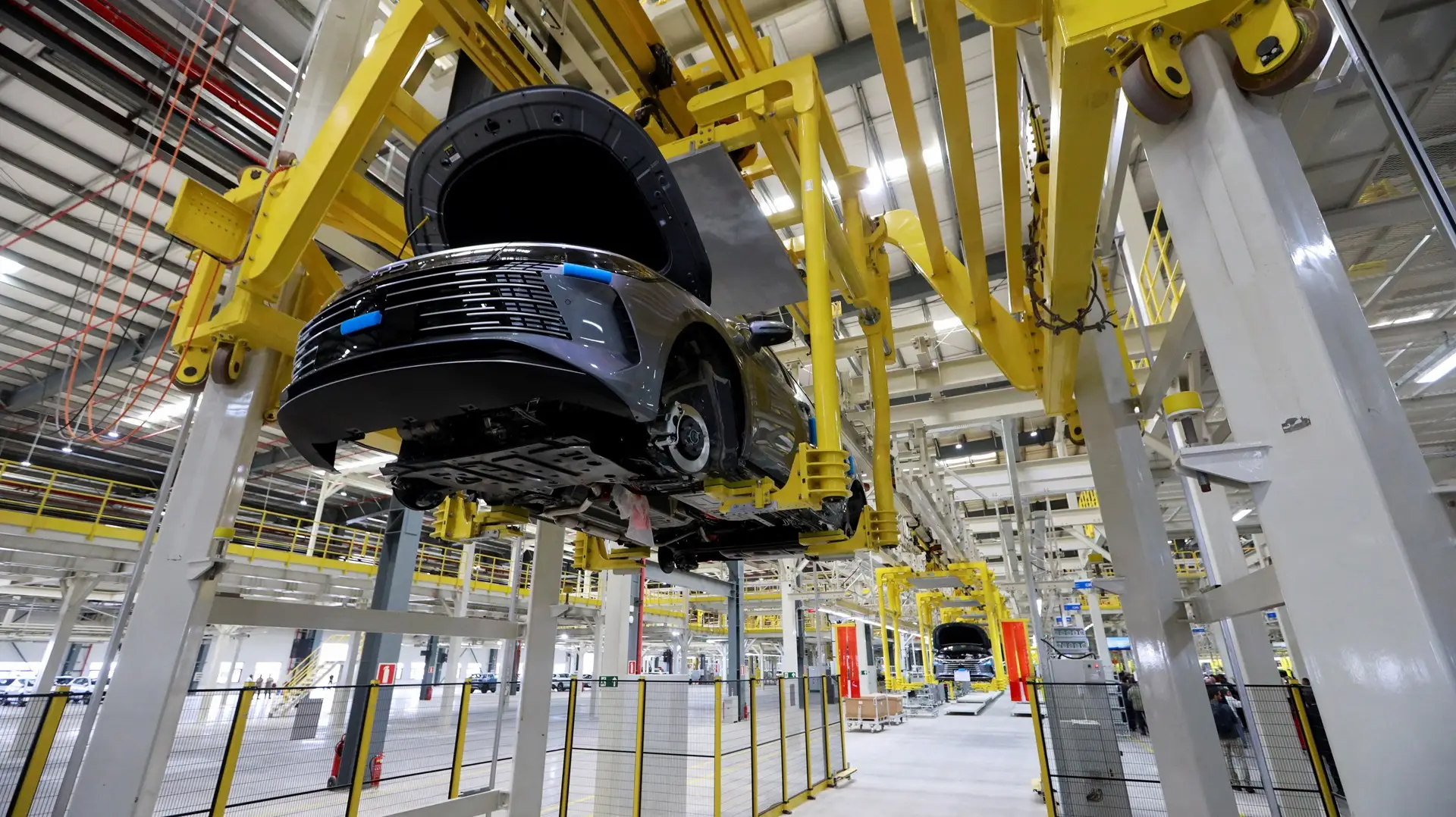
The consumer durables category also demonstrated growth, rising by 2.7% in October. This expansion was largely driven by a recovery in electronics (+4%) and motor vehicles (+2%). Nevertheless, XP anticipates a modest short-term performance for this sector, citing tighter credit conditions and elevated inventory levels as potential headwinds.
Similarly, the consumer semi and non-durables category advanced by 1.0% in October. This growth was primarily fueled by a fourth consecutive increase in food products, which have seen a cumulative expansion of 5.5% over the period. This segment’s resilience highlights the consistent demand for essential goods.
Intermediate Goods Face Challenges, Impacting Overall Output
In contrast, the intermediate goods category experienced a decline for the second consecutive month, falling by 0.8%. This is a significant development, as this category represents approximately 60% of the general industrial index. XP noted that this segment was heavily impacted by a reduction in the production of petroleum derivatives.
Valério, from Inter, commented that the October results reinforce the dynamic of growth accommodation within the industrial sector. He highlighted that the sector is particularly exposed to international trade policies, as Brazilian industrial products have not benefited from tariff mitigations seen elsewhere. “Furthermore, industrial production, being more capital-intensive, is more sensitive to monetary policy, and the tightening of financial conditions should continue to be a counteracting force for the sector in the coming readings. We expect a continuation of the accommodation trend, with the sector ending the year with a 0.5% increase,” he estimated.
Cautious Projections for the Industrial Sector
XP’s outlook for the Brazilian industry in the short term is also one of stability. “Contractionary monetary conditions and supply constraints will continue to weigh on the sector. Nevertheless, labor market resilience and expected economic stimulus measures for next year should prevent a recessionary cycle in the sector as a whole. We predict that total industrial production will increase by 1.0% in 2025 and 1.3% in 2026,” XP described.
Claudia Moreno, an economist at C6 Bank, believes the October data reinforces the assessment that the Brazilian industry as a whole has lost steam. “Our expectation is that the sector will end the year with growth close to 1%, well below the 3.1% expansion recorded in 2024,” she stated. Moreno added, “The slowdown of industry throughout 2025 is one of the signs that the Brazilian economy, in general, should grow less than in 2024. This loss of strength is a reflection of high interest rates, which reduce the room for new investments and limit the growth of economic activity. Our expectation is that GDP will advance 2% in 2025 and 1.7% in 2026.”
Goldman Sachs pointed out that the industrial sector has been facing difficulties since mid-2024, with industrial production currently almost 1% below its June 2024 level. For the future, the sector is expected to find support in significant fiscal transfers to families, real wage growth, and government-sponsored industrial policies, but will continue to face challenges due to tighter monetary and financial conditions.
Ariane Benedito, chief economist at PicPay, noted that the October reading, following a September decline, confirms an irregular activity trajectory. “For the final months of 2025, we maintain a scenario of volatility and stability in the moving average, with a projection of marginal growth in November and December. With this, we estimate that the industry will end 2025 with an advance close to 0.9%, reflecting a year of limited recovery, heterogeneous performance among sectors, and high sensitivity to macroeconomic conditions,” Benedito stated.
Bradesco’s analysis of the IBGE data reinforces the perception of a deceleration in economic activity. “For the fourth quarter, we project GDP stability after an estimated 0.3% increase in the third quarter. For 2025 as a whole, we project real GDP growth of 2.0%,” the bank commented.

Empowering you to master your money with confidence and clarity. On this channel, we break down personal finance—from budgeting basics and saving smarter to debt-free strategies and practical investing—all in easy-to-understand language.
Expect weekly deep dives into real-life financial questions, step-by-step tutorials, and expert insights that make money topics approachable and actionable. Whether you’re building emergency savings, paying off loans, or planning for the future, you’re in the right place to get informed, empowered, and financially confident.