
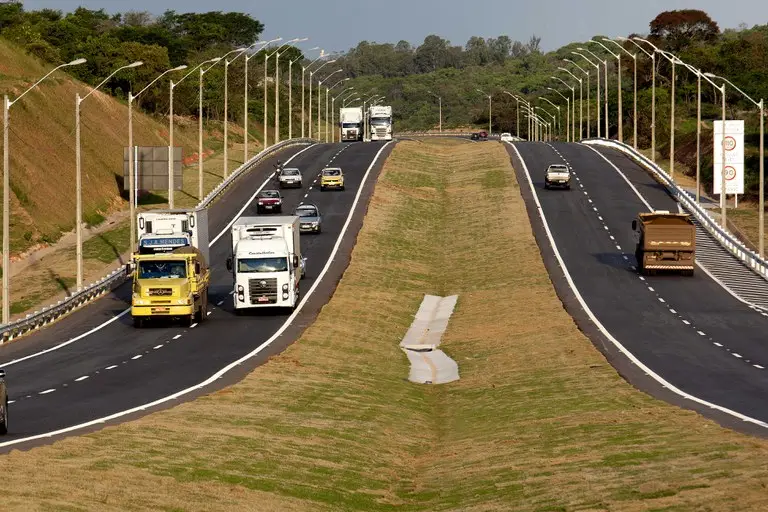
A significant dispute is unfolding in Brazil’s infrastructure sector, with the Tribunal de Contas da União (TCU), the country’s federal audit court, intervening in a conflict over access to crucial operational data for the BR-381 highway, also known as Fernão Dias. The TCU has issued a directive compelling the National Land Transport Agency (ANTT) to ensure immediate and continuous access for the new concessionaire, Motiva, to all technical and operational information pertaining to the highway.
This intervention comes after allegations that the previous operator, Arteris, was attempting to obstruct Motiva’s access to vital data. The situation has escalated to the point where the Federal Police have been involved, underscoring the seriousness of the dispute and its potential impact on the smooth transition of highway management. The case highlights the critical importance of data integrity and seamless information transfer in large-scale infrastructure projects and concession agreements.
The recent transfer of operational and administrative control of the BR-381, a key 569 km stretch connecting Belo Horizonte (MG) and São Paulo (SP), from Arteris to Motiva, formalized by the Ministry of Transport, forms the backdrop of this controversy. The TCU’s decisive action aims to prevent any disruption in the management and operation of this vital transportation artery, ensuring that the new concessionaire has the necessary tools and information to fulfill its responsibilities effectively. This development, as reported by Estadão Conteúdo, signals a robust stance by regulatory bodies to uphold contractual obligations and ensure public service continuity.
The financial implications of such disputes can be substantial, affecting investor confidence, operational efficiency, and ultimately, the quality of services provided to the public. Understanding the nuances of concession agreements, regulatory oversight, and the role of entities like the TCU is crucial for anyone involved in or impacted by Brazil’s burgeoning infrastructure investment landscape. This situation serves as a case study in the complexities of public-private partnerships and the legal frameworks designed to govern them.
The Core of the Dispute: Data Access and Operational Continuity
The crux of the matter, as detailed in the TCU’s ruling, revolves around the alleged unwillingness of Arteris to provide Motiva with the necessary technical and operational data. According to the representation filed and subsequently investigated by the TCU, Arteris may have expressed intentions to reset equipment and refrain from transferring content stored in its corporate digital environments. Such actions, if proven, could severely hamper Motiva’s ability to assume control and manage the Fernão Dias highway effectively from day one.
Understanding Highway Concessions and Regulatory Oversight
Highway concessions are a common mechanism in many countries, including Brazil, for financing, building, and operating road infrastructure. In this model, a private company (the concessionaire) is granted the right to operate a public road for a specified period, usually in exchange for collecting tolls and maintaining the road to certain standards. The government, through agencies like the ANTT, oversees these concessions to ensure that the terms of the agreement are met and that the public interest is served.
The TCU plays a vital role as an independent audit court. Its mandate includes overseeing the proper use of public funds and ensuring the legality, legitimacy, and efficiency of government operations, including those managed through concessions. When disputes arise, such as the one between Arteris and Motiva, the TCU can investigate and issue binding decisions to resolve the issues and prevent financial losses or service disruptions.
The Role of the ANTT and the Federal Police
The ANTT, as the primary regulatory agency for land transport in Brazil, is tasked with managing and supervising transport concessions. In this instance, the TCU’s order directly targets the ANTT, instructing it to actively facilitate Motiva’s data access. This places a significant responsibility on the agency to ensure compliance and mediate the situation effectively.
The involvement of the Federal Police signifies that the matter has moved beyond a civil or administrative dispute and may involve potential legal infractions. While the specific nature of these potential infractions is not detailed in the initial reports, the escalation suggests that the actions of the previous operator could be subject to criminal investigation, particularly if they are deemed to have intentionally obstructed a lawful transfer of public assets and responsibilities.
Financial and Investment Implications of Infrastructure Disputes
Disputes like this can send ripples through the **investment community**. For investors in infrastructure, **predictability** and **transparency** are paramount. When concession transfers are marred by conflict, it can raise concerns about the stability of the regulatory environment and the ease with which contracts are honored. This uncertainty can lead to increased **risk premiums** on future investments, potentially driving up the cost of capital for infrastructure projects in Brazil.
Furthermore, operational disruptions, even temporary ones, can lead to **revenue losses** for the concessionaire and potentially impact the quality of service for users. If Motiva faces significant delays or challenges in accessing data, its ability to implement necessary improvements, manage traffic flow efficiently, and collect tolls could be compromised. This can affect its financial projections and its ability to meet its debt obligations or deliver returns to its shareholders.
Arteris’s Position and the Importance of Governance
In its statement, Arteris has indicated that it was aware of the TCU’s precautionary measure and intends to provide clarifications. The company refutes all accusations made by Motiva, emphasizing its adherence to the highest standards of corporate governance and ethical conduct. This highlights the importance of strong **corporate governance** in managing public-private partnerships. Transparent and ethical practices are essential to building trust among stakeholders, including regulatory bodies, investors, and the public.
The assertion by Arteris that integrity is a fundamental pillar of its operations underscores the broader expectation for companies operating in the infrastructure sector. When such disputes arise, the credibility of the parties involved is often put to the test. The outcome of the TCU’s investigation and any subsequent legal proceedings will be closely watched to understand the full picture of the events and the accountability of each party.
Economic Impact of the BR-381 Highway
The BR-381 is not just another road; it is a critical economic corridor linking two of Brazil’s most important industrial and population centers. Its efficient operation is vital for the **logistics** of goods and the **mobility** of people. Any disruption or inefficiency on this highway can have a cascading effect on the **economy**, increasing transportation costs for businesses and potentially impacting consumer prices. Ensuring a smooth transition of management is therefore of national economic importance.
The concession agreement for the BR-381 involves significant **capital investment** and long-term commitments. The success of this concession is a reflection of the viability of Brazil’s infrastructure development model. The current dispute, therefore, has implications beyond the immediate parties involved, touching upon the broader framework for attracting **foreign and domestic investment** into Brazil’s infrastructure sector.
Navigating Investment in Emerging Markets Infrastructure
For investors looking at infrastructure opportunities in emerging markets like Brazil, understanding the regulatory landscape and the potential for disputes is a key part of due diligence. Factors to consider include:
- Regulatory Framework Stability: How stable and predictable are the regulations governing concessions? Are there clear mechanisms for dispute resolution?
- Contractual Clarity: Are concession agreements well-defined, leaving little room for ambiguity regarding responsibilities and data transfer protocols?
- Enforcement Mechanisms: How effectively do regulatory bodies and courts enforce contract terms and protect the rights of all parties involved?
- Corporate Governance Standards: What are the governance practices of the companies involved? Do they align with international best practices?
- Political Risk: Infrastructure projects can be influenced by political changes. Assessing political risk is crucial for long-term investments.
The TCU’s intervention in the Fernão Dias case demonstrates a proactive approach by regulatory authorities to ensure that infrastructure projects function as intended. While disputes are an inherent part of complex business dealings, the swift and decisive action by the TCU aims to mitigate potential negative impacts and uphold the integrity of the concession system.
Future Outlook and Lessons Learned
The resolution of this dispute will likely set a precedent for future concession transfers and data access issues in Brazil. It underscores the need for meticulous planning and execution during the handover phase of infrastructure concessions. Both incoming and outgoing concessionaires must ensure that all contractual obligations, especially those related to information and asset transfer, are met without impediment.
For investors, this situation serves as a reminder to conduct thorough due diligence, not only on the financial and operational aspects of a project but also on the legal and regulatory environment. Understanding the potential for disputes and the mechanisms for their resolution is a critical component of managing **investment risk**.
The ultimate goal is to ensure that vital infrastructure like the BR-381 highway operates efficiently, safely, and reliably, contributing to economic growth and the well-being of citizens. The TCU’s decisive action in mandating data access for Motiva and involving the Federal Police is a significant step towards achieving this objective, reinforcing the importance of transparency and accountability in the management of public infrastructure.
FAQ
Q1: What is the main issue at the heart of the dispute concerning the BR-381 highway?
A1: The primary issue is the alleged obstruction by the former concessionaire, Arteris, in providing the new concessionaire, Motiva, with immediate and continuous access to essential technical and operational data of the BR-381 highway. This data is crucial for Motiva to effectively manage the road.
Q2: Who is the Tribunal de Contas da União (TCU) and what is its role in this case?
A2: The TCU is Brazil’s federal audit court, responsible for overseeing public spending and ensuring the legality and efficiency of government operations. In this case, the TCU has intervened by ordering the ANTT to ensure Motiva’s access to the data, acting as a regulatory enforcer.
Q3: Why has the Federal Police been involved in this dispute?
A3: The involvement of the Federal Police indicates that the dispute may have escalated beyond a civil or administrative matter, potentially involving legal infractions or criminal conduct. Their involvement suggests a probe into whether any laws were broken during the data access obstruction.
Q4: What are the potential financial consequences of this dispute for investors?
A4: Such disputes can increase the perceived risk of investing in Brazilian infrastructure, potentially leading to higher financing costs. It can also affect the financial performance of the concessionaires involved due to operational disruptions and legal costs, impacting investor confidence and future project viability.
Q5: How does the ANTT fit into this scenario?
A5: The Agência Nacional de Transportes Terrestres (ANTT) is the regulatory agency responsible for land transport concessions in Brazil. The TCU has directed the ANTT to take urgent action to guarantee Motiva’s access to the highway data, making the ANTT a key player in resolving the immediate issue.
Q6: What does Arteris’s statement imply about the situation?
A6: Arteris has acknowledged the TCU’s order and stated its intention to provide clarifications, while refuting the accusations. The company emphasized its commitment to corporate governance and ethical conduct, suggesting that they believe their actions were compliant and that the accusations are unfounded.
Q7: What is the economic significance of the BR-381 highway (Fernão Dias)?
A7: The BR-381 is a vital economic artery connecting Belo Horizonte and São Paulo, two major industrial and population centers in Brazil. Its efficient operation is critical for logistics, transportation of goods, and economic activity between these regions.
Q8: What lessons can be learned from this dispute for infrastructure investments?
A8: This case highlights the importance of thorough due diligence on regulatory environments, clear contractual terms, robust governance practices, and effective dispute resolution mechanisms when investing in infrastructure projects, especially in emerging markets. It also underscores the need for seamless data and asset transfer during concession handovers.
Q9: How might this dispute impact future concession auctions in Brazil?
A9: If the TCU’s intervention leads to a swift and fair resolution, it could bolster confidence in Brazil’s regulatory framework. Conversely, prolonged or unresolved disputes might deter investors due to perceived instability or increased regulatory risk, potentially affecting future auction values and participation.
Q10: What are the typical components of technical and operational data for a highway concession?
A10: This data typically includes traffic volume counts, toll collection system performance, maintenance records, structural integrity reports, emergency response protocols, traffic management system logs, and any historical operational performance metrics. This information is essential for planning, maintenance, and ensuring the safety and efficiency of the highway.

Empowering you to master your money with confidence and clarity. On this channel, we break down personal finance—from budgeting basics and saving smarter to debt-free strategies and practical investing—all in easy-to-understand language.
Expect weekly deep dives into real-life financial questions, step-by-step tutorials, and expert insights that make money topics approachable and actionable. Whether you’re building emergency savings, paying off loans, or planning for the future, you’re in the right place to get informed, empowered, and financially confident.