
Brazilian Food Prices: Record Harvest Eases Inflation in 2025, But Currency Shifts Threaten 2026 Relief
Brazilian consumers experienced an unexpected respite from rising food prices in 2025, a welcome change from typical seasonal increases. Record agricultural harvests within Brazil, coupled with robust yields in other key producing nations, played a significant role in lowering the cost of essential food items.
Furthermore, a notable depreciation of the US dollar against the Brazilian Real provided substantial relief, making imported goods and agricultural inputs more affordable. This combination of factors led to a remarkable deflationary period for food in the latter half of the year.
However, specialists are cautioning that this favorable scenario is unlikely to persist into 2026. While expectations point to another strong grain harvest, the positive impact of currency exchange rates may diminish, particularly in an election year for Brazil. This information was reported by Broadcast, the real-time news system of Grupo Estado, citing insights from various economic experts.
Harvest Boon Meets Currency Headwinds for 2026 Food Inflation
André Braz, coordinator of Price Indices at the Brazilian Institute of Economics of the Getulio Vargas Foundation (Ibre/FGV), explains that while a large grain harvest could theoretically help stabilize food prices, the currency exchange rate is a major wildcard. Improved export conditions and stronger relations with the United States have led to increased export volumes, meaning that a bumper crop might not necessarily translate to lower prices domestically if those goods are shipped abroad.
“Given that export conditions and relations with the United States have improved significantly, and our currency will remain devalued with no forecast of drastic exchange rate changes next year, this can help increase export volume. So, a super harvest doesn’t always materialize as supply that creates space for new price drops here in Brazil,” Braz stated.
Electoral Year Uncertainty and Fiscal Policy Impact on the Real
Braz further elaborates that the upcoming electoral race in Brazil tends to create an environment more conducive to a devaluation of the Brazilian Real against the US dollar, often driven by concerns over fiscal policy. A stronger Real could have limited export growth and sustained a larger domestic supply, potentially keeping food prices down.
“If we see an exchange rate appreciation next year, this could limit export growth and sustain a larger domestic supply, to the point of maintaining these food price drops. But I don’t think that will happen. Especially because it’s an election year, and the issue of public spending is unlikely to be a priority in 2026. (…) It’s normally a year of greater incentives, and this should maintain the noise around fiscal policy, preventing a stronger exchange rate appreciation,” he added.
Dollar’s Role in 2025 Food Price Relief and 2026 Projections
Claudia Moreno, an economist at C6 Bank, corroborated that the recent inflationary relief was largely driven by the dollar’s depreciation, which impacted both food and industrial goods prices. She noted that the dollar’s significant drop of about 10% throughout 2025 provided considerable relief to inflation.
“We had a significant dollar drop throughout the year, around 10%. This brought great relief to inflation,” Moreno said. “For next year, I think the harvest should be good. On the other hand, we see an exchange rate depreciation. The exchange rate depreciation should also affect food prices,” predicted Moreno, who anticipates a 7% cost increase for food consumed at home in 2026.
Data Shows Significant Price Drops in Key Food Items
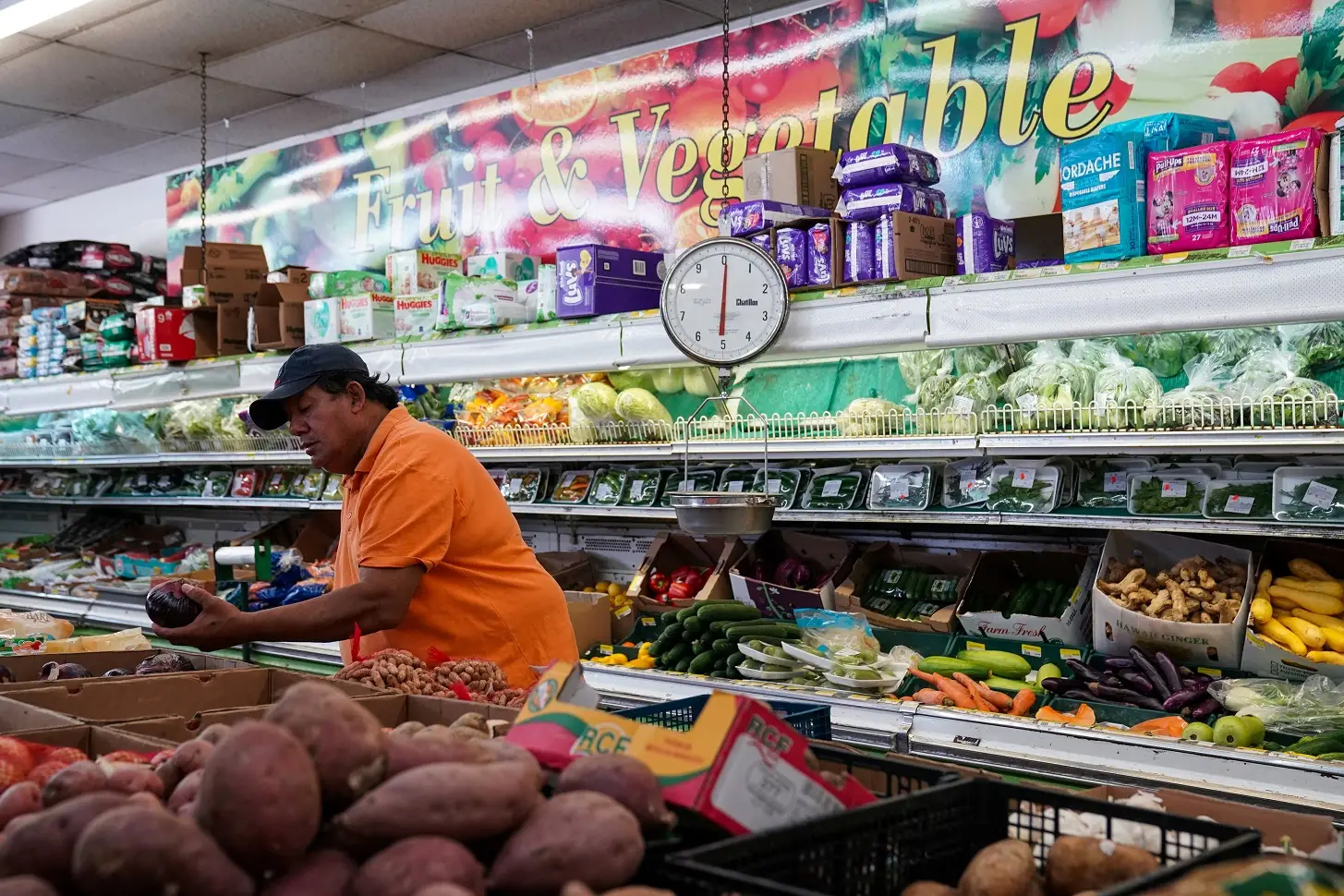
The positive impact of the falling dollar and the record agricultural production is evident in the recent inflation data. Food prices for home consumption in Brazil have fallen for seven consecutive months, from June to December 2025, according to the preliminary official inflation index, IPCA-15, compiled by the Brazilian Institute of Geography and Statistics (IBGE). While the overall cost of food at home rose 1.94% in 2025, specific items saw substantial declines. These include rice (-26.04%), black beans (-31.82%), potatoes (-27.70%), oranges (-33.33%), lemons (-29.64%), long-life milk (-10.42%), olive oil (-20.90%), and garlic (-12.24%).
Currency’s Broader Impact on Agricultural Supply Chains
Maria Andreia Parente Lameiras, a Planning and Research Technician at the Institute of Applied Economic Research (Ipea), highlighted the surprising strength of food price behavior in the last quarter of 2025. She emphasized that while a good harvest was anticipated, the added benefit of a weaker currency was unexpected and significantly boosted food inflation relief.
“We knew food prices would be better this year because of the harvest, but nobody imagined there would be help from the currency. More than the harvest, the currency helps food inflation a lot,” Lameiras stated. She explained that a cheaper dollar benefits the entire production chain, from more affordable inputs like fertilizers to the purchase of machinery for productivity. Crucially, a devalued dollar discourages exports, leading to more produce being available in the domestic market, thus driving down prices.
Ipea Adjusts Forecasts Amid Shifting Economic Landscape
The Ipea revised its inflation forecast for food consumed at home downwards significantly for 2025. Initially projecting a 4.4% increase, the institute has halved its expectation to 2.1%. For 2026, however, Ipea anticipates a 4.2% rise in food prices at home, with upward pressure expected from meat prices due to recent culling of female animals for reproduction. This increase in meat costs could, in turn, shift consumer demand to other protein sources, potentially driving up their prices as well.
“Next year, we expect some acceleration in food prices, but largely due to pressure from meats and because we are unlikely to have the currency helping as it did this year. We should have a more or less stable currency, which, if it doesn’t hurt, doesn’t help either,” estimated the Ipea technician. She projects the dollar to be quoted at R$ 5.40 by the end of 2025 and to close 2026 at R$ 5.35.

Empowering you to master your money with confidence and clarity. On this channel, we break down personal finance—from budgeting basics and saving smarter to debt-free strategies and practical investing—all in easy-to-understand language.
Expect weekly deep dives into real-life financial questions, step-by-step tutorials, and expert insights that make money topics approachable and actionable. Whether you’re building emergency savings, paying off loans, or planning for the future, you’re in the right place to get informed, empowered, and financially confident.