Brazilian exporters are facing significant hurdles that are undermining their ability to compete on the global stage. High logistics costs and elevated interest rates are identified as major impediments, according to a recent report by the National Confederation of Industry (CNI).
The study, which surveyed companies on 50 different types of obstacles, found that the most critical challenges are directly related to the country’s infrastructure and transportation systems. These persistent issues are preventing Brazilian goods from reaching international markets efficiently and affordably.
The findings underscore a long-standing problem that requires urgent attention from both government and the private sector to foster a more favorable business environment and enhance Brazil’s participation in world trade. The CNI’s research provides a clear diagnosis of these issues, aiming to guide strategic planning for Brazil’s trade policies.
Logistics Costs Dominate Export Challenges
The research, titled “Challenges to the Competitiveness of Brazilian Exports,” reveals that the top four obstacles are directly linked to logistics and infrastructure. The most significant issue, cited by 58.2% of companies, is the high cost of international transport.
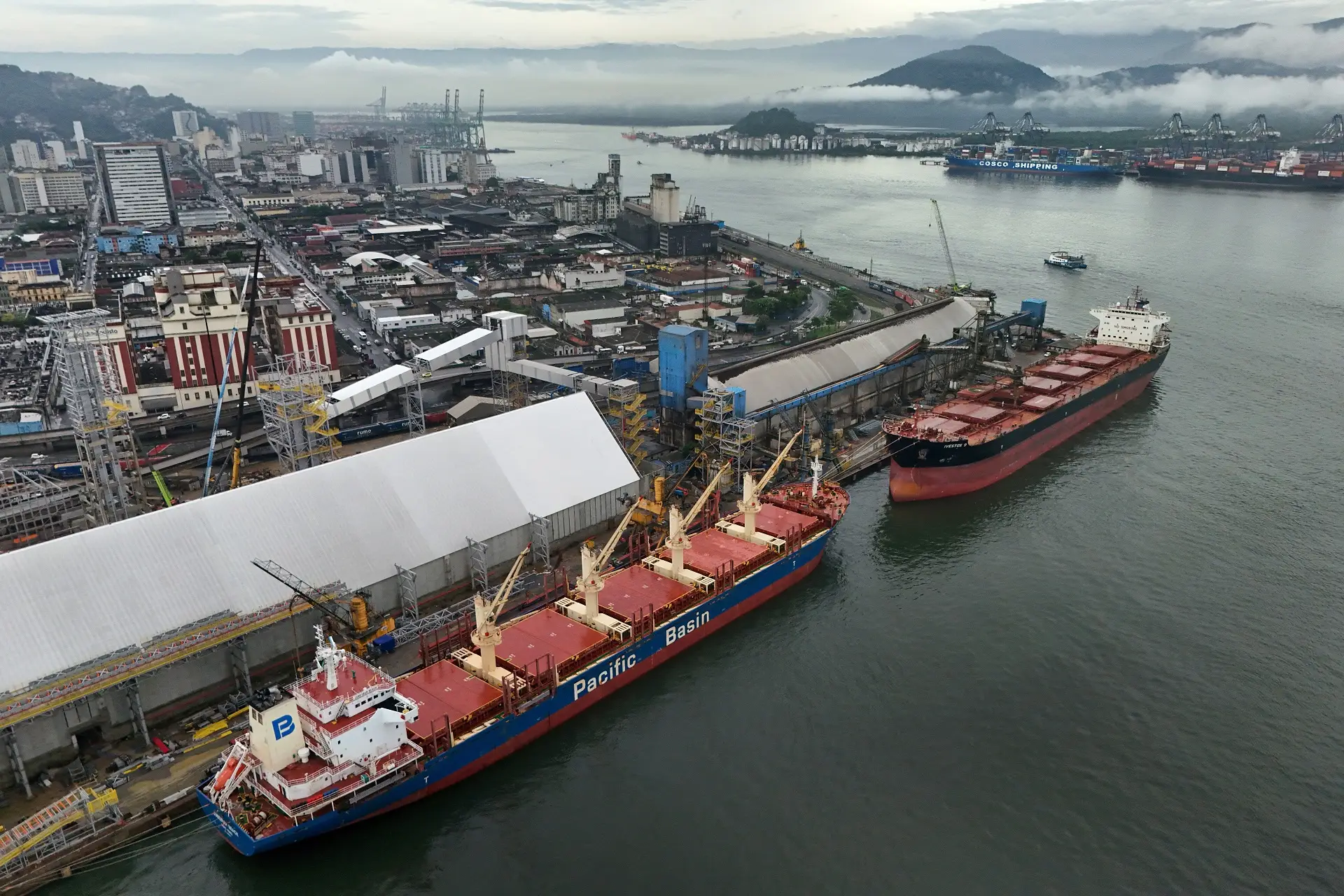
Following closely behind are inefficiencies at ports for handling and shipping cargo, identified by 48.5% of companies. Limitations in maritime routes, space, and container availability were also highlighted by 47.7% of respondents, while high port tariffs were a concern for 46.2%.
The first non-logistical barrier to appear on the list is currency volatility, which 41.8% of exporters consider a relevant hindrance. This indicates that while external market fluctuations play a role, internal structural problems are more pervasive.
Macroeconomic Factors and Bureaucracy Compound Difficulties
Beyond logistics, macroeconomic factors, particularly high interest rates, are also cited as significant drags on export competitiveness. These elevated borrowing costs increase the overall expense for businesses, making it harder to price products competitively in international markets.
The CNI also points to persistent structural issues that have plagued Brazilian exports for years. These include customs bureaucracy, insufficient infrastructure, and a complex regulatory framework that adds to costs and reduces predictability for businesses operating internationally.
Ricardo Alban, president of the CNI, emphasized that these domestic bottlenecks hinder Brazil’s industrial capacity to compete globally, especially at a time when the country is striving to maintain its international presence amidst global trade disputes and restrictive measures.
Port Inefficiencies Worsen, Trade Agreements Lacking
A notable shift in the survey’s findings compared to the previous edition in 2022 is the increased concern over port efficiency. Port inefficiency jumped from the 14th position to the 2nd, indicating a worsening of operational bottlenecks. This deterioration is a significant concern for exporters relying on timely and cost-effective port services.
Furthermore, the lack of trade agreements with strategic partners is identified as the primary obstacle to accessing foreign markets, affecting 25.8% of companies. This isolation limits opportunities and puts Brazilian products at a disadvantage compared to those from countries with more favorable trade relationships.
Other barriers include import tariffs at destination markets (67.2%), customs bureaucracy (37.8%), and technical regulations (37%). Tax and regulatory hurdles also directly impact operational costs, with high taxes on imported services used in exports being a critical issue for 32.1% of companies.
CNI Proposes Solutions for Enhanced Competitiveness
In response to these challenges, the CNI has proposed a series of measures to bolster Brazil’s international trade performance. These recommendations focus on several key areas, including financing for exports, tax reform, improvements in logistics and infrastructure, trade facilitation, international agreements, and enhanced governance.
The confederation stresses that 2026 will be a crucial year for implementing reforms, forging new agreements, and modernizing logistics to ensure the competitiveness of Brazilian industry. Addressing these deep-seated issues is vital for Brazil to fully leverage its potential in global value chains and expand its reach in international markets.

Empowering you to master your money with confidence and clarity. On this channel, we break down personal finance—from budgeting basics and saving smarter to debt-free strategies and practical investing—all in easy-to-understand language.
Expect weekly deep dives into real-life financial questions, step-by-step tutorials, and expert insights that make money topics approachable and actionable. Whether you’re building emergency savings, paying off loans, or planning for the future, you’re in the right place to get informed, empowered, and financially confident.