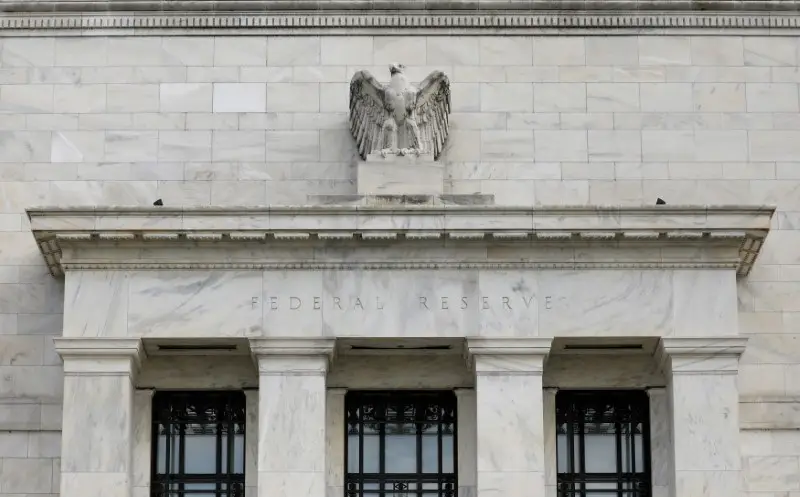
The United States is at a critical juncture, with inflation showing stubborn signs of remaining above the Federal Reserve’s target. Top officials from the central bank have raised a collective eyebrow, describing the current inflationary environment with an “orange alert” – a signal of caution that falls just short of a full-blown red alert, but demands significant attention.
This nuanced assessment comes from prominent figures within the Fed, including Beth Hammack, President of the Federal Reserve Bank of Cleveland, and Austan Goolsbee, President of the Federal Reserve Bank of Chicago. Their recent public statements have shed light on the internal deliberations and the complex economic landscape the Fed is navigating. Understanding these signals is crucial for anyone looking to make informed financial decisions in the current climate.
The implications of this “orange alert” extend beyond the halls of the Federal Reserve, potentially influencing interest rate decisions, investment strategies, and the overall economic outlook for American households and businesses. As we delve deeper into the Fed’s assessment, we’ll explore the specific factors driving this concern and what it could mean for your personal finances. This information is based on statements made by Fed officials, as reported by Estadão Conteúdo.
The Federal Reserve has long held a 2% inflation target as a cornerstone of its monetary policy. However, recent data indicates that inflation has been hovering closer to the 3% mark for an extended period. This persistent deviation from the target is a primary driver behind the “orange alert.” As Beth Hammack, President of the Federal Reserve Bank of Cleveland, articulated, “Inflation has been above our target for five years, we are closer to 3% than to our 2% target. We made good progress in 2024, but in the last two years, we have been treading water.” This sentiment underscores a growing unease within the central bank about the pace of disinflation.
The phrase “treading water” suggests that while some progress may have been made, the overall trend has been one of stagnation rather than steady decline towards the desired 2% goal. This lack of significant downward momentum in inflation is what elevates the concern from a less severe “yellow” to the more cautious “orange.” The longevity of inflation being above target is a key factor; sustained elevated prices can begin to embed themselves into consumer and business expectations, making them harder to dislodge.
Austan Goolsbee, President of the Federal Reserve Bank of Chicago, offered a more vivid description of the situation, explaining his perspective on the economic trajectory. He noted, “We were going down the wrong path, and we started last year with a series of what I call ‘stagflation dust’ thrown into the air.” Goolsbee’s concern has apparently intensified, as he added, “I was optimistic that we would return to the path of 2% inflation, but it has gone from orange to red lately.” This escalation in his personal assessment highlights the dynamic nature of economic forecasting and the potential for unexpected shifts in inflationary pressures.
The factors contributing to this elevated inflation concern are multifaceted. Goolsbee specifically pointed to the impact of tariffs on prices, a measure that directly increases the cost of imported goods and can ripple through the supply chain. Additionally, a rise in gasoline prices has a broad-ranging effect, impacting transportation costs for both consumers and businesses, and often leading to broader inflationary pressures across various sectors of the economy. These specific drivers are contributing to the “orange” status, indicating that the Fed is actively monitoring these developments and their potential to further impede progress toward price stability.
The Labor Market: A Mixed Signal
While inflation remains a primary concern, the Federal Reserve also closely monitors the labor market for signs of overheating or cooling that could influence inflation. Goolsbee characterized the current state of the labor market as “yellow,” a designation he described as “unusual.” He highlighted that the rate of hiring has reached its lowest level in years, which might typically suggest a cooling economy.
However, this observation is tempered by another critical factor: layoffs are also at an extremely low level. This combination of reduced hiring and minimal layoffs creates a unique dynamic. Goolsbee explained this phenomenon, stating, “I believe this is due to uncertainty, during periods of uncertainty, you tend to see companies stop hiring, but also not firing.” This suggests that businesses are hesitant to expand their workforce due to economic ambiguity, yet they are also reluctant to let go of existing employees, perhaps due to a fear of future labor shortages or a desire to retain skilled workers.
This delicate balance in the labor market presents a challenge for the Fed. A robust labor market with strong wage growth can fuel consumer spending and contribute to inflation. Conversely, a rapidly deteriorating labor market could signal a recession. The current “yellow” status indicates that the labor market is not presenting clear signals of either overheating or significant weakness, making it a variable that requires careful observation.
Beth Hammack offered a slightly different perspective on the labor market, describing it as being in a “fragile equilibrium.” She emphasized that the unemployment rate is “very close to my estimates of full employment.” Full employment is a theoretical state where all available labor resources are employed, and it can be a sign of a healthy economy. However, even at full employment, if wage growth is too rapid, it can contribute to inflationary pressures.
The convergence of these views suggests that while the labor market may not be a direct cause of the current inflation concerns, its stability and the dynamics of hiring and retention are crucial factors that the Fed considers when formulating its monetary policy. A tight labor market, even with low unemployment, can still exert upward pressure on wages, which in turn can influence prices.
Financial System Stability: A Cause for Optimism, with Caveats
In contrast to the concerns surrounding inflation, the Federal Reserve views the broader financial system with a more optimistic outlook, assigning it a “green” status. This suggests that, for the most part, the financial infrastructure is considered stable and resilient. Hammack noted that while the overall system is “green,” there are specific sectors that warrant closer attention, such as private credit.
The mention of private credit is significant. This refers to loans and debt issued by non-bank financial institutions, such as private equity firms, hedge funds, and other alternative lenders. The growth of private credit has been a notable trend in recent years, and its interconnectedness with the broader financial system means that any instability in this sector could have wider repercussions. The Fed’s focus here indicates a proactive approach to identifying and mitigating potential risks before they escalate.
Austan Goolsbee adopted a more cautious stance regarding the financial system, opting for a “yellow” designation. His primary concern lies with the valuation of companies. Goolsbee expressed uncertainty about whether current market valuations are justified by fundamental improvements in productivity, particularly those driven by advancements in artificial intelligence (AI), or if they represent an unsustainable bubble.
The rapid advancements in AI have the potential to significantly boost productivity across various industries, which could justify higher company valuations. However, the speculative nature of some investments and the sheer pace of technological change can also lead to market exuberance, where asset prices detach from their underlying economic value. This “is it a bubble or is it grounded in real productivity improvements from artificial intelligence (AI)?” question highlights the inherent difficulty in distinguishing between genuine innovation and speculative excess.
The Fed’s dual assessment of the financial system – generally green but with yellow flags in specific areas like private credit and market valuations – underscores the complexity of maintaining financial stability in a rapidly evolving economic landscape. While the core banking system may be sound, the Fed remains vigilant about emerging risks and potential contagion effects from less regulated or rapidly growing segments of the financial market.
Navigating the Path Forward: Policy Implications
The “orange alert” on inflation, coupled with the mixed signals from the labor market and the nuanced view of the financial system, presents a complex challenge for the Federal Reserve. The primary objective remains to bring inflation back down to the 2% target without causing undue harm to the economy, particularly through a sharp increase in unemployment.
The Fed has several tools at its disposal, most notably the setting of interest rates. Higher interest rates tend to cool demand by making borrowing more expensive for consumers and businesses, which can help to curb inflation. However, raising rates too aggressively or keeping them at elevated levels for too long can stifle economic growth and lead to job losses.
The current “orange alert” suggests that the Fed may be inclined to maintain a cautious stance, potentially keeping interest rates higher for longer than previously anticipated. This is to ensure that the progress made in combating inflation is not reversed. The “treading water” analogy used by Hammack implies that the Fed is not yet confident enough to signal a pivot towards rate cuts.
For investors, this economic environment calls for a strategic approach. Assets that have performed well in a low-interest-rate environment may face headwinds. Conversely, sectors that are less sensitive to interest rate hikes or that benefit from the underlying economic trends, such as productivity gains from AI, might offer more resilience. Understanding the Fed’s “color-coded” assessment is crucial for aligning investment portfolios with the prevailing economic conditions.
Consumers may also feel the impact of sustained higher interest rates, affecting mortgage rates, car loans, and credit card debt. The “orange alert” serves as a reminder to exercise prudence in borrowing and to focus on building emergency savings. The goal is to navigate potential economic headwinds with a solid financial foundation.
FAQ: Understanding the Fed’s Inflation Alerts
Q1: What does the Federal Reserve’s “orange alert” for inflation signify?
A1: An “orange alert” signifies that inflation is a significant concern, hovering closer to 3% than the Fed’s 2% target, and progress in bringing it down has stalled in recent years. It’s a level of caution that indicates the Fed is closely monitoring the situation and may adjust its monetary policy accordingly, short of a full “red alert” which would signal a more severe crisis.
Q2: Why are Fed officials using color codes to describe economic conditions?
A2: The color-coded system (red, orange, yellow, green) is a simplified way for Federal Reserve officials to communicate the severity of different economic indicators to the public and to each other. Green represents the most favorable conditions, while red signifies the most severe issues, with orange and yellow indicating intermediate levels of concern.
Q3: What specific factors are contributing to the “orange alert” on inflation?
A3: According to Fed officials like Austan Goolsbee, contributing factors include the impact of tariffs on prices and a recent rise in gasoline prices. The persistent deviation of inflation from the 2% target over several years is also a key reason for the elevated concern.
Q4: How does the labor market’s “yellow” status impact the inflation outlook?
A4: A “yellow” status for the labor market, as described by Austan Goolsbee, indicates an unusual situation where hiring is low but layoffs are also minimal. While this doesn’t directly fuel inflation like a booming job market, it creates uncertainty and suggests that companies are hesitant to expand or contract their workforce significantly. This can indirectly influence economic activity and wage pressures.
Q5: What are the concerns regarding the financial system being rated “yellow” by some Fed officials?
A5: While the overall financial system is considered “green” by some, Austan Goolsbee’s “yellow” assessment highlights concerns about company valuations. He questions whether these valuations are supported by genuine productivity gains, potentially from AI, or if they represent an unsustainable market bubble. Additionally, private credit is noted as a sector requiring more attention.
Q6: What is “stagflation dust” as mentioned by Austan Goolsbee?
A6: “Stagflation dust” is a metaphorical term used by Austan Goolsbee to describe conditions that could potentially lead to stagflation – a combination of stagnant economic growth, high unemployment, and high inflation. His comment suggests that certain economic factors were creating an environment where such a scenario was a risk, though he was initially optimistic about avoiding it.
Q7: How might the Fed’s “orange alert” influence interest rate decisions?
A7: An “orange alert” suggests that the Federal Reserve is likely to maintain a cautious approach to monetary policy. This could mean keeping interest rates at their current levels for a longer period than previously expected, or potentially even considering further hikes if inflation proves more persistent. The priority is to ensure inflation returns to the 2% target.
Q8: What are the implications of these Fed assessments for individual investors?
A8: For investors, the “orange alert” signals a need for careful portfolio management. Assets that are sensitive to interest rates may face challenges. Investors should consider diversifying their portfolios and looking for opportunities in sectors that are less impacted by rate hikes or that stand to benefit from long-term trends like technological innovation. Understanding the Fed’s perspective is key to making informed investment decisions in this environment.

Empowering you to master your money with confidence and clarity. On this channel, we break down personal finance—from budgeting basics and saving smarter to debt-free strategies and practical investing—all in easy-to-understand language.
Expect weekly deep dives into real-life financial questions, step-by-step tutorials, and expert insights that make money topics approachable and actionable. Whether you’re building emergency savings, paying off loans, or planning for the future, you’re in the right place to get informed, empowered, and financially confident.