
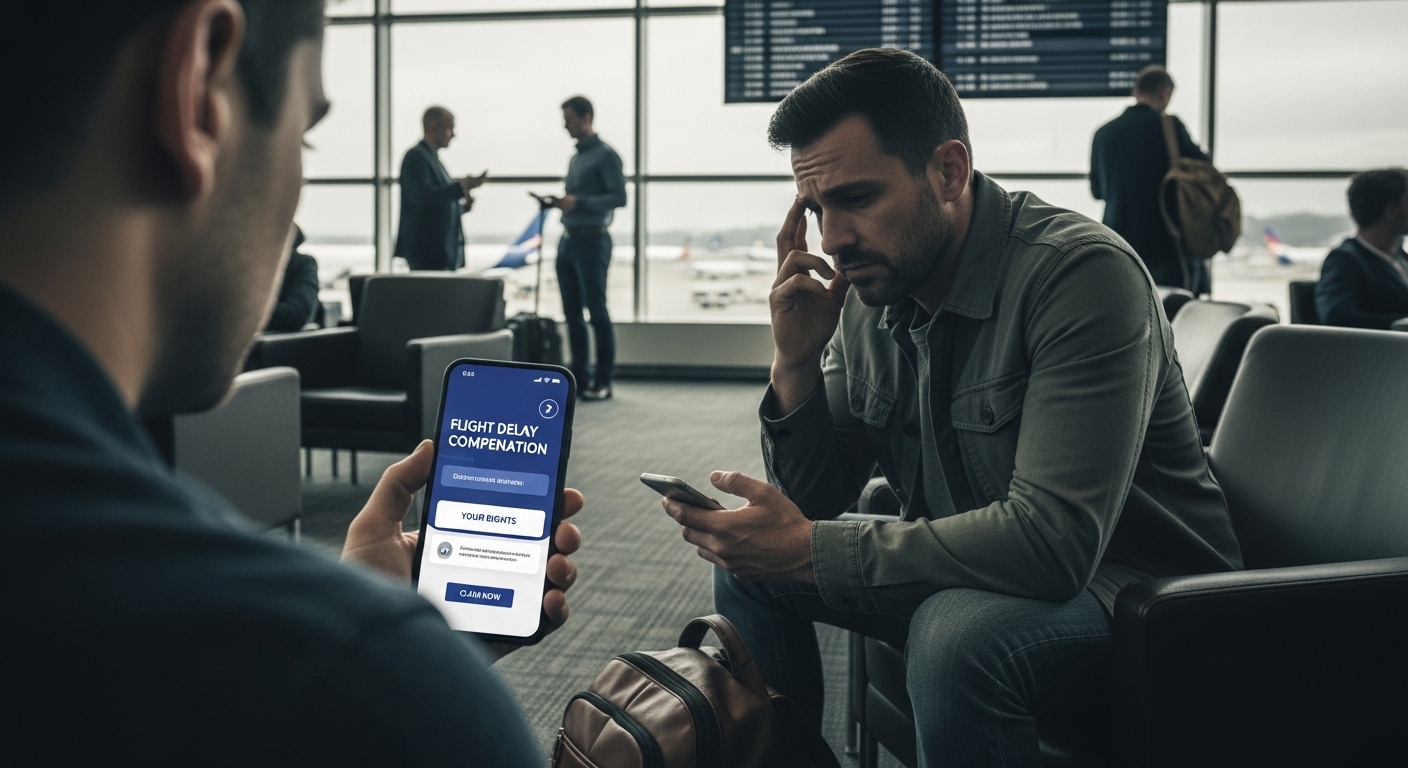
Few travel experiences are as universally frustrating as a flight delay. What starts as a minor inconvenience can quickly escalate into missed connections, ruined plans, and unexpected expenses, leaving travelers feeling helpless and out of pocket. However, what many passengers don’t realize is that these delays often come with a hidden financial opportunity: the right to **compensation for flight delay**.
Understanding your passenger rights and the specific regulations governing airline operations can transform a stressful situation into a chance to recoup significant losses. This isn’t just about a refund for your ticket; it’s about claiming additional financial recompense for the disruption to your travel plans and the associated costs.
As a seasoned financial expert, I’m here to demystify the process, providing you with a clear, actionable roadmap to claim what you’re rightfully owed. This comprehensive guide is built upon general principles of consumer protection and established airline regulations, offering a clear path to understanding and claiming what you are owed.
Understanding Your Rights: The Foundation of Flight Delay Compensation
Before you can claim **compensation for flight delay**, it’s crucial to understand the legal frameworks that protect you. Passenger rights vary significantly depending on where your flight originated, where it was headed, and the airline’s operating region. Being aware of these differences is the first step toward a successful claim.
Key Regulations: EU261 vs. U.S. DOT Rules
The two most prominent sets of regulations impacting flight delay compensation are the European Union’s EC 261/2004 (often referred to as EU261) and the rules enforced by the U.S. Department of Transportation (DOT). While both aim to protect passengers, their scope and requirements differ considerably.
EU261 is widely considered one of the most comprehensive passenger rights laws globally. It applies to passengers departing from an EU airport, arriving at an EU airport on an EU-based airline, or arriving at an EU airport on a non-EU airline from outside the EU. Under EU261, passengers may be entitled to fixed monetary **compensation for flight delay** ranging from €250 to €600, depending on the flight distance and the length of the delay (typically three hours or more). This compensation is in addition to the right to care (meals, refreshments, accommodation, transport) and re-routing or reimbursement.
In contrast, U.S. DOT rules do not mandate cash compensation for delayed flights. Instead, their primary focus is on requiring airlines to provide specific amenities and information during significant delays or cancellations. For instance, if a flight is delayed on the tarmac, airlines must provide food, water, working lavatories, and medical attention after a certain period. While airlines are generally expected to re-route passengers or offer refunds for significantly delayed or canceled flights, direct monetary **compensation for flight delay** is not legally required by the DOT for domestic or international flights originating or terminating in the U.S.
This critical distinction means that if your delayed flight falls under EU261, your chances of receiving a direct financial payout are much higher. For U.S.-centric travel, the focus shifts more towards negotiating with the airline for vouchers, miles, or other forms of goodwill compensation, unless the delay caused additional, provable financial losses.
What Qualifies for Compensation? Defining “Delay” and “Cancellation”
Not all delays are created equal when it comes to eligibility for **compensation for flight delay**. Under EU261, a flight is considered delayed if it arrives at its final destination three or more hours late. The amount of compensation is tiered based on flight distance and delay duration. For cancellations, passengers are entitled to compensation unless they were informed at least 14 days in advance or if the airline offered an alternative flight with a similar schedule.
A crucial element in both EU261 and general airline policies is the concept of “extraordinary circumstances.” Airlines are typically exempt from paying compensation if the delay or cancellation is due to events beyond their control. This often includes severe weather conditions, air traffic control strikes (not airline staff strikes), political instability, security risks, or unforeseen manufacturing defects affecting the aircraft. However, even in these cases, airlines are usually still obligated to provide care and assistance, such as meals and accommodation, until the passenger can reach their destination.
It’s important to differentiate between a delay and a cancellation. A cancellation means the flight was never operated, while a delay means it eventually departed. The rules for compensation can be slightly different, particularly regarding re-routing options and the timing of notification. Always check the specific wording of the regulations that apply to your situation.
Common Scenarios and Exceptions
Understanding common scenarios can help you quickly assess your eligibility for **compensation for flight delay**. For example, a technical fault discovered before takeoff, if it was not an unforeseen manufacturing defect, is often considered within the airline’s control and thus eligible for compensation under EU261. Similarly, operational issues like crew shortages or scheduling problems are generally the airline’s responsibility.
However, if your flight is delayed due to an airport closure caused by a sudden snowstorm, this would likely fall under “extraordinary circumstances.” The key is to determine if the airline could have reasonably prevented the issue. For instance, while a snowstorm is extraordinary, an airline failing to de-ice its plane in a timely manner (leading to further delays) might still be held accountable for the additional delay caused by their operational negligence.
Another exception might be if you miss a connecting flight due to an initial delay, but the connecting flight was operated by a different airline and not part of a single ticket. In such cases, claiming **compensation for flight delay** for the subsequent disruption becomes more complex, often requiring claims against each airline separately, or relying on travel insurance.
The Financial Impact of Flight Delays: Beyond the Ticket Price
The true cost of a flight delay extends far beyond the price of your ticket. While the immediate frustration is palpable, the ripple effect on your personal finances can be substantial. Recognizing these broader financial impacts is essential when building a strong case for **compensation for flight delay**.
Direct Costs: Missed Connections, Accommodation, Meals
When a flight is delayed, direct expenses can quickly accumulate. A missed connecting flight might necessitate purchasing a new ticket, often at a higher last-minute price. If you’re stranded overnight, you’ll likely incur costs for accommodation, which can range from budget motels to unexpected hotel stays in unfamiliar cities. Meals and refreshments, especially in expensive airport environments, can add up significantly during prolonged waits.
These direct costs are often recoverable, either through the airline’s duty of care (under regulations like EU261) or through a robust travel insurance policy. It’s vital to keep every receipt – from a bottled water purchase to a hotel bill – as these documents serve as critical evidence for your claim. Even small expenses contribute to the overall financial burden and should be accounted for when seeking **compensation for flight delay**.
Indirect Costs: Lost Wages, Vacation Time, Emotional Distress
Beyond the tangible expenses, flight delays often lead to significant indirect financial losses. If the delay causes you to miss an important business meeting, you might face lost revenue or damage to professional relationships. For leisure travelers, a delayed flight can eat into precious vacation time, potentially costing you pre-paid tours, activities, or even a day of work if you miss your return flight and have to take an unplanned day off.
While harder to quantify, the emotional distress caused by significant delays – stress, anxiety, disruption to family events – also represents a real cost. While direct monetary compensation for emotional distress is rare under standard airline regulations, the overall value of your time and the impact on your well-being should not be underestimated when considering the full scope of your claim for **compensation for flight delay**.
Calculating Your Potential Compensation
Calculating your potential **compensation for flight delay** involves several factors. Under EU261, the compensation is fixed based on flight distance and delay: €250 for flights up to 1,500 km; €400 for flights between 1,500 km and 3,500 km (or EU flights over 1,500 km); and €600 for flights over 3,500 km. These amounts can be reduced by 50% if the airline offers re-routing that results in an arrival time not exceeding the original scheduled arrival time by a certain margin (e.g., two hours for short-haul, three hours for medium-haul, four hours for long-haul).
For flights not covered by EU261, calculation becomes more complex. You’ll need to meticulously itemize all provable direct expenses (meals, accommodation, new tickets) and potentially quantify indirect losses (e.g., lost wages, though these are much harder to claim without specific legal action). Keeping detailed records of your original itinerary, the delayed itinerary, and all incurred costs is paramount. This robust documentation forms the backbone of any successful claim, demonstrating the full financial impact of the delay.
Step-by-Step Guide to Claiming Your Compensation
Once you understand your rights and the potential financial impact, the next step is to actively pursue your **compensation for flight delay**. This process requires diligence, organization, and persistence.
Document Everything: Your Evidence is Key
The moment you realize your flight is delayed, start documenting. This is arguably the most critical step in securing **compensation for flight delay**. Collect the following:
- **Original Booking Confirmation:** Keep your flight number, booking reference, and scheduled departure/arrival times readily available.
- **Proof of Delay:** Take photos of departure boards showing the delay, screenshots of airline apps, or emails/SMS notifications from the airline confirming the delay.
- **Reason for Delay:** Ask airline staff for the official reason for the delay. Get it in writing if possible.
- **Receipts:** Any expenses incurred due to the delay (meals, accommodation, transport, new tickets) must have corresponding receipts.
- **Communication Log:** Keep a record of all interactions with the airline, including dates, times, names of staff, and what was discussed.
The more comprehensive your documentation, the stronger your claim will be. Think of yourself as building a financial case; every piece of evidence strengthens your position.
Communicating with the Airline: First Steps
Your initial point of contact should always be the airline itself. Many airlines have dedicated customer service portals or online forms specifically for delay and cancellation claims. Be polite, clear, and factual in your communication. State your flight details, the nature of the delay, and what you are claiming (e.g., specific EU261 compensation, reimbursement for expenses).
Attach all your compiled documentation. It’s often advisable to send your initial claim via a method that provides proof of delivery, such as registered mail or an online portal that generates a case number. Give the airline a reasonable amount of time to respond, typically 30 days, before escalating the matter. Remember, while the airline is a business, they also have a reputation to uphold and a legal obligation to respond to valid claims for **compensation for flight delay**.
Escalating Your Claim: Regulatory Bodies and Third-Party Services
If the airline denies your claim, offers an unsatisfactory resolution, or fails to respond within a reasonable timeframe, it’s time to escalate. For flights covered by EU261, you can contact the national enforcement body (NEB) in the country where the incident occurred or where the airline is registered. These bodies can mediate or enforce passenger rights. For U.S. flights, while no direct cash compensation is mandated, you can file a complaint with the U.S. DOT’s Aviation Consumer Protection Division. While they won’t force compensation, they can investigate and put pressure on airlines for unfair practices.
Alternatively, numerous third-party services specialize in claiming **compensation for flight delay** on your behalf. Companies like AirHelp, Flightright, or ClaimCompass operate on a no-win, no-fee basis, taking a percentage of your successful claim. They have expertise in navigating the legal complexities and dealing with airlines, which can be invaluable, especially for complex cases or if you lack the time to pursue the claim yourself. However, be aware of their fees, as they will reduce your overall payout.
Maximizing Your Claim: Financial Strategies and Best Practices
To ensure you receive the maximum possible **compensation for flight delay**, adopt a strategic approach that leverages all available resources and adheres to best practices.
Timing is Everything: Deadlines and Statute of Limitations
Don’t delay in making your claim. Each jurisdiction and airline has specific time limits for filing for **compensation for flight delay**. Under EU261, the statute of limitations varies by country, ranging from one year (e.g., Belgium) to six years (e.g., UK) or even ten years (e.g., Luxembourg). For U.S. claims, while there’s no federal statute of limitations for airline complaints, state laws for contract breaches typically range from 2-6 years. Filing promptly increases your chances of success while all details are fresh and evidence is readily available. Procrastination can lead to lost opportunities for financial recovery.
Leveraging Credit Card Protections and Travel Insurance
Many premium credit cards offer built-in travel protection benefits, including coverage for flight delays, baggage delays, and trip cancellations. These benefits can often provide reimbursement for expenses like meals, accommodation, or even new tickets, often kicking in after a shorter delay period (e.g., 6 hours) than what airlines might offer. Review your credit card’s benefits guide carefully before you travel.
Similarly, a good travel insurance policy can be a financial lifeline. Comprehensive policies typically cover trip delays, providing reimbursement for unexpected expenses and sometimes even a per diem amount for each day of delay. It’s crucial to understand what your policy covers, its deductibles, and the process for filing a claim. Travel insurance and airline compensation are often separate, meaning you might be able to claim from both, though you cannot double-dip for the same specific expense. For example, airline compensation for the delay itself (under EU261) and insurance reimbursement for a hotel stay caused by the delay are often compatible.
When to Seek Professional Help: Legal Advisors and Claim Companies
While many claims for **compensation for flight delay** can be handled directly, there are times when professional help becomes invaluable. If your claim is particularly complex, involves significant financial losses, or if the airline is being exceptionally difficult or unresponsive, consulting a legal advisor specializing in aviation law might be necessary. They can provide expert guidance, draft official letters, and represent you if the case goes to court.
As mentioned, third-party claim companies are also an excellent option if you prefer a hands-off approach. They possess the knowledge and resources to navigate the legal landscape and can often secure compensation where individuals might fail. Weigh the convenience against their service fees to decide if this is the right path for your situation. For high-value claims or persistent denials, the investment in professional assistance can yield a greater net financial return.
Understanding your rights and being proactive are your most powerful tools in securing **compensation for flight delay**. Don’t let airlines keep what’s rightfully yours due to a lack of knowledge or a reluctance to pursue your claim. With the right information and a methodical approach, you can turn a travel setback into a financial recovery.
FAQ: Your Questions About Flight Delay Compensation Answered
Q1: What is the difference between EU261 and U.S. DOT rules regarding flight delay compensation?
A1: EU261 mandates fixed cash compensation (up to €600) for significant delays (3+ hours) or cancellations under specific circumstances, in addition to care and re-routing. U.S. DOT rules do not require airlines to pay cash compensation for delays; they primarily focus on requiring airlines to provide care (food, water, lavatories) during lengthy tarmac delays and facilitate re-routing or refunds for cancellations or significant delays, but not direct financial payouts for the inconvenience of the delay itself.
Q2: How long does a flight delay need to be to qualify for compensation?
A2: Under EU261, a flight must arrive at its final destination at least three hours late to qualify for compensation. For U.S. flights, there isn’t a specific delay duration that triggers mandatory cash compensation; eligibility for refunds or alternative flights is typically at the airline’s discretion for “significant delays,” which are not federally defined by a specific number of hours.
Q3: Can I get compensation if my flight was delayed due to weather?
A3: Generally, no. Severe weather is considered an “extraordinary circumstance” under EU261, meaning it’s beyond the airline’s control. Therefore, airlines are usually exempt from paying monetary **compensation for flight delay** in such cases. However, they are still typically obligated to provide care, such as meals and accommodation, until your flight can depart.
Q4: What documents do I need to submit for a compensation claim?
A4: You should gather your original booking confirmation (flight number, dates, times), proof of the delay (photos of departure boards, airline notifications), the reason for the delay (if provided by the airline), and all receipts for any expenses incurred due to the delay (meals, accommodation, transport, new tickets). A detailed log of communications with the airline is also helpful.
Q5: How long does it typically take to receive compensation for flight delay?
A5: The timeline varies significantly. Airlines are generally expected to respond to claims within 30 days. If the claim is straightforward and approved, payment might follow within a few weeks. However, if the claim is disputed, requires escalation to regulatory bodies, or involves third-party services, it can take several months, sometimes up to a year or more, to resolve.
Q6: Are there any fees involved in using a claim compensation service?
A6: Most reputable flight delay compensation services operate on a “no win, no fee” basis. This means they only charge a fee (a percentage of the compensation received, typically 25-35%) if your claim is successful. If they don’t secure compensation for you, you generally don’t pay anything. Always read their terms and conditions carefully.
Q7: Can I claim compensation for a flight delay that happened years ago?
A7: It depends on the jurisdiction. Under EU261, the statute of limitations varies by country, ranging from one to ten years. For example, in the UK, you typically have six years to claim. For U.S. claims, while there’s no federal limit, state contract law limits usually apply, often between 2-6 years. It’s always best to file as soon as possible after the incident.
Q8: What if the airline denies my compensation claim?
A8: If the airline denies your claim and you believe you are entitled to compensation, you have several options. You can appeal directly to the airline, providing additional evidence. You can escalate the claim to a national enforcement body (for EU261 claims) or the U.S. DOT (for U.S. flights). Alternatively, you can engage a specialized flight delay compensation service or, in some cases, seek legal advice.
Q9: Does travel insurance cover flight delays, and how does it relate to airline compensation?
A9: Yes, many travel insurance policies offer coverage for flight delays, providing reimbursement for unexpected expenses like meals, accommodation, or even a per-diem payment. This coverage is usually separate from airline compensation. You can often claim both: direct airline compensation (e.g., under EU261 for the delay itself) and insurance reimbursement for out-of-pocket expenses incurred due to the delay, provided you don’t claim the exact same expense from both sources (no double-dipping).
Q10: Is there a limit to the amount of compensation I can receive?
A10: Under EU261, the maximum fixed cash **compensation for flight delay** is €600 per passenger, depending on flight distance. For claims outside of EU261, the limit is generally the sum of your provable direct financial losses (e.g., new tickets, accommodation, meals). Travel insurance policies will also have their own coverage limits for delay-related expenses.

Empowering you to master your money with confidence and clarity. On this channel, we break down personal finance—from budgeting basics and saving smarter to debt-free strategies and practical investing—all in easy-to-understand language.
Expect weekly deep dives into real-life financial questions, step-by-step tutorials, and expert insights that make money topics approachable and actionable. Whether you’re building emergency savings, paying off loans, or planning for the future, you’re in the right place to get informed, empowered, and financially confident.