
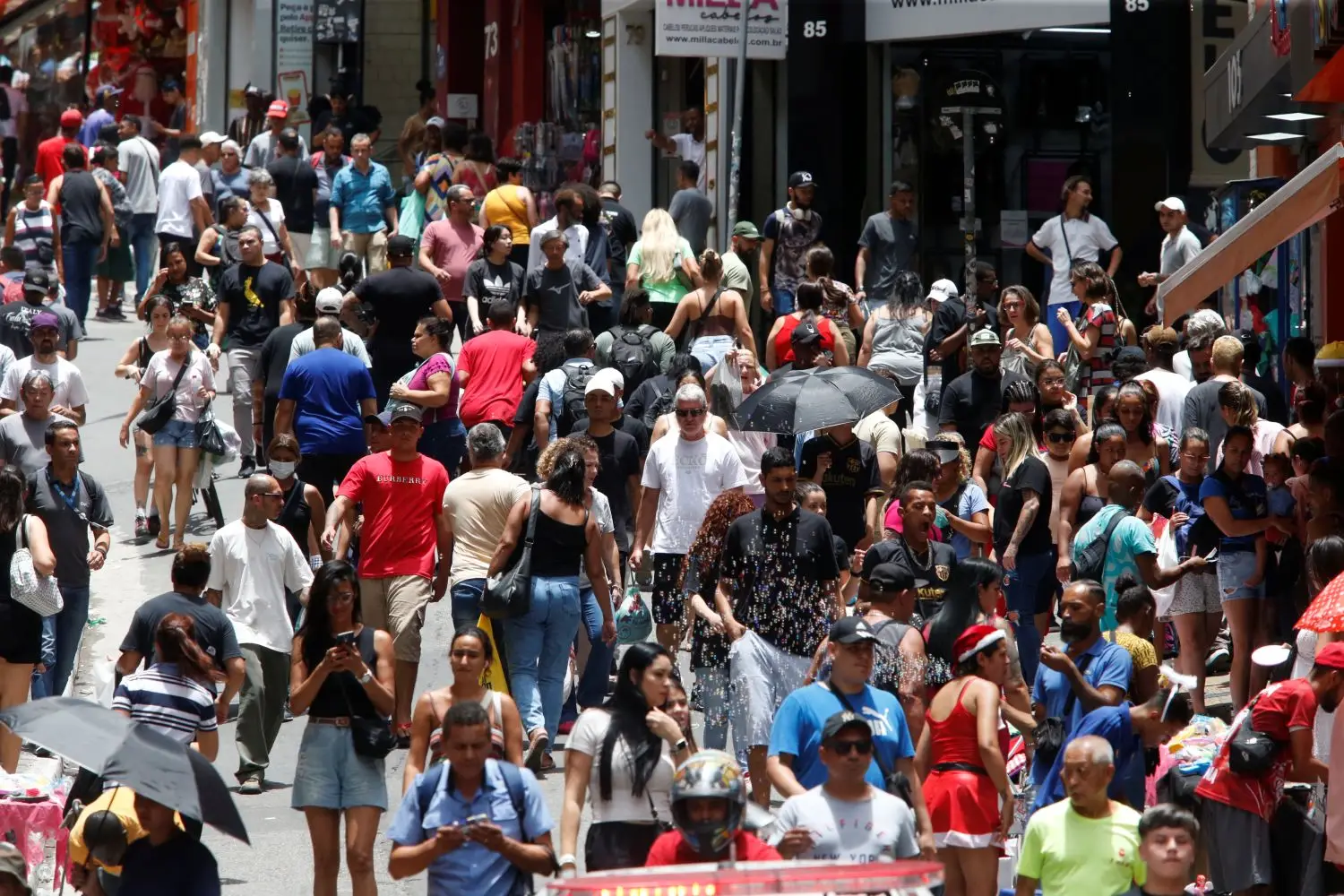
As Christmas Eve arrives, Brazilians are flocking to stores for those final gift purchases and essential items for their festive meals. With a robust job market and a more favorable exchange rate compared to last year, consumers are finding themselves able to spend a bit more on holiday shopping this season.
However, a sense of caution persists. Elevated interest rates and a rise in consumer debt are prompting many to remain vigilant with their finances. The retail sector is anticipating a modest 2.1% increase in sales for this year’s holiday season, a slight uptick from 2024.
These insights come from the Agência O Globo, highlighting a dynamic yet careful approach to holiday spending. Consumers are balancing the desire to celebrate with the economic realities of the current climate, making strategic choices in their last-minute shopping endeavors.
Holiday Rush in Popular Markets
In Rio de Janeiro’s bustling Saara popular market, shoppers like 62-year-old retiree Celma Borges were seen making their final gift selections. Despite being able to allocate more funds for presents this year, she maintained her tradition of buying thoughtful small gifts for her children, husband, and seven grandchildren. “Compared to last year, I can invest a bit more in these small gifts. The prices are better,” she shared.
Joice Batista, a 43-year-old dental hygienist, opted for a family tradition, ordering matching pajamas for Christmas Eve. She also used her trip to Saara to pick up her orders and purchase footwear for the celebration. Her gifts were bought the previous day, with an estimated spending of around R$ 500. “I bought the gifts yesterday. I think this year I was able to invest more. I set aside about R$ 500 for it,” she mentioned, showing off the custom-ordered family attire.
Retailers See Positive Trends
The National Confederation of Commerce of Goods, Services, and Tourism (CNC) projects a total sales volume of R$ 72.71 billion for this Christmas, marking a 2.1% growth from the previous year. If this forecast holds true, it would represent the strongest Christmas sales performance for Brazilian retail since 2014, when sales reached R$ 77.26 billion. Shopping malls, represented by the Brazilian Association of Shopping Centers (Abrasce), anticipate a 1% increase in visitor traffic and a 5% rise in sales compared to 2024.
At Shopping Nova América, over 1 million visitors are expected between December 10th and 24th, with the peak traffic occurring just before Christmas Eve. The mall foresees a 7% increase in traffic compared to the first week of December and a significant 24% jump from the daily average in November. Similarly, Shopping Leblon expected over 30,000 visitors on Christmas Eve, despite reduced operating hours. Rodrigo Lovatti, Superintendent of Shopping Leblon, affirmed, “There is no doubt that the Christmas 2025 results are positive, with growth in customer flow and sales volume compared to the same period in 2024.”
Consumer Prudence Amidst Economic Factors
Despite the optimistic retail outlook, consumers are exercising caution. Data from Serasa indicates that over 80 million Brazilians were in default as of November. The high basic interest rate, Selic, at 15%, is also a significant factor influencing consumer behavior, according to Fábio Bentes, chief economist at CNC. “Consumers have become more cautious due to the historically high interest rate,” he explained. “This Christmas is expected to see increased sales of food and clothing, particularly traditional small gifts, as well as a greater consumption of imported products.”
A study by IFec RJ, affiliated with Fecomércio-RJ, conducted in late November in the Rio Metropolitan Region, revealed that 62.1% of respondents intended to give gifts, a slight increase from 61% last year. However, the average spending per consumer decreased from R$ 312 in 2024 to R$ 293 this year. This reduction is partly attributed to the strong sales during Black Friday, which led many consumers to advance their Christmas shopping.
At Cadeg, Verônica Baptista, manager at Empório Gourmet, observed a decrease in the average ticket size but an increase in sales volume. She noted that customers are more price-sensitive, prompting the store to enhance its loyalty program and focus on promotions. “Compared to last year, sales have increased. We had to increase the number of gift baskets and even expand our staff,” she reported.
For their traditional codfish pie, Rafaela Fortunato, 39, and her husband Leonardo Fortunato, also 39, visited Cadeg for codfish flakes. The couple mentioned that planning helps manage holiday expenses. “For me, the price is practically the same as last year. We always prepare for this period. Normally, we manage to do some shopping in advance, but this year our routine got in the way,” Rafaela commented.
Meanwhile, designer Thais Sobrinho, 30, and her mother, Tânia Sobrinho, 64, left the purchase of flowers and fruits for their Christmas Eve dinner until the last minute. “We came to buy flowers and took the opportunity to get some fruits. I think this year it’s been calmer to prepare the dinner, we didn’t have to reduce portions, for example,” said Tânia.

Empowering you to master your money with confidence and clarity. On this channel, we break down personal finance—from budgeting basics and saving smarter to debt-free strategies and practical investing—all in easy-to-understand language.
Expect weekly deep dives into real-life financial questions, step-by-step tutorials, and expert insights that make money topics approachable and actionable. Whether you’re building emergency savings, paying off loans, or planning for the future, you’re in the right place to get informed, empowered, and financially confident.