Mexico’s Central Bank Continues Interest Rate Cuts Amidst Inflationary Pressures
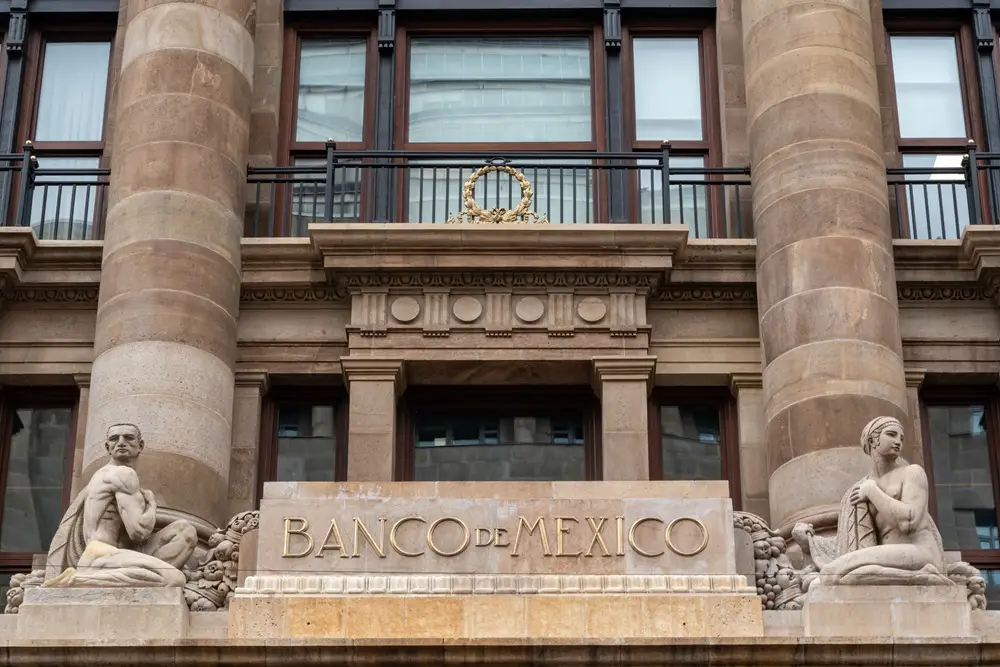
The Bank of Mexico (Banxico) has once again lowered its benchmark interest rate, marking the latest move in a series of reductions aimed at stimulating economic growth. This decision comes despite persistent concerns over accelerating inflation and a noticeable slowdown in the country’s economic expansion.
This latest cut brings the cost of borrowing down to 7%, a move anticipated by all 27 economists surveyed by Bloomberg. However, the decision was not unanimous, with one member of the monetary policy committee voting to maintain the current rate, highlighting internal divisions within the bank.
The central bank has now implemented twelve consecutive rate cuts, even as overall inflation has seen an uptick and the core inflation rate remains stubbornly above the 4% mark. Banxico’s target inflation rate is 3%, with a permissible range of one percentage point above or below.
Inflationary Headwinds Persist
Annual inflation in Mexico accelerated to 3.8% in November, surpassing the median economist estimate of 3.70% and showing an increase from October’s 3.57%. This upward trend is a significant concern for policymakers attempting to manage price stability.
Core inflation, which excludes the volatile prices of food and fuel, has been particularly persistent, staying above 4%. In November, it rose to 4.43%, up from 4.28% in October, indicating underlying inflationary pressures within the economy.
The current cycle of monetary easing by Banxico began in March of the previous year. At that time, the interest rate stood at a considerably higher 11.25%, demonstrating a significant shift in the bank’s monetary policy stance.
Economic Growth Concerns and Credibility Questions
Economists at Banco Base, led by Gabriela Siller, had recommended holding the interest rate steady prior to the decision. They cited the gradual increase in prices as a reason to pause the rate cuts, warning that further reductions could be inappropriate given the inflationary risks.
Concerns about Banxico’s credibility have been raised, particularly regarding its ability to bring inflation under control. Some analysts, like Heath, have characterized the bank’s expectation of reaching the 3% inflation target by the third quarter of next year as unrealistic, given the current data.
Banxico policymakers have consistently voiced their worries about a sluggish economy. This slowdown has been exacerbated by ongoing uncertainty surrounding intermittent U.S. tariffs on Mexican exports, creating a challenging environment for businesses and trade.
GDP Slowdown and Future Projections
The Mexican Gross Domestic Product (GDP) experienced a contraction of 0.2% in the third quarter of this year compared to the same period in 2024, following a period of stagnation in the second quarter. This indicates a weakening economic performance.
In response to these trends, Banxico has halved its GDP growth estimate for the current year to a mere 0.3% in its central scenario, as detailed in its quarterly inflation report last month. Despite this downward revision, the bank still anticipates the economy to grow by 1.1% in 2026 and 2% in 2027.
Victoria Rodriguez Ceja, the head of the central bank, has expressed optimism that the fourth quarter will not see further contraction, following the slight downturn in the preceding quarter. This suggests a potential stabilization of economic activity.
Recent analysis from Citi indicates that Mexican economists are forecasting a 0.4% GDP growth for the current year. They have also revised their inflation forecast for the end of 2025 upwards, from 3.79% to 3.90%, reflecting ongoing price pressures.

Empowering you to master your money with confidence and clarity. On this channel, we break down personal finance—from budgeting basics and saving smarter to debt-free strategies and practical investing—all in easy-to-understand language.
Expect weekly deep dives into real-life financial questions, step-by-step tutorials, and expert insights that make money topics approachable and actionable. Whether you’re building emergency savings, paying off loans, or planning for the future, you’re in the right place to get informed, empowered, and financially confident.