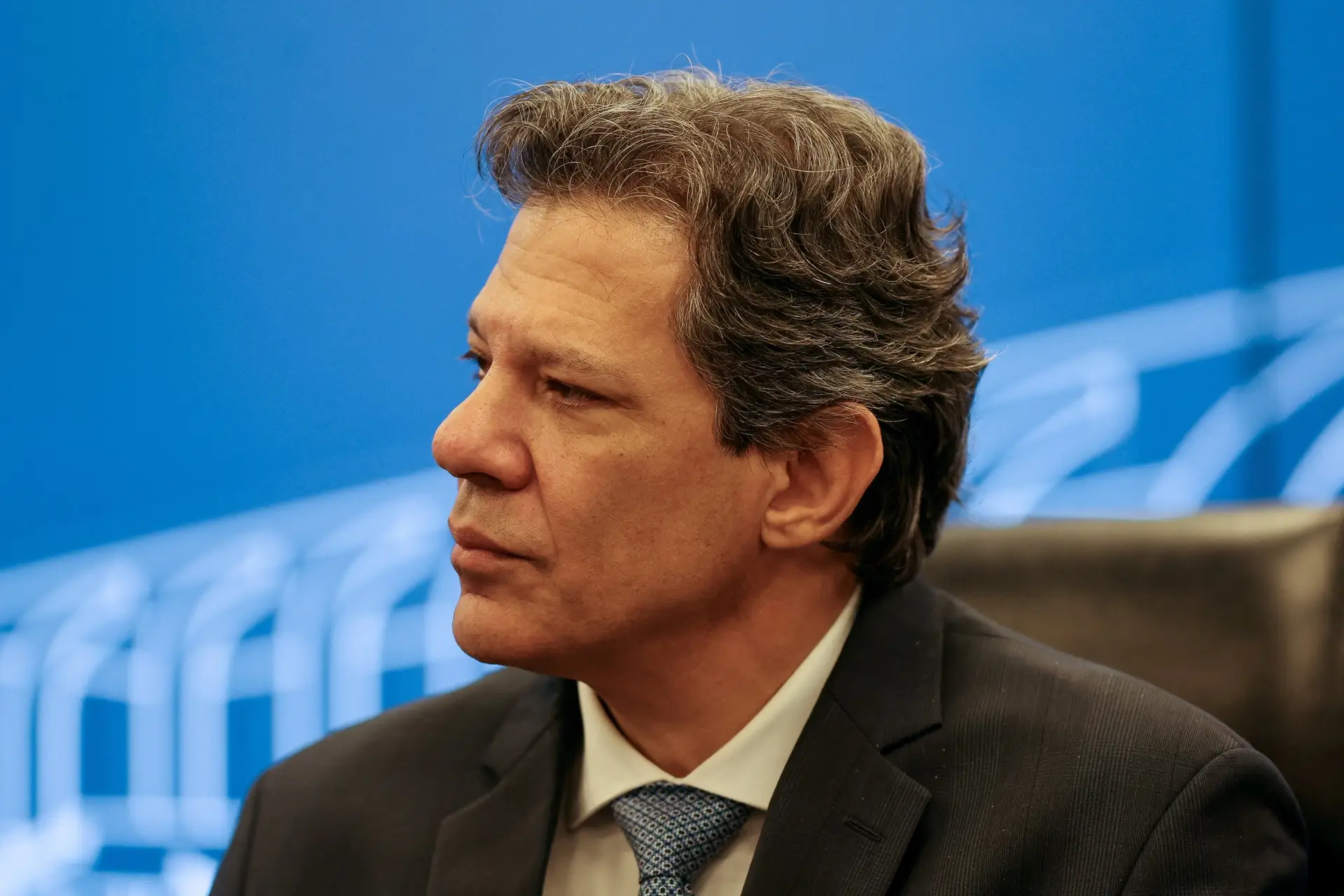
Finance Minister Fernando Haddad has acknowledged that the 2026 budget presents significant challenges, but firmly defended its viability, asserting that compliance is “credible.” He emphasized the economic team’s ongoing efforts to restore fiscal balance, citing the achievement of a zero-deficit target in 2024 due to increased ordinary revenues and reduced extraordinary ones.
Haddad refuted claims of naivety in incorporating projects not yet approved by Congress into the 2026 budget. He explained that fiscal responsibility necessitates including necessary measures to support budget proposals. The minister stressed that he has never submitted an “absurd” budget or one he knew was unapprovable, noting the limited discretion a Finance Minister has in budget matters.
This defense comes as Haddad continues to navigate complex economic waters, facing scrutiny over fiscal projections and past government policies. He also highlighted the tax reform as his most significant achievement, describing it as a “colossal” initiative that will transform the country. These statements were made during a recent press conference, as reported by Estadão Conteúdo.
Haddad Addresses Budget Credibility and Fiscal Reconstruction
Minister Haddad stated, “There is nothing inconsistent in the 2026 budget document, it has challenges, but it is credible.” He reiterated the government’s commitment to “rebuilding the trajectory of balanced accounts.” Haddad pointed to 2024 as an example, where ordinary revenues exceeded expectations while extraordinary revenues were lower, allowing the government to meet its zero-deficit target.
Regarding the inclusion of unapproved projects, Haddad argued, “When you have to make a fiscal effort, it is impossible to send the budget without the necessary measures to support it.” He maintained that he has never submitted a budget he considered unfeasible or “approvable” beforehand, highlighting the limited “discretion” of the Finance Minister in such matters.
Tax Reform Praised, Past Fiscal Issues Recalled
Haddad identified the tax reform as his “greatest victory” at the Finance Ministry, calling it “colossal” and transformative for Brazil. He acknowledged that more work is needed but urged a look at the starting point, arguing that public finances have been disorganized since 2015. He claimed to have inherited a R$ 180 billion deficit from the previous minister, Paulo Guedes, who himself inherited a similar deficit from Henrique Meirelles.
The minister also criticized the spending cap, implemented during the Michel Temer administration, for losing credibility. He noted that the current government inherited high interest rates. Similarly, he stated that the Central Bank President, Gabriel Galípolo, also inherited “serious problems.”
Administrative Reform and State-Owned Enterprises Discussed
On the subject of administrative reform, Haddad mentioned that the public servant payroll as a proportion of GDP has remained relatively stable. When discussing state-owned enterprises, he clarified that “investment often sounds like a deficit, but it is not.” He cited the operational system for the tax reform, estimated to cost around R$ 2 billion, questioning, “How can you leave the tax reform, which will change the face of the country, without this investment?”
For 2026, Haddad indicated potential measures such as an Import Tax (II) and IOF on IPI, alongside other possibilities like taxes on large transactions. He also pointed to Supreme Court decisions that are nearing final judgment and could yield “a reasonable amount” in 2026, describing a “map of possibilities for small adjustments” to compose the 2026 fiscal picture.
Haddad Criticizes “Fake News” and Defends Government Actions
Haddad expressed frustration over what he termed “fake news” targeting his ministry over the past three years, stating the Finance Ministry has been a victim like never before. He specifically cited the “tax on shopping bags” (taxa das blusinhas) and Pix as examples of misinformation.
Regarding the “tax on shopping bags,” Haddad clarified that the ICMS collected on international purchases goes to the states, a fact often misunderstood. He questioned why governors like Tarcísio de Freitas were not questioned about taxing these items, suggesting political motivations. He also noted that all parties in Congress voted in favor of this tax.
On Pix, Haddad described the backlash against the Finance Ministry for an alleged tax on the system as “brutal.” He rhetorically asked where the Finance Ministry erred concerning international purchases and Pix, arguing that the “tax on shopping bags” and the deficits inherited from previous ministers are often overlooked.
Discretionary Spending and Tax Policy Updates
Haddad also commented on the bill concerning fiscal benefits, clarifying that the recovery of outstanding payments, which can revive canceled amendments, did not involve the Finance Ministry. He defended the government’s adherence to the complementary law on amendments, which was formulated in conjunction with the Supreme Court (STF).
“Execution of amendments is demanded according to the law agreed upon at the Supreme Court,” he stated. “There is a law, which you can question, but it is much better than having no law at all. Because until then, we had no parameters to regulate this matter. Some parameters were created to regulate this matter,” he explained during a coffee with journalists.
He added that it is natural for the government to be held accountable for budget execution, including “mandatory amendments” and “bloc amendments,” which are being executed in accordance with the law.
Taxation Pipeline and Past Government Criticisms
Concerning the tax pipeline, Haddad confirmed that there are no new initiatives beyond the regulation of the selective tax (IS), which involves setting rates for each sector. This text needs to be submitted to Congress. “It’s almost ready, but it hasn’t been presented to the Civil House yet, it’s more or less ready in the Finance Ministry’s kitchen. But again, I have to do it in parts, because if I don’t do it in parts, I won’t get things approved.” He mentioned waiting for discussions around the selective tax on sugary drinks in Congress before finalizing this.
Haddad also reiterated his criticisms of past governments, noting that they became too reliant on the old spending cap and neglected the primary surplus. He emphasized the need for ongoing reforms to improve the sustainability of public spending over time.

Empowering you to master your money with confidence and clarity. On this channel, we break down personal finance—from budgeting basics and saving smarter to debt-free strategies and practical investing—all in easy-to-understand language.
Expect weekly deep dives into real-life financial questions, step-by-step tutorials, and expert insights that make money topics approachable and actionable. Whether you’re building emergency savings, paying off loans, or planning for the future, you’re in the right place to get informed, empowered, and financially confident.