
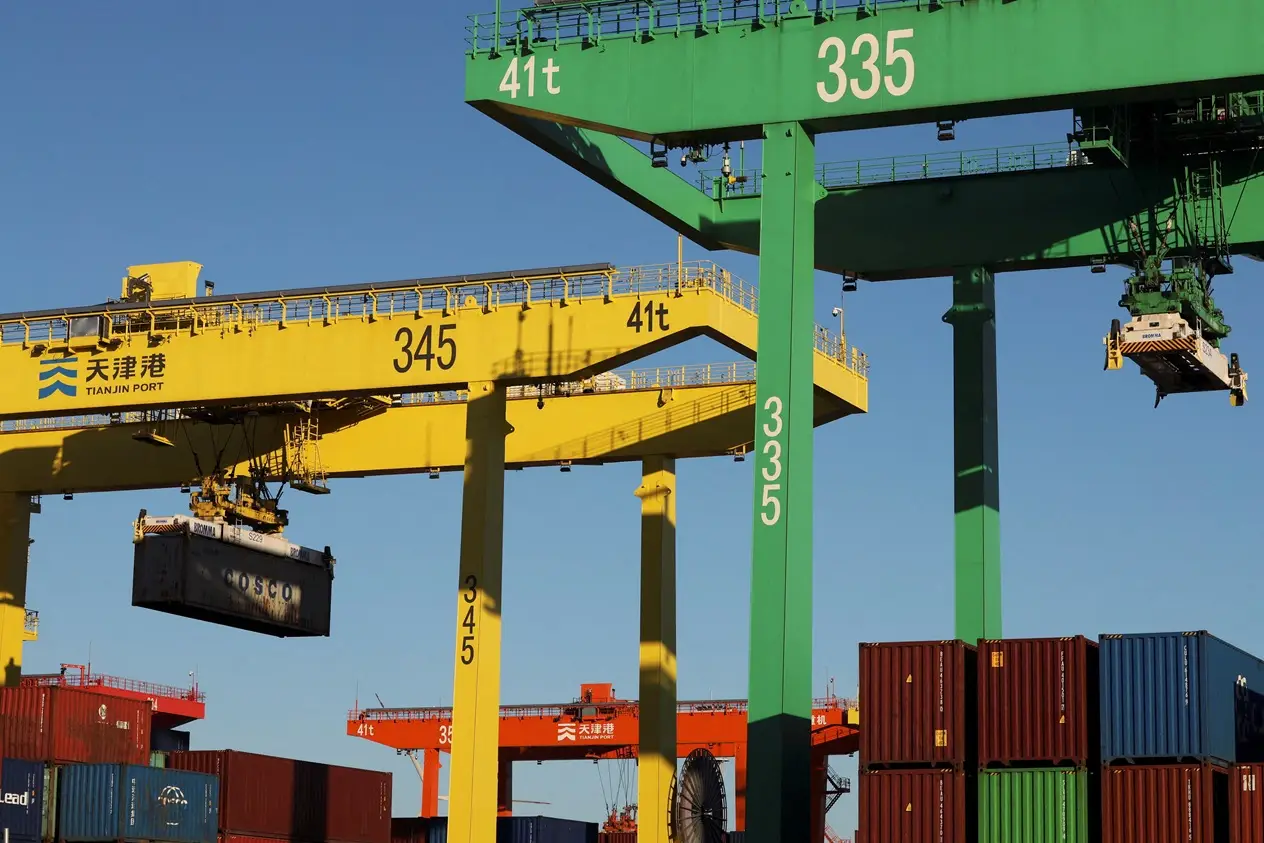
China has achieved a historic milestone, surpassing a staggering $1 trillion in trade surplus for the first time. This remarkable feat underscores the nation’s immense dominance across a vast spectrum of global manufacturing, from cutting-edge electric vehicles to everyday low-cost apparel.
The surge in China’s trade performance, as reported by the General Administration of Customs on December 8th, highlights a significant increase in exports while imports saw a slight decrease. This widening gap between what China sells to the world and what it buys is a testament to decades of strategic industrial policies and human capital development.
This unprecedented surplus not only solidifies China’s position as the world’s manufacturing hub but also raises critical questions for global trade dynamics and international economic relations. The implications are far-reaching, prompting reactions from major economic blocs and signaling potential shifts in global trade strategies. According to information released by the Associated Press, the country’s trade surplus for goods this year has now exceeded $1 trillion.
From ‘Factory of the World’ to High-Value Exports
China’s journey from a poor agrarian economy in the late 1970s to the world’s second-largest economy is a remarkable story of transformation. Initially known for producing low-cost items like wigs, sneakers, and Christmas lights, earning it the moniker “factory of the world” in the 1980s and 1990s, China has steadily climbed the value chain.
Over the years, the nation has aggressively built upon this foundation, becoming an indispensable part of global supply chains in sectors ranging from technology and transportation to medicine and consumer goods. In recent years, its leading companies have become dominant players in crucial industries such as solar panels, electric vehicles, and the semiconductors that power countless everyday devices.
Global Repercussions and Shifting Trade Flows
The sheer scale of China’s industrial might is a well-known factor in its trade relationships, often becoming a focal point for international tensions. Last year, China’s trade surplus reached a record $993 billion, and crossing the $1 trillion mark this year further emphasizes its export dominance and is likely to intensify scrutiny over global economic imbalances.
Jens Eskelund, president of the European Union Chamber of Commerce in China, noted, “It’s so large that it’s obvious that it is not just the United States or Europe, but the entire world that will have to finance this gap.” This sentiment highlights the global impact of China’s trade performance.
Navigating Tariffs and Diversifying Markets
Despite facing significant tariffs from the United States, China’s overall exports have continued to grow. While the U.S. has imposed substantial tariffs, averaging around 37% on Chinese imports according to the Urban-Brookings Tax Policy Center, China has effectively redirected its shipments to other destinations.
Exports to Africa, Southeast Asia, and Latin America have seen notable increases of 26%, 14%, and 7.1% respectively, this year. Conversely, Chinese exports to the U.S. in November fell by 29% year-on-year. This strategic redirection has helped offset the impact of U.S. tariffs, as Zichun Huang, an economist at Capital Economics, observed, “The role of trade redirection to offset the negative impact of U.S. tariffs still appears to be increasing.”
Future Outlook and European Concerns
Looking ahead, few economists anticipate a significant slowdown in China’s trade momentum, despite geopolitical headwinds and diversification efforts by other economies. Analysts from Morgan Stanley predict that China’s share of global goods exports could reach 16.5% by the end of the decade, up from approximately 15% currently. This growth is attributed to China’s leadership in advanced manufacturing and its ability to anticipate global demand trends.
This trajectory has raised alarms, particularly in Europe, which has seen its automotive, technology, and luxury goods sectors challenged by agile Chinese competitors. French President Emmanuel Macron recently warned that Europe might be forced to take strong measures, including imposing tariffs, if China does not address its trade advantage. He expressed concern that “China is hitting the heart of the European industrial and innovation model.” The relative weakness of the Chinese yuan, which has fallen about 10% against the euro this year, further accentuates this imbalance, according to Eskelund.
The concerns are not limited to Europe, as Eskelund points out a growing number of bilateral trade complaints and actions against China from various regions. He anticipates an increase in trade defense initiatives globally, warning that “we might reach a point where things break.”

Empowering you to master your money with confidence and clarity. On this channel, we break down personal finance—from budgeting basics and saving smarter to debt-free strategies and practical investing—all in easy-to-understand language.
Expect weekly deep dives into real-life financial questions, step-by-step tutorials, and expert insights that make money topics approachable and actionable. Whether you’re building emergency savings, paying off loans, or planning for the future, you’re in the right place to get informed, empowered, and financially confident.