Brazil on Track for Historic Low Inflation, Says Finance Minister Haddad
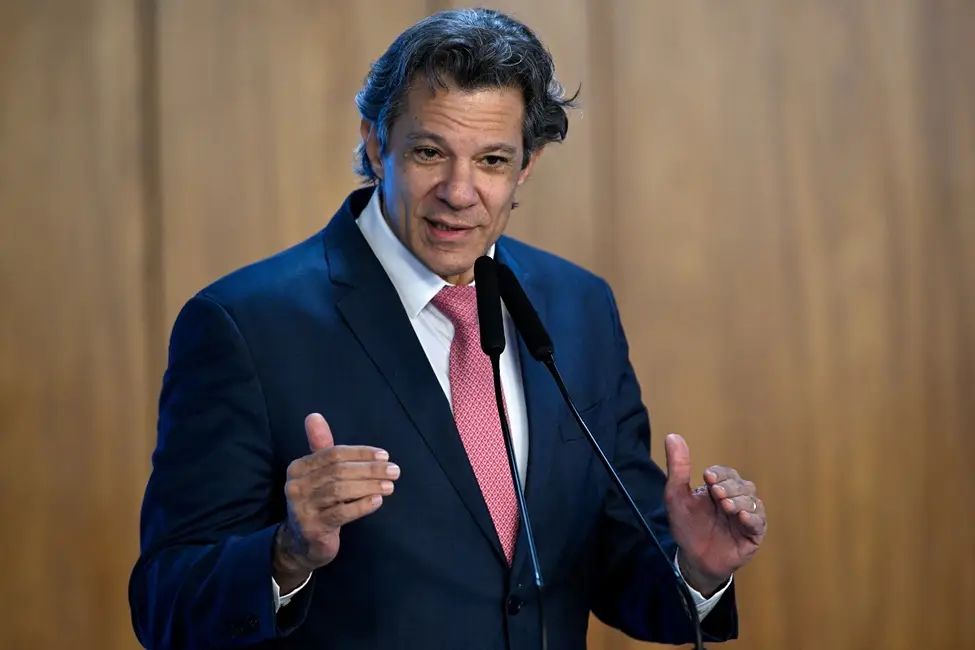
Brazil’s Finance Minister, Fernando Haddad, announced on Thursday that the current government is set to record the lowest inflation in the country’s history over its four-year term. This significant economic achievement was revealed during the 6th plenary meeting of the Council for Economic and Social Development (CDESS), also known as the Conselhão.
Haddad emphasized that this low inflation rate surpasses figures from various historical periods, including the Empire, the Old Republic, the Estado Novo, and the Plano Real era. This statement comes as the National Broad Consumer Price Index 15 (IPCA-15) currently stands at 4.5% for the 12 months ending in November.
The minister’s remarks, as reported by Agência Brasil, underscore a period of economic stability and growth for Brazil, bolstering confidence among both domestic and international observers.
A Dual Success: Low Inflation and Unemployment
According to Minister Haddad, the Brazilian government is successfully balancing two crucial economic indicators: **decreasing inflation** and **falling unemployment**. He pointed out that Brazil’s unemployment rate reached 5.4% in the last quarter, marking the lowest figure since the Brazilian Institute of Geography and Statistics (IBGE) began its historical series in 2012.
“When you can reconcile falling inflation with falling unemployment, you have the lowest level of discomfort for a society. We are managing to reconcile this,” Haddad stated, highlighting the positive impact on the general population’s well-being.
Government Policies Boost Food Prices and Infrastructure Investment
Haddad attributed the reduction in food inflation, a critical factor for low-income workers, to government initiatives such as the Plano Safra and the National Program for Strengthening Family Agriculture (Pronaf). He asserted that Brazil will see its **lowest food inflation rate in history**.
He also lamented the lack of public attention given to the government’s positive economic results. Haddad cited a **record investment in infrastructure**, reaching R$ 261 billion in 2024, as a prime example of an achievement that often goes unnoticed domestically but surprises foreign investors.
The minister also noted the appreciation of the Brazilian Real against the US dollar, with the dollar currently trading around R$ 5.30, contradicting earlier predictions of R$ 8. He questioned why certain analysts with a history of inaccurate economic forecasts continue to hold significant influence.
Fiscal Responsibility and International Confidence
Addressing fiscal matters, Haddad stated that the fiscal deficit during President Luiz Inácio Lula da Silva’s current mandate will be **70% lower than the previous government’s** and **60% lower than the one before that**. He emphasized the government’s commitment to transparency in public finances and adherence to international standards.
“We are providing total transparency for public accounts. We have returned to respecting international standards. That’s why we are the second-largest destination for foreign investment in the world today,” he added.
Minister of Institutional Relations, Gleisi Hoffmann, echoed Haddad’s sentiments, reinforcing that Brazil’s economy is experiencing sustainable growth that is improving people’s lives. She highlighted the Conselhão’s contributions, including proposals for sustainable public procurement and the electronic registration of invoices, which aim to reduce credit costs and combat fraud.
Hoffmann also pointed to the positive impact of income tax exemption for those earning up to R$ 5,000, calling it a step towards tax justice. She suggested further advancements, such as ending the 6×1 work schedule to enhance workers’ quality of life.
Vice President and Minister of Development, Industry, Commerce, and Services, Geraldo Alckmin, underscored policies benefiting various economic sectors, including the automotive industry, with several manufacturers resuming or expanding production.

Empowering you to master your money with confidence and clarity. On this channel, we break down personal finance—from budgeting basics and saving smarter to debt-free strategies and practical investing—all in easy-to-understand language.
Expect weekly deep dives into real-life financial questions, step-by-step tutorials, and expert insights that make money topics approachable and actionable. Whether you’re building emergency savings, paying off loans, or planning for the future, you’re in the right place to get informed, empowered, and financially confident.