
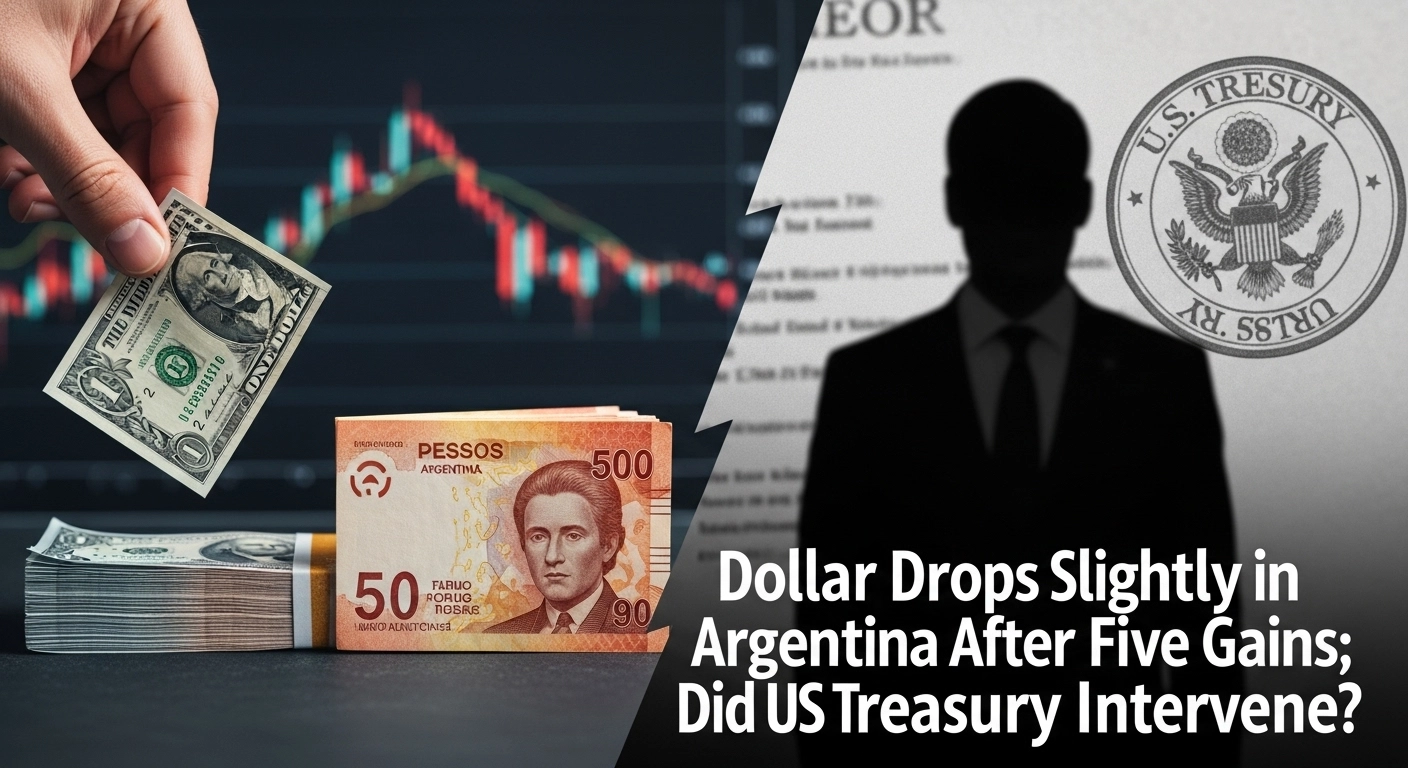
Argentina has been in the global financial spotlight as currency volatility intensifies in the run-up to crucial parliamentary elections. After five consecutive sessions of rising rates, the official exchange rate of the U.S. dollar in Argentina experienced a slight dip — but not without some high-profile intervention. Here’s what happened, and what it means for the country’s fragile economy.
Recent Moves in the Dollar Exchange Rate
On Wednesday, Argentina’s official wholesale dollar rate fell by a modest 0.13%, closing at 1,489 pesos per U.S. dollar. This small decline followed a tense period during which the rate flirted with the upper limit of the government’s currency band, peaking at 1,491.56 pesos. According to local financial experts cited by leading newspapers (Clarín), this respite did not come about naturally. Instead, it was the result of intervention by Argentina’s central bank (BCRA) — and, reportedly, the U.S. Treasury as well.
U.S. Treasury Steps Into the Fray
Market data from Clarín shows that trading volume was exceptionally high: $793 million in the spot market and an eye-popping $922 million in futures were exchanged on Wednesday. These numbers are noteworthy given that market insiders believe the U.S. Treasury may have sold up to $450 million to help stabilize the peso.
This follows the BCRA’s own intervention the day prior, when it reportedly spent $45.5 million to defend the upper edge of the currency band, as reported by La Nación.
Key Facts at a Glance
- Official dollar rate dipped to 1,489 pesos after peaking at 1,491.56.
- Reports suggest up to $450 million in U.S. Treasury sales contributed to market calm.
- Argentina’s central bank spent $45.5 million earlier in the week to stabilize the peso.
- Traders exchanged $793 million (spot) and $922 million (futures) in a single day.
- Political uncertainty ahead of elections is fueling investor anxiety and driving demand for dollars.
How Political Uncertainty Fuels Dollar Demand
The backdrop to this financial see-saw? Argentina’s looming parliamentary elections. Investors have been scrambling to protect their portfolios against possible adverse outcomes — especially fears that a strong win by the Peronist party could spur further economic instability.
According to market analysts from Max Capital, local investors are hedging their bets, seeking dollars as a safeguard against uncertainty in the days leading up to the vote. This rush for greenbacks, often called “dollarization,” is putting upward pressure on the exchange rate and creating volatility in both official and parallel markets.
The Gap Between Official and “Blue” Dollar Rates
While the official retail exchange rate at Banco Nación held steady at 1,515 pesos per dollar — its highest nominal value to date — most Argentinians looking to buy dollars turn to the so-called “dólar blue.” On Wednesday, the blue dollar was trading at 1,530 pesos for buying and 1,550 for selling, a substantial premium reflecting ongoing fears and black-market demand.
Insights From Market Experts
Gustavo Ber, an analyst quoted in Ámbito Financiero, noted, “The wholesale dollar continues to chase the upper edge of the currency band, which has required central bank intervention. All eyes are now on Sunday’s election: after the vote, we’ll be able to assess whether this rush to dollarize was warranted.”
Economy Minister Luis Caputo has sought to calm the waters, dismissing rumors of an imminent overhaul to Argentina’s currency regime, regardless of the election results. “As soon as people see constant talk on television about the end of currency controls, it triggers a wave of dollarization like what we’re seeing right now,” Caputo explained. Based on previous episodes under the current administration, he even predicted that the exchange rate could correct downward by as much as 10% after the election dust settles.
What This Means for Argentina — And for Investors
Argentina’s currency market turmoil is a stark reminder of how political uncertainty and market sentiment can combine to throw economies off balance. The country’s reliance on central bank and foreign interventions underscores both the fragility of emerging markets and the interconnectedness of global finance.
In Summary
- Government and U.S. Treasury interventions have temporarily eased exchange rate pressure.
- Local and foreign investors remain wary ahead of pivotal elections.
- The divide between the official and parallel (“blue”) dollar rates highlights persistent distrust in the peso.
Looking Ahead: Stay Informed and Prepared
Argentina’s story serves as a cautionary tale for investors and policymakers alike about the ripple effects of political uncertainty on currency markets. With major elections looming and interventions likely to continue, staying updated on financial developments is more important than ever.
For more detailed coverage, check out the original Clarín and La Nación reports. And as always, keep a close eye on the economic landscape, especially if you have stakes in emerging markets.
Curious about how this drama will play out after the votes are counted? Follow us for the latest updates on Argentina’s economy, and make sure your investments are ready for whatever comes next!

Empowering you to master your money with confidence and clarity. On this channel, we break down personal finance—from budgeting basics and saving smarter to debt-free strategies and practical investing—all in easy-to-understand language.
Expect weekly deep dives into real-life financial questions, step-by-step tutorials, and expert insights that make money topics approachable and actionable. Whether you’re building emergency savings, paying off loans, or planning for the future, you’re in the right place to get informed, empowered, and financially confident.