
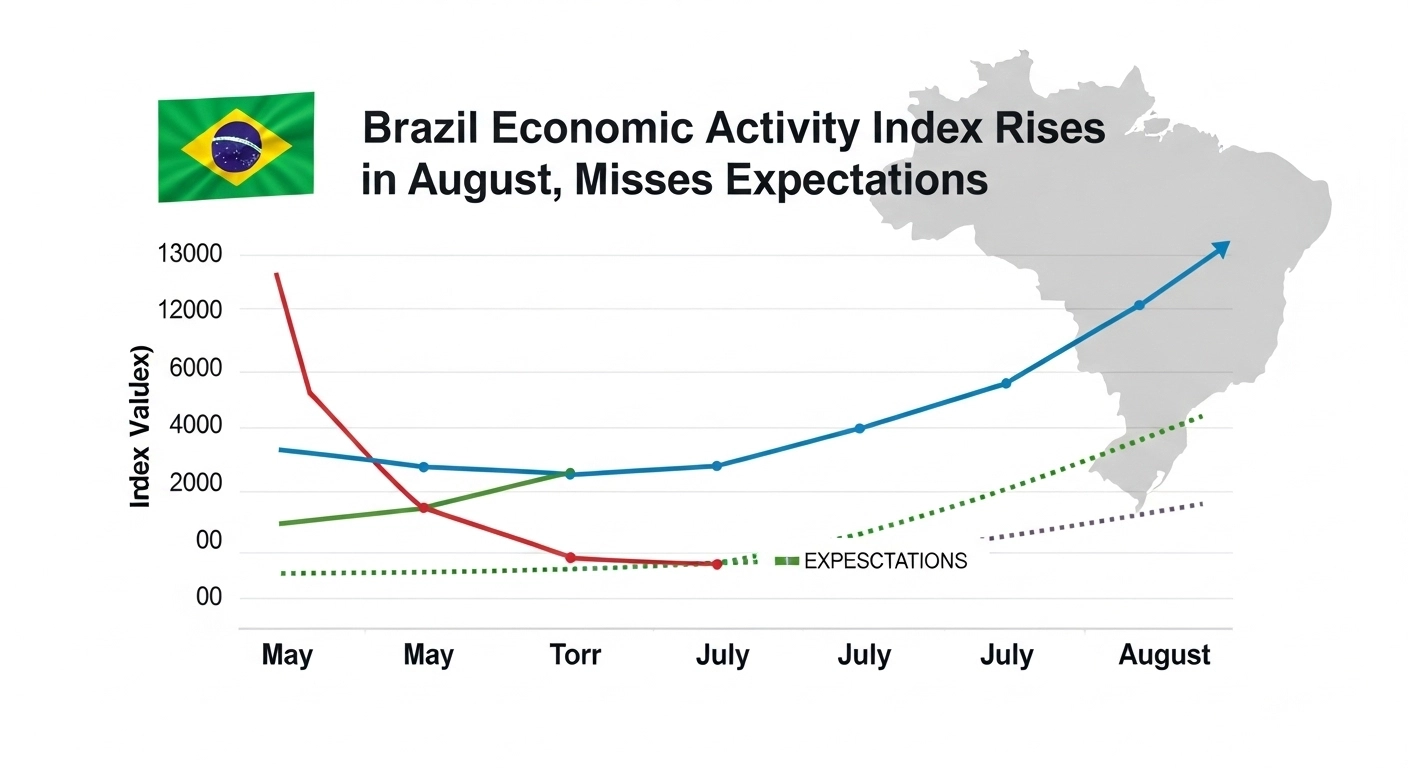
After three consecutive months of decline, Brazil Economic has taken a step in the right direction. New data released by the Central Bank of Brazil indicates a mild recovery in August, signaling some resilience in Latin America’s largest economy—even as global uncertainties and domestic challenges linger. So, what drove this turnaround, and what does it mean for Brazil’s future growth prospects? Let’s delve into the numbers and trends shaping Brazil right now.
Slow but Steady Growth: What the Latest Numbers Reveal
Brazil’s Economic Activity Index, known locally as the IBC-Br and widely considered a reliable early indicator of the nation’s GDP performance, grew by 0.4% in August compared to July on a seasonally adjusted basis, according to the Central Bank. While this is certainly a positive step after recent contractions, the increase fell short of the 0.6% expansion forecast by economists in a Reuters poll. In comparison, July saw a slight dip of 0.52%, following a previous estimate of -0.50%.
When placed in a year-over-year context, the IBC-Br index edged up just 0.1% this August versus the same month in 2023. Over a rolling 12-month period, however, Brazil’s broader activity logged a healthy 3.2% gain—demonstrating that the economy still has momentum, even if the pace has slowed.
Key Sectors: Who’s Rising, Who’s Falling?
A closer look at the Central Bank’s breakdown reveals some important dynamics across Brazil’s industries:
- Industrial Output: Surprised on the upside, growing 0.8% month-over-month in August.
- Services Sector: Managed a small but meaningful 0.2% gain, marking the seventh consecutive month of expansion.
- Agriculture: Stood out for the wrong reasons, suffering a notable 1.9% decline.
- Retail Sales: Increased by 0.2%, breaking a streak of four months of decreases.
If we set aside agriculture, overall economic activity for the month rose by 0.4%.
List: Brazil’s August Economic Highlights
To sum up the latest economic movements:
- Industrial growth outpaced forecasts, rising 0.8% in a month.
- Services continued their steady upward trend with a 0.2% increase.
- Agriculture saw a significant 1.9% contraction.
- Retail sales snapped a months-long losing streak, edging up 0.2%.
- Overall economic activity grew 0.4%—a welcome turnaround after three months of setbacks.
Tariffs and Interest Rates: Two Big Headwinds
August also marked a major change in the landscape for Brazil’s exporters. A new 50% tariff imposed by the United States took effect, targeting Brazilian goods like beef, coffee, fruit, and footwear. Despite these new trade challenges, positive economic momentum—especially in manufacturing and services—helped cushion the blow.
Meanwhile, Brazil continues to grapple with a restrictive monetary environment. The Central Bank’s most recent policy meeting kept the benchmark Selic interest rate at a sky-high 15% annually. Officials emphasized in their meeting notes that this marks the start of a new monetary policy phase, with the high Selic rate likely to remain unchanged for a prolonged period as Brazil continues to fight inflation.
Looking Forward: Mixed Projections for 2025 and Beyond
With all these factors at play, what’s in store for Brazil’s economic future? According to the Central Bank’s closely watched Focus survey of market analysts, Brazil’s GDP is expected to grow by about 2.16% in 2025 before decelerating to 1.80% in 2026. The IBC-Br index itself is a composite, drawing on proxies for agricultural, industrial, and service production—plus production-based taxes—to estimate short-term trends well ahead of official GDP results.
Tools for Tracking and Forecasting Growth
For those interested in monitoring potential investment returns in this evolving environment, the XP simulator is a free tool that gives quick insight into possible financial outcomes. The tool can help users understand how their money might grow given Brazil’s current economic conditions.
Why This Matters: Insights for Investors and Observers
Brazil’s economic journey is a story of both resilience and caution. Factors like strong industrial growth and steady services have enabled the country to rebound, even as challenges—such as falling agricultural output, high borrowing costs, and uncertainties from U.S. trade policy—persist. Shifts like these can have ripple effects globally, as Brazil is a key supplier of food, metals, and energy to world markets.
Take Action: Stay Informed and Seize Opportunities
Keeping an eye on Brazil’s economic indicators, policy shifts, and the global context is essential for investors, business leaders, and anyone with an interest in emerging markets. As Brazil adapts to both internal and external pressures, windows of opportunity may open for those ready to act. Want to see how your assets might perform in this climate? Try out the XP free simulator for instant insights.

Empowering you to master your money with confidence and clarity. On this channel, we break down personal finance—from budgeting basics and saving smarter to debt-free strategies and practical investing—all in easy-to-understand language.
Expect weekly deep dives into real-life financial questions, step-by-step tutorials, and expert insights that make money topics approachable and actionable. Whether you’re building emergency savings, paying off loans, or planning for the future, you’re in the right place to get informed, empowered, and financially confident.