
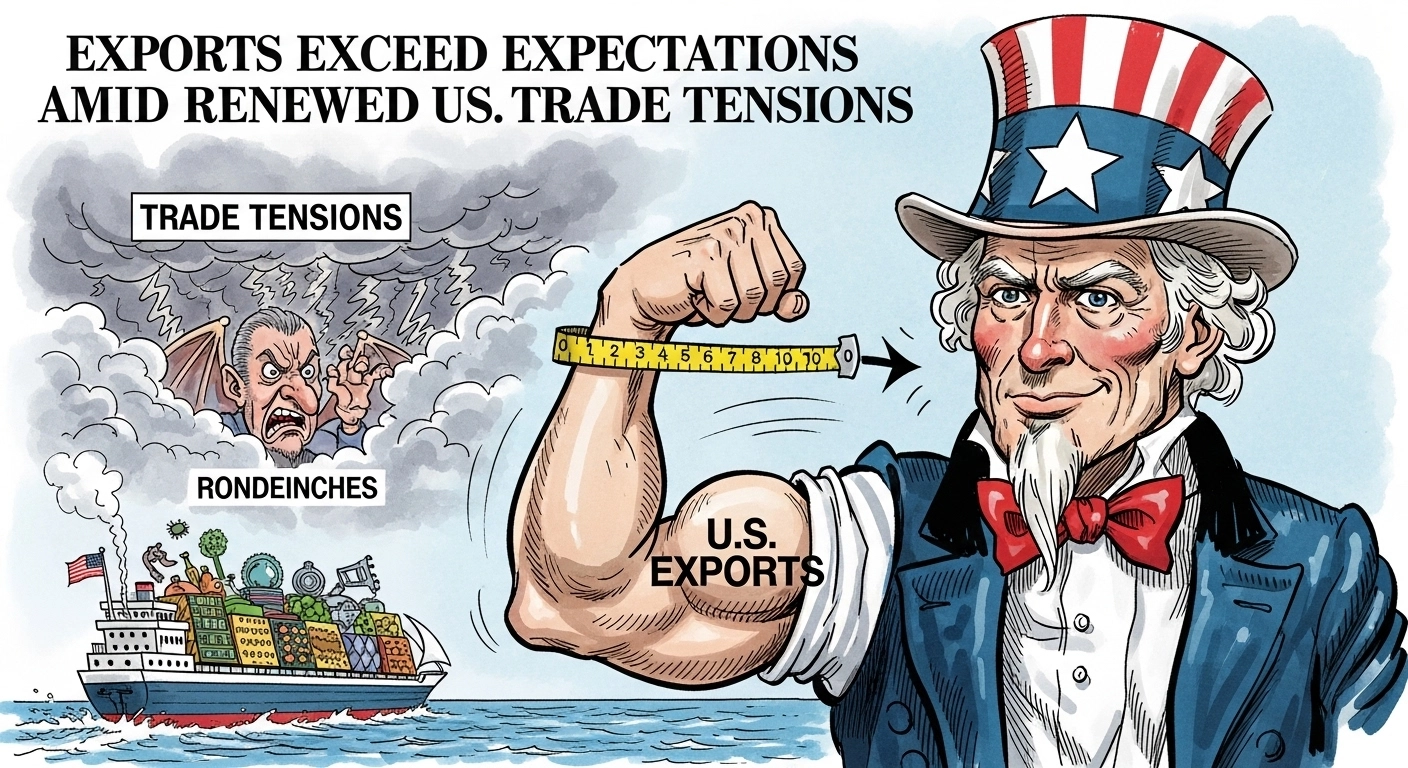
China’s Export Growth Surges, but US Tariff Threats Spark Renewed Economic Jitters
As the world’s economic powerhouse, China’s performance on the global stage never fails to draw attention. In September, the country posted an impressive surge in exports, defying cautious projections and fueling hope for its ongoing growth. Yet, even as Chinese manufacturers celebrate, escalating trade tensions with the United States threaten to cast a shadow on this momentum—bringing concerns over jobs, wider economic stability, and deflation back into sharp focus.
Navigating a Shifting Global Landscape
For decades, China has relied on its robust export sector to drive growth, providing jobs for millions and positioning the nation as a cornerstone of worldwide supply chains. However, rising trade tensions—most notably between Beijing and Washington—have forced Chinese policymakers to rethink their strategies.
President Donald Trump’s recent threats to slap triple-digit tariffs on Chinese goods have reignited fears of a new era of protectionism. These proposed measures came as a response to Beijing’s decision to impose export controls on rare earth elements, resources where China enjoys a near-monopoly and crucial to industries ranging from electric vehicles to aerospace.
A Diversification Strategy: China Looks for New Trade Partners
Despite the turbulence, China’s economic adaptability has been on full display. Throughout 2024, the country has aggressively diversified its export markets to lessen its reliance on American buyers and buffer against US tariffs. These efforts have kept China’s GDP growth largely on track, with the government aiming for a target of about 5% this year.
Key Highlights from China’s Latest Trade Data
Let’s break down the latest numbers out of China:
- Exports jumped 8.3% year-over-year in September, according to official customs data—handily beating the 6% rise forecast by a recent Reuters survey.
- In August, the growth rate was 4.4%, showing that the upward momentum is picking up steam.
- Exports to the US, however, fell 27% on the year, reflecting the ongoing strain in Sino-American relations.
- Conversely, shipments to the European Union rose 14%, to Southeast Asia by 15.6%, and—most stunningly—to Africa by 56.4%.
- Imports also saw a boost, up 7.4% in September—a pace not seen since April 2024, outstripping both the previous month’s 1.3% gain and the anticipated 1.5% rise.
Despite these strong trade numbers, China’s trade surplus shrank to $90.45 billion, down from $102.33 billion in August and below the predicted $98.96 billion mark. The narrowing surplus highlights both the strengths and vulnerabilities currently at play.
The Implications of Renewed Tariff Threats
While China’s economic resilience has so far exceeded many expectations, there is no denying the risks associated with a further fallout between the world’s two largest economies. As noted by Julian Evans-Pritchard of Capital Economics, “Although the Chinese economy has proved more resilient to US tariffs than many feared, there remains significant downside risk if a deeper rift with the US develops.”
The possibility of the US enacting tariffs exceeding 100% would undoubtedly pressure smaller Chinese exporters and threaten factory jobs—already a worry in a country trying to manage a softening labor market amid global instability. An aggressive tariff hike could also set off a deflationary shock within China, lowering factory prices and stoking broader economic anxieties.
Rare Earths: China’s Leverage in the Trade Chess Match
China’s recent move to tighten controls over exports of rare earths and related magnets carries weighty global implications. With its nearmonopoly in this sector, Beijing wields considerable influence over industries such as:
- Automotive manufacturing (especially electric vehicles)
- Renewable energy components
- Aerospace technology
Any major restriction in this supply line could reverberate through entire global industries, threatening production pipelines from Detroit to Berlin.
A Look at the Road Ahead
With so much at stake, many analysts believe that Beijing and Washington will aim to deescalate tensions in the coming weeks—possibly paving the way for a long-anticipated meeting between President Trump and his Chinese counterpart Xi Jinping at the APEC summit scheduled in South Korea.
Xu Tianchen, senior economist at the Economist Intelligence Unit in Beijing, notes, “Chinese companies are actively entering new markets, leveraging the relative cost advantage of their products.” He adds, “Direct exports to the US now account for less than 10% of China’s total. While 100% tariffs would increase pressure on our exporters, I don’t think the impact will be as severe as before.”
Key Takeaways: What You Need to Know
- China’s exports grew at their fastest pace since March, underscoring the country’s adaptability.
- Exports to the US are sliding, but new markets—especially Africa—are booming.
- Rare earth controls give China extra clout in the ongoing trade dispute.
- Trade surplus is shrinking, showing both the strengths and vulnerabilities in China’s position.
- High-level diplomatic talks remain possible, hinting at potential deescalation and compromise.
No matter where you are in the world, the outcome of this US-China trade standoff could have real-world consequences. As China strengthens ties across continents and the US weighs its next move, the coming months will be crucial in shaping the future of trade, jobs, and economic prosperity.
Stay tuned for further developments, and if you’re involved in global business or simply concerned about the world economy, now is the time to keep your finger on the pulse. Explore Reuters for ongoing coverage, and consider how these shifts may affect your sector or investments.

Empowering you to master your money with confidence and clarity. On this channel, we break down personal finance—from budgeting basics and saving smarter to debt-free strategies and practical investing—all in easy-to-understand language.
Expect weekly deep dives into real-life financial questions, step-by-step tutorials, and expert insights that make money topics approachable and actionable. Whether you’re building emergency savings, paying off loans, or planning for the future, you’re in the right place to get informed, empowered, and financially confident.