Introduction: Cautious Pause in a Volatile World
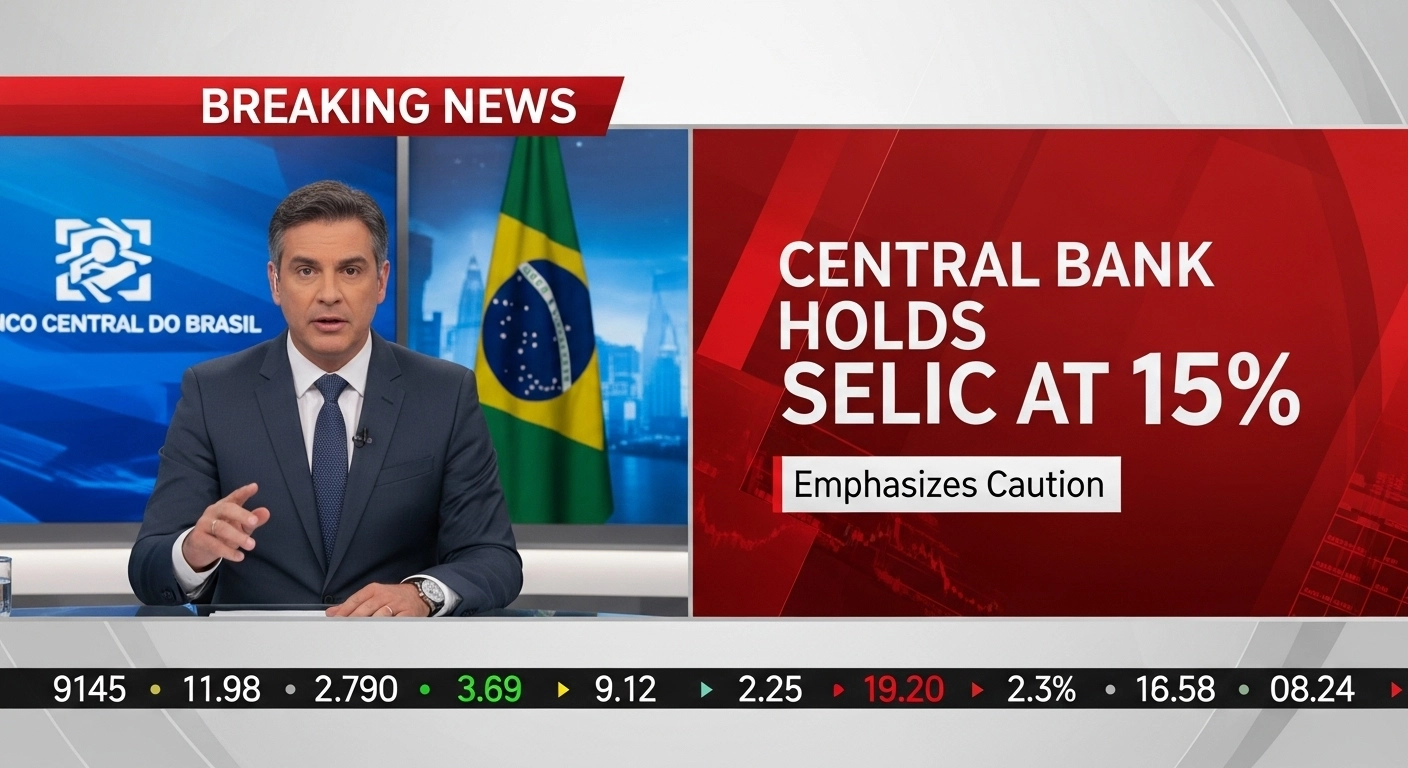
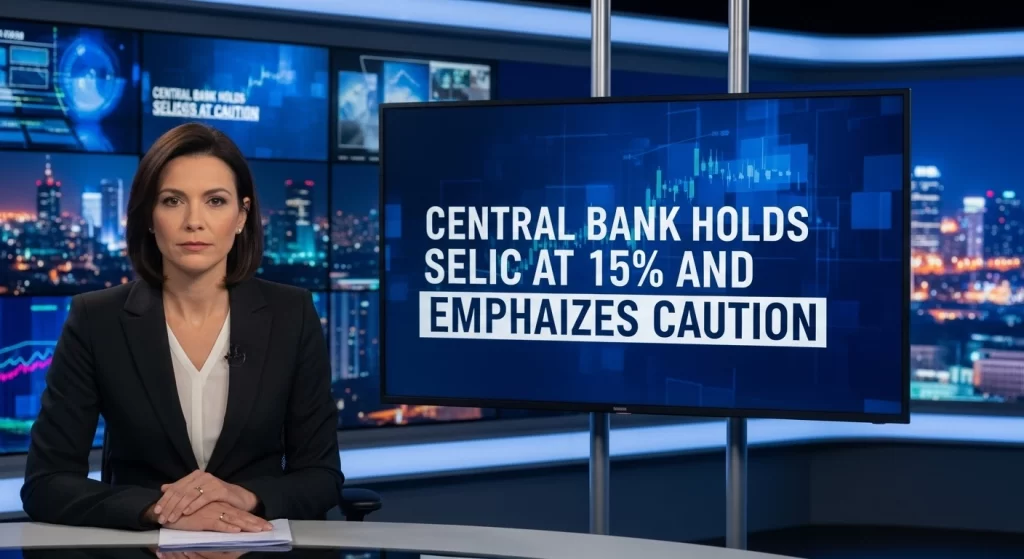
In a world upended by economic turbulence and unpredictable markets, every decision from central banks can have a global ripple effect. This week, Brazil’s Monetary Policy Committee (Copom) remained in the spotlight, as it announced the Selic benchmark interest rate would hold firm at 15%—the highest level seen since July 2006.
Brazilian Central Bank Holds Selic Rate Steady Amid Global Uncertainty
This move, aligning with market expectations, comes against a backdrop of persistent domestic inflation and mounting global uncertainty. As American readers watch their own Federal Reserve take a cautious approach, it’s clear the interconnectedness of global monetary policies is more crucial than ever.
Copom’s Latest Move: Holding Steady at 15%
On Wednesday, Copom stuck to a policy of stability, keeping Brazil’s Selic rate at 15% for another cycle. This decision maintains the restrictive monetary stance, intending to combat stubborn inflation in Brazil while navigating an environment riddled with international tension and market unpredictability.
The committee’s official statement, issued right after the meeting, highlighted that the elevated rate—which hasn’t been this high in 19 years—is a response to “contractionary monetary conditions” and continuous inflationary pressures domestically.
Significantly, Copom’s language has subtly shifted since its July release. Previously, communication referred to a “continuation of the interruption” of rate hikes, signaling an indefinite hold. That phrase has now been omitted, possibly hinting at a new readiness to adjust policy if circumstances warrant.
Global Context: Influence from the U.S. and Beyond
The timing of Brazil’s announcement was particularly noteworthy since it came just hours after the Federal Reserve announced a 0.25 percentage point cut to its key Fed Funds rate. Copom specifically referenced the global environment, noting that the economic policies of the United States and ongoing geopolitical tensions are amplifying volatility and demanding additional caution from emerging economies like Brazil.
As Copom observed, roller coaster-like swings in various asset classes are echoing across global financial conditions, creating both opportunities and heightened risks (read more).
Navigating Domestic Pressures: Inflation Still High
On the domestic front, Copom’s statement recognized that while some economic moderation can be detected, Brazil’s labor market remains robust. More concerning to policymakers is inflation, which continues to run above the established target. The forecast for inflation over the next two years (2025 and 2026) remains “unanchored,” meaning expectations are not firmly under control.
The committee weighed several key risks:
- Upside Risks: Persistent service price inflation, potential further depreciation of the Brazilian real.
- Downside Risks: More pronounced global economic slowdown, falling commodity prices.
Recap: Selic Rate’s Recent Journey
Since January 2025, Copom communications have traced a steady increase in the Selic rate. This tightening path unfolded as follows:
- January: Raised by 1 percentage point to 13.25% due to high inflation and resilient economic activity.
- March: Another hike of 1 point, bringing the rate to 14.25%.
- May: Increased by 0.50 point to 14.75%.
- June: Additional 0.25 point hike settled the rate at 15%.
- July & September: Selic held at 15%, the current high watermark.
This progression reflects the committee’s focus on aligning inflation closer to its target while reacting to ongoing adversity both at home and abroad.
The Key Takeaways: What U.S. Audiences Should Know
1. Strategic Patience
- Copom is signaling a wait-and-see approach, pausing further rate hikes but not ruling out future action if inflation or global shocks demand it.
2. Inflation Remains a Challenge
- Expectations for 2025 and 2026 indicate inflation could stay above target, pointing to a tough road ahead for monetary policy.
3. Global Markets Drive Uncertainty
- U.S. monetary policy and worldwide geopolitical tensions are weighing heavily on Brazil’s financial outlook and forcing policymakers to tread carefully.
4. Communication Adjustments Matter
- Subtle shifts in central bank language can provide significant signals to analysts and investors.
5. Temporary Peak Expected
- While the Selic’s historic high is notable, Copom continues to stress this level is not expected to last indefinitely—future cuts could depend on economic developments in both Brazil and globally.
Market Reaction: Analysts Remain Watchful
Unsurprisingly, most analysts were unfazed by Copom’s latest statement—there were no dramatic surprises, but rather a reinforcement of the central bank’s vigilant, slightly more hawkish tone. Economists like Leonardo Costa of ASA pointed out that the newer, more flexible language in the press release “reinforces caution in uncertain times and signals ongoing vigilance.”
XP’s chief economist, Caio Megale, underscored the seriousness: “With projected inflation reaching 3.4% for Q1 of 2027, central bank forecasts indicate a clear challenge for future policy.”
Natalie Victal, chief economist at SulAmérica Investimentos, interpreted Copom’s tone as resolute: “[Policy] flexibility in 2025 will be on the table only if there is a marked improvement in economic conditions.”
Selic Rate: By the Numbers
Here’s a snapshot of the Selic rate’s trajectory through 2025:
- January: 13.25%
- March: 14.25%
- May: 14.75%
- June: 15%
- July: 15%
- September: 15%
Conclusion: Looking Ahead in a Time of Uncertainty
Brazil’s central bank is keeping its foot firmly on the brake to steer the nation through what could be months of heightened inflation and market volatility. Yet, with central banks worldwide (including the Federal Reserve) also recalibrating their policies, the message from Copom is clear: patience, vigilance, and adaptability are the order of the day.
For investors and anyone keeping an eye on global markets, understanding these nuanced policy decisions is essential. Developments in one country can reverberate across the globe—so stay informed and, as always, keep an eye on the signals from central banks worldwide.

Empowering you to master your money with confidence and clarity. On this channel, we break down personal finance—from budgeting basics and saving smarter to debt-free strategies and practical investing—all in easy-to-understand language.
Expect weekly deep dives into real-life financial questions, step-by-step tutorials, and expert insights that make money topics approachable and actionable. Whether you’re building emergency savings, paying off loans, or planning for the future, you’re in the right place to get informed, empowered, and financially confident.