
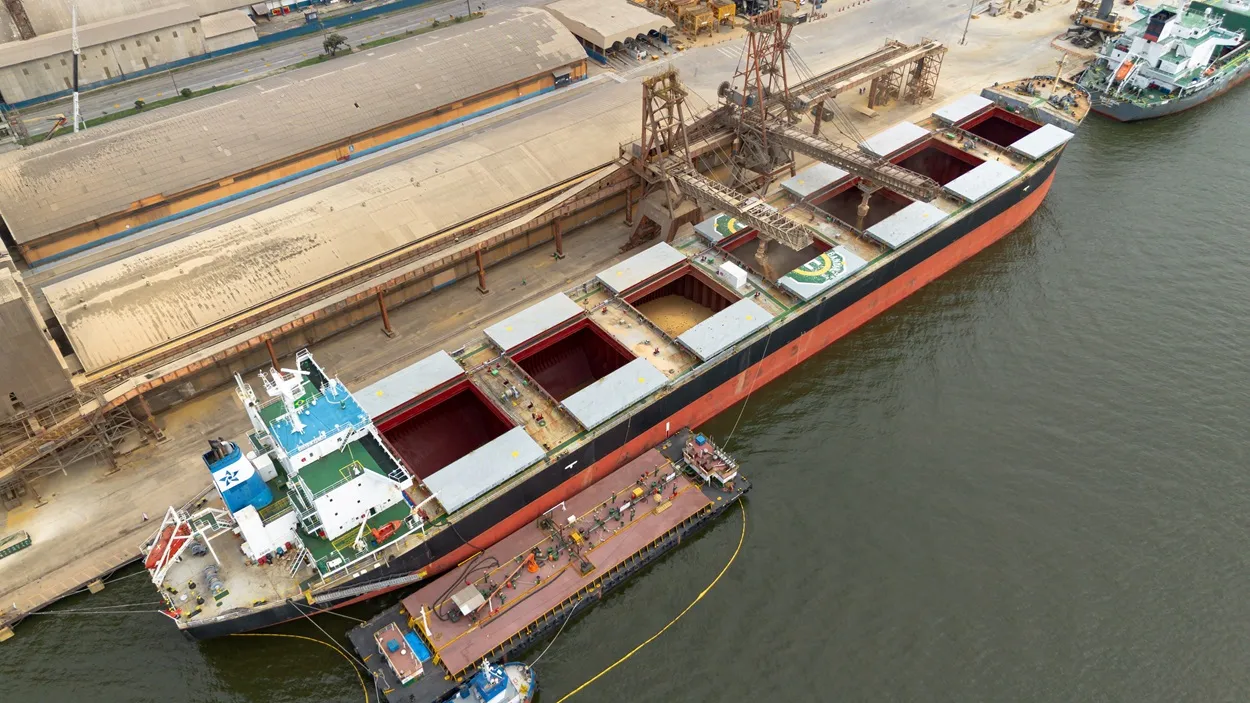
March 2026 has delivered a stark dichotomy in Brazil’s international trade landscape. While exports to the United States experienced a significant downturn, a surge in demand from China has reshaped the nation’s trade performance. These contrasting trends highlight the evolving global economic currents and the critical importance of diversification in international trade strategies.
The latest figures, released by the Secretariat of Foreign Trade (Secex) of the Ministry of Development, Industry, Trade and Services (MDIC), reveal a 9.1% decrease in Brazilian product exports to the U.S. in March 2026, falling to $2.894 billion from $3.182 billion in the same month of the previous year. Concurrently, imports from the U.S. also declined by 6.31%, totaling $3.314 billion. This resulted in a trade deficit of $420 million with the United States for the month.
Conversely, the trade relationship with China painted a much rosier picture. Exports of Brazilian products to China skyrocketed by 17.8% in March 2026, reaching an impressive $10.490 billion, a substantial increase from $8.903 billion in March 2025. This robust performance, however, was accompanied by a significant 32.9% rise in imports from China, which amounted to $6.664 billion. Despite the increased inbound shipments, Brazil maintained a healthy trade surplus of $3.826 billion with the Asian economic powerhouse.
The Impact of Tariffs and Shifting Market Demands
The decline in exports to the U.S. marks the eighth consecutive monthly decrease, a trend largely attributed to the imposition of a 50% tariff by the Trump administration on Brazilian products in mid-2025. While some tariffs were eased by year-end, the MDIC estimates that 22% of Brazilian exports remain subject to these additional duties, impacting key sectors and diminishing their competitiveness in the American market.
This situation underscores the vulnerability of economies heavily reliant on a single major trading partner. The ongoing trade tensions and the imposition of protectionist measures can have profound and lasting effects on trade flows and economic growth. For Brazilian exporters, the U.S. market, once a cornerstone, is now presenting considerable challenges, necessitating a strategic pivot towards more receptive and growing markets.
In stark contrast, China’s insatiable demand for commodities and manufactured goods has provided a significant boost to Brazil’s export sector. The 17.8% growth in exports to China not only compensates for losses elsewhere but also highlights the strategic importance of the Asian market. This surge is indicative of China’s continued economic expansion and its increasing role as a global consumer market, offering substantial opportunities for countries rich in natural resources and with competitive manufacturing capabilities.
Deep Dive into Trade Figures: March 2026 Performance
The detailed report from Secex/MDIC paints a comprehensive picture of Brazil’s trade performance across its major partners in March 2026. The overall trade balance for Brazil in March registered a surplus of $6.405 billion, a figure that, while positive, fell short of market projections which had a median expectation of $7.55 billion. This shortfall was primarily due to the decrease in exports to the U.S. and a notable increase in imports from China.
United States: A Downturn in Trade
The 9.1% drop in exports to the U.S. translates to $2.894 billion in March 2026, down from $3.182 billion in March 2025. Imports from the U.S. also saw a decrease of 6.31%, totaling $3.314 billion compared to $3.537 billion. This resulted in a trade deficit of $420 million, a significant shift from previous periods where the U.S. was a key source of trade surplus for Brazil.
Looking at the cumulative data for January to March 2026, exports to the U.S. have fallen by 18.7%, reaching $7.781 billion. Imports have also decreased by 11.1%, totaling $9.169 billion. Consequently, the trade balance with the U.S. for the first quarter shows a deficit of $1.388 billion, a concerning trend for bilateral trade relations.
China: A Booming Partnership
The story is dramatically different with China. Exports surged by 17.8% in March 2026, hitting $10.490 billion, up from $8.903 billion in March 2025. This phenomenal growth has been a significant driver of Brazil’s overall export performance. However, imports from China also rose by a substantial 32.9% to $6.664 billion from $5.014 billion, indicating increased consumption of Chinese goods within Brazil.
Despite the rise in imports, Brazil secured a healthy surplus of $3.826 billion with China in March. For the first quarter of 2026, exports to China grew by 21.7% to $23.890 billion, while imports saw a 6.0% decrease, totaling $17.907 billion. This resulted in a substantial first-quarter surplus of $5.983 billion with China, solidifying its position as Brazil’s most important trading partner.
European Union: Steady Growth with a Deficit
The European Union also demonstrated positive export growth for Brazil, with a 7.3% increase in March 2026, reaching $4.110 billion compared to $3.829 billion in March 2025. However, imports from the EU also climbed significantly by 14.9%, totaling $4.687 billion. This dynamic led to a trade deficit of $577 million with the EU in March.
In the first quarter of 2026, exports to the EU grew by 9.7% to $12.232 billion. Imports, however, decreased by 2.2% to $11.607 billion. This resulted in a cumulative first-quarter surplus of $625 million with the EU, indicating a more balanced trade relationship over the longer term, despite the monthly deficit.
Argentina: Mixed Signals
Trade with Argentina presented a mixed picture. Exports fell by 5.9% to $1.470 billion in March, while imports increased by 13.1% to $1.128 billion. This led to a trade surplus of $342 million with Argentina for the month.
In the first quarter of 2026, exports to Argentina saw a sharper decline of 18.1%, totaling $3.447 billion. Imports also decreased by 6.5% to $2.744 billion. The first-quarter surplus with Argentina was $703 million, showing a continued positive balance despite the recent export slowdown.
Navigating Global Trade: Strategies for Resilience and Growth
The fluctuating trade figures for March 2026 serve as a crucial reminder of the dynamic nature of international commerce. The reliance on specific markets can expose economies to significant risks, especially in times of geopolitical uncertainty or shifts in trade policy. For Brazil, the sharp contrast between its performance with the U.S. and China highlights the imperative for strategic diversification.
Diversification as a Risk Mitigation Strategy
The impact of U.S. tariffs on Brazilian exports demonstrates how political decisions in one nation can reverberate across global supply chains. To mitigate such risks, Brazilian businesses and policymakers must continue to explore and cultivate relationships with a diverse range of trading partners. This includes strengthening ties with emerging markets in Asia, Africa, and other regions, reducing dependence on any single economic bloc.
Building a resilient export portfolio involves understanding the unique demands and regulatory environments of different markets. It requires proactive engagement, market research, and potentially the adaptation of products and services to meet local preferences. This strategic approach not only safeguards against external shocks but also opens up new avenues for growth and revenue generation.
Leveraging China’s Growing Demand
China’s role as a global economic engine continues to present unparalleled opportunities. For Brazil, with its vast natural resources, particularly in agriculture and mining, the demand from China offers a consistent and growing market. The 17.8% surge in exports is a testament to this dynamic. However, it is crucial for Brazil to manage this relationship strategically, ensuring favorable terms of trade and avoiding over-reliance that could create future vulnerabilities.
This includes focusing on value-added products rather than solely raw materials. Developing domestic processing capabilities and exporting finished or semi-finished goods can yield higher profit margins and foster long-term economic development. Furthermore, understanding China’s evolving consumer preferences and regulatory landscape is key to sustaining and expanding export success.
The Role of Policy and Investment
Government policies play a pivotal role in shaping trade outcomes. For Brazil, this means actively negotiating trade agreements, reducing bureaucratic hurdles for exporters, and investing in infrastructure that supports efficient trade. Support for innovation and technological advancement in export-oriented industries can also enhance competitiveness on the global stage.
Encouraging foreign direct investment (FDI) in export-related sectors can further bolster Brazil’s trade capacity. Attracting investment in logistics, manufacturing, and technology can create jobs, transfer knowledge, and improve the overall efficiency of the export process. A stable and predictable regulatory environment is essential for attracting and retaining such investments.
Understanding Trade Balances and Economic Health
A trade surplus, like the one Brazil enjoys with China, generally indicates a healthy economy, with more goods and services being sold abroad than purchased. However, persistent trade deficits, such as the one with the U.S., can signal potential economic imbalances. These deficits can lead to currency depreciation and increased national debt if not managed effectively.
The overall trade surplus of $6.405 billion in March, though below expectations, still reflects Brazil’s capacity to generate export revenue. The key lies in understanding the composition of this balance and ensuring that the sources of surplus are robust and sustainable, while addressing the causes of deficits. This requires continuous analysis of trade data and agile policy responses.
FAQ: Decoding Brazil’s Shifting Trade Landscape
Q1: What are the main reasons for the decline in Brazilian exports to the U.S.?
A1: The primary driver is the imposition of a 50% tariff by the U.S. government on Brazilian products in mid-2025. Although some tariffs were later removed, a significant portion of Brazilian exports remains subject to these additional duties, making them less competitive in the American market.
Q2: Why did exports to China increase so significantly?
A2: China’s continued economic growth and increasing consumer demand for commodities and manufactured goods are the main factors. Brazil’s strong position in supplying raw materials like soybeans, iron ore, and oil to the Chinese market has fueled this surge.
Q3: What is a trade deficit, and why is it a concern?
A3: A trade deficit occurs when a country imports more goods and services than it exports. It can be a concern if it’s persistent, as it can lead to a weakening of the national currency, increased foreign debt, and potential pressure on domestic industries.
Q4: How does the overall trade surplus of $6.405 billion in March 2026 compare to market expectations?
A4: The surplus was below the median market expectation of $7.55 billion. This shortfall was mainly due to the significant drop in exports to the U.S. and a substantial increase in imports from China, which, despite contributing to a surplus with China, impacted the overall national balance.
Q5: What is the impact of the trade relationship with the European Union?
A5: Brazil experienced a 7.3% rise in exports to the EU in March 2026, but imports also grew by 14.9%, resulting in a monthly deficit of $577 million. However, the first quarter showed a surplus of $625 million, indicating a more balanced, albeit fluctuating, trade dynamic with the bloc.
Q6: What does the trade data suggest about Brazil’s economic resilience?
A6: The data highlights both resilience and vulnerability. The strong performance with China demonstrates Brazil’s ability to capitalize on growing global demand. However, the heavy reliance on certain markets and the impact of external policies, like U.S. tariffs, underscore the need for greater diversification to ensure long-term economic stability.
Q7: What are the implications of increased imports from China for Brazilian industries?
A7: The 32.9% increase in imports from China could put pressure on some domestic Brazilian industries, particularly those competing with lower-cost Chinese manufactured goods. This necessitates strategies to enhance domestic competitiveness through innovation, efficiency, and targeted government support.
Q8: What steps can Brazil take to mitigate the negative impact of U.S. tariffs?
A8: Brazil can pursue diplomatic channels to negotiate tariff reductions, explore alternative markets for its products, and invest in sectors that are less affected by U.S. trade policies. Additionally, fostering domestic value addition can make Brazilian products more competitive globally, even with tariffs in place.
Q9: How does the trade performance with Argentina reflect the broader Mercosur relationship?
A9: While exports to Argentina declined in March and the first quarter, Brazil still maintained a trade surplus. This indicates that despite some bilateral challenges, the trade relationship within Mercosur remains significant, though subject to economic fluctuations in member countries.
Q10: What is the significance of the MDIC’s role in this trade data?
A10: The Ministry of Development, Industry, Trade and Services (MDIC), through its Secretariat of Foreign Trade (Secex), is the official body responsible for collecting, analyzing, and disseminating Brazil’s foreign trade data. Their reports are crucial for understanding the country’s economic performance and for informing policy decisions.

Empowering you to master your money with confidence and clarity. On this channel, we break down personal finance—from budgeting basics and saving smarter to debt-free strategies and practical investing—all in easy-to-understand language.
Expect weekly deep dives into real-life financial questions, step-by-step tutorials, and expert insights that make money topics approachable and actionable. Whether you’re building emergency savings, paying off loans, or planning for the future, you’re in the right place to get informed, empowered, and financially confident.