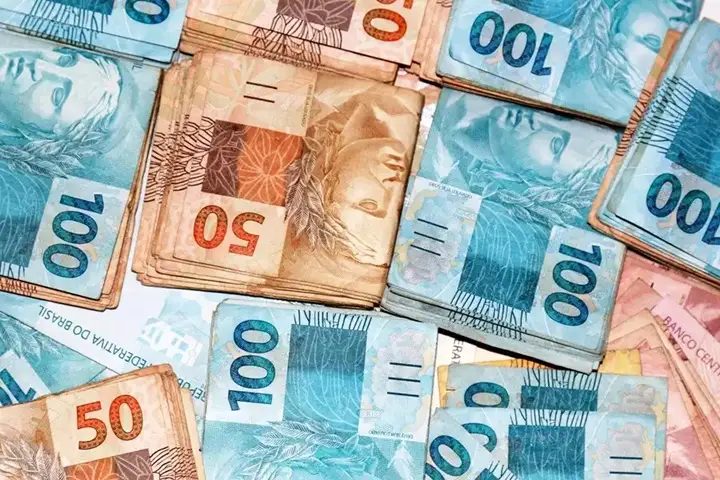
The Brazilian government has officially confirmed the minimum wage for 2026, announcing a significant increase that will impact millions of workers and social benefit recipients across the country. The new figure, set at R$ 1,621, represents a notable rise from the current R$ 1,518.
This adjustment is a result of a new policy that combines inflation correction with a share of economic growth, aiming to preserve and enhance the purchasing power of the lowest-paid workers. The Ministry of Planning detailed the calculations behind this increase, which will be reflected in payments starting February 2026.
The confirmation comes shortly after the release of key economic indicators, including the National Consumer Price Index (INPC), which is a primary driver for the annual minimum wage adjustments. The figures released by the IBGE provide a clear picture of the economic landscape influencing this crucial wage policy, as reported by news agencies.
Minimum Wage Reaches R$ 1,621 with Inflation and Growth Boost
The Ministry of Planning confirmed that the minimum wage for 2026 will be adjusted from the current R$ 1,518 to R$ 1,621, marking an increase of R$ 103, or 6.79%. This new amount is set to be included in salary payments beginning in February 2026, according to the ministry’s announcement.
This wage hike is calculated based on two main components. The first is the accumulated National Consumer Price Index (INPC) over the 12 months leading up to November of the previous year. For 2026, this means incorporating the 4.18% INPC recorded up to November 2025.
Economic Growth Contributes to Wage Increase
The second component of the minimum wage adjustment for 2026 is linked to the country’s economic growth. Specifically, it considers the economic expansion from two years prior, which in this case is 2024. The Brazilian Institute of Geography and Statistics (IBGE) recently revised its Gross Domestic Product (GDP) data for 2024, confirming an expansion of 3.4%.
However, the fiscal framework, which governs public spending, limits the portion of economic growth that can be passed on to the minimum wage increase. This limit is set between 0.6% and 2.5%. Applying these rules, the calculated minimum wage for 2026 stands at R$ 1,620.99, which, after rounding as per legal provisions, becomes R$ 1,621.
Government to Revise Public Accounts Projections
The announced minimum wage value of R$ 1,621 will necessitate a revision of public finance calculations for the upcoming year. This is because the 2026 Budget Guidelines Law, approved by Congress, had previously estimated the minimum wage at R$ 1,627, representing a projected increase of 7.18%.
The value of the minimum wage has a significant ripple effect on public finances. Beyond its direct impact, it serves as a benchmark for numerous other government disbursements. This includes crucial social programs such as the Continuous Cash Benefit (BPC), which provides support to elderly individuals and people with disabilities facing socioeconomic vulnerability.
Understanding INPC and its Role in Wage Adjustments
Similar to the minimum wage, other benefits like unemployment insurance, the INSS ceiling, and payments exceeding the minimum wage are adjusted based on the INPC accumulated up to December. The INPC is released alongside another key IBGE index, the Broad National Consumer Price Index (IPCA), often referred to as the official inflation rate.
The IPCA registered a 0.18% increase in November, accumulating 4.46% over the last 12 months. The fundamental difference between INPC and IPCA lies in their target populations. The INPC measures the cost of living for families earning up to five minimum wages, while the IPCA tracks it for households with incomes up to 40 minimum wages.
The IBGE assigns different weightings to various price categories within these indices. For instance, food items constitute nearly 25% of the INPC, a higher proportion than in the IPCA (around 21%). This reflects the reality that lower-income families allocate a larger portion of their budget to food expenses. Conversely, costs like airfare have a lesser impact on the INPC compared to the IPCA.
According to the IBGE, the primary objective of the INPC is to maintain the purchasing power of wages by measuring price variations in the consumption basket of lower-income salaried individuals. Price data collection for the INPC is conducted across ten metropolitan regions throughout Brazil, ensuring a comprehensive and representative measure of cost of living fluctuations for the target demographic.

Empowering you to master your money with confidence and clarity. On this channel, we break down personal finance—from budgeting basics and saving smarter to debt-free strategies and practical investing—all in easy-to-understand language.
Expect weekly deep dives into real-life financial questions, step-by-step tutorials, and expert insights that make money topics approachable and actionable. Whether you’re building emergency savings, paying off loans, or planning for the future, you’re in the right place to get informed, empowered, and financially confident.