
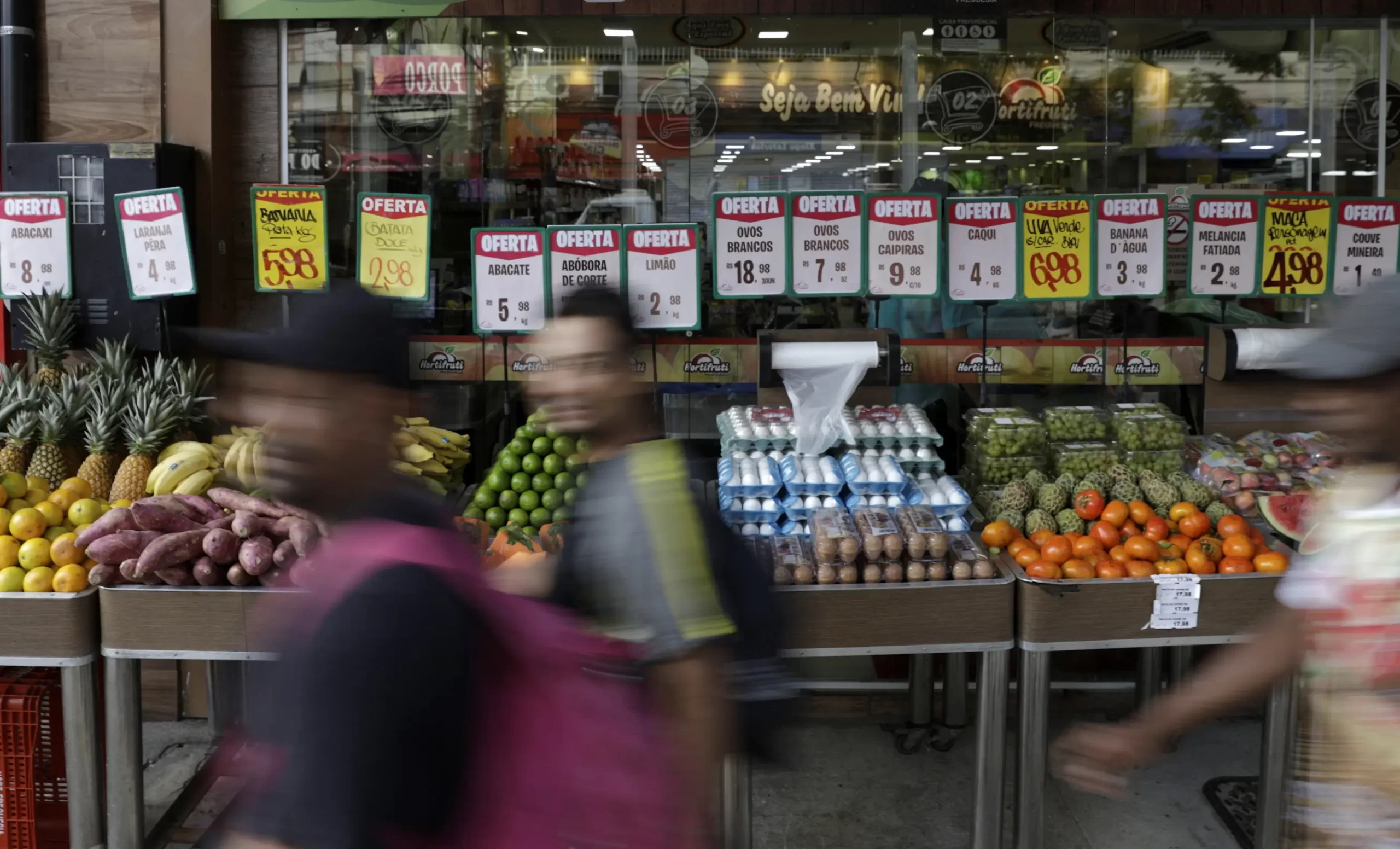
After a significant 8.2% increase in 2024, food-at-home inflation surprised many by contributing positively to the disinflation process of the Broad National Consumer Price Index (IPCA) this year. Projections indicated that 2025 would close slightly below the inflation target ceiling of 4.5%, according to the latest Focus survey. However, economists consulted by Broadcast, the real-time news system of Grupo Estado, suggest that the outlook for 2026 is less optimistic.
These specialists highlight that food-at-home prices are unlikely to benefit from the same favorable conditions in 2026 as they did in 2025. A key factor influencing this shift is the projected dynamics of beef prices. Despite this, analysts anticipate that food inflation will likely remain within typical Brazilian patterns.
As of October 2025, food-at-home prices had accumulated a 4.53% increase. The moderation observed this year is attributed to several factors, including a stronger currency, favorable harvests, a decline in commodity prices, relief in meat prices, and government policies that boosted domestic supply. This led to five consecutive months of price decreases in the sub-group from June to October.
2025: A Year of Unexpected Food Price Declines
Economist João Fernandes from Quantitas emphasized that 2025 has been one of the most surprising years for lower food inflation in a long time. He noted that the market was caught off guard, as price rebounds were expected during the months of decline, but they were delayed.
“Wholesale data showed that we still had conditions favorable enough for continued price decreases in food items,” Fernandes stated, projecting a 2% increase for the sub-group this year. He also pointed to the dynamics of the live cattle market as a significant driver behind the downward revisions in the year’s inflation, which also influenced Quantitas’s reduction in their 2026 food-at-home projection from 5.5% to 4.9%.
Outlook for 2026: Rising Beef Prices and Shifting Export Dynamics
The scenario for 2026, however, points towards an increase in meat prices, driven by export market dynamism and the cattle cycle. Fernandes cautioned that the situation remains uncertain, stating, “The expectation is that prices will be higher in 2026, but this is being postponed more and more. An inflection in female cattle slaughter was expected in the second half of this year, which did not occur. We saw resilience in slaughter numbers, and the expectation has now been pushed to the first half of next year.”
Fabio Romão, an economist at 4intelligence, believes it’s unlikely that the benign scenario for food-at-home will repeat in 2026. He mentioned that early 2025 projections for the sub-group were a 7% increase, which has now been revised to between 2.5% and 3%. “The recent currency appreciation is not expected to repeat next year. Meat prices may continue to rise until mid-year, not dramatically, but the comparison base has become low,” he explained.
Key Factors Influencing 2026 Food Inflation
Romão forecasts a slowdown in meat price increases to 1.7% in 2025, followed by a rise to 6.9% in 2026. He also identified fruits, dairy products, and oils and fats as other categories to watch closely for inflation in food prices.
Andrea Angelo, an inflation strategist at Warren Investimentos, also reduced her projection for food-at-home inflation in 2025 to around 2.5%, down from an earlier estimate of 6%. This revision was largely influenced by the more stable beef prices in 2025, along with weaker prices for fresh and semi-processed food items.
Angelo anticipates that food-at-home inflation will not follow the favorable trend in 2026, projecting a 6% increase for the period. “With the relative prices of beans, rice, and milk being very low, we don’t see this movement continuing for a second consecutive year,” she stated, also expecting an increase in beef prices.
Regarding the exchange rate, which Warren estimates at R$5.40 for both 2025 and 2026, Angelo does not foresee it significantly impacting food inflation next year. The **IPCA** and its components, especially **food prices**, are under close observation by economists as the year 2026 approaches, with particular attention on the **beef market** and global economic influences.

Empowering you to master your money with confidence and clarity. On this channel, we break down personal finance—from budgeting basics and saving smarter to debt-free strategies and practical investing—all in easy-to-understand language.
Expect weekly deep dives into real-life financial questions, step-by-step tutorials, and expert insights that make money topics approachable and actionable. Whether you’re building emergency savings, paying off loans, or planning for the future, you’re in the right place to get informed, empowered, and financially confident.